What Korean Dermatologists Actually Prescribe for Glass Skin (And the Ingredients Behind It All)
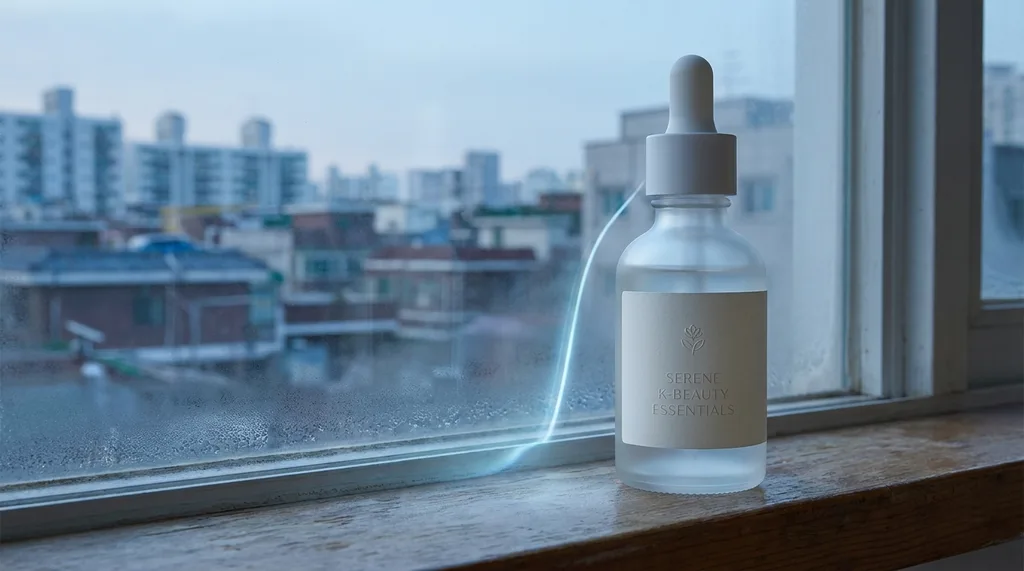
Walk into a Gangnam dermatology clinic and ask what actually creates glass skin — the dewy, poreless, light-refracting complexion that became K-Beauty's most exported aesthetic — and the answer you'll hear has almost nothing to do with how many products you're applying. The doctor won't reach for a catalog. They'll talk about your skin barrier's structural integrity. They'll say words like transepidermal water loss, filaggrin expression, possibly even the biomechanical stiffness of individual keratinocytes. And somewhere in that conversation, a quiet truth will surface: the 10-step routine you've been faithfully following is, in large part, a marketing architecture. Not a medical protocol.
- What the Korean Clinic Standard Actually Looks Like
- The Science Behind Three Ingredients That Dermatologists Actually Trust
- The Protocol Korean Women Actually Follow — And What the Data Shows About It
- Where to Source These Ingredients Without the Retail Markup
- Explore Dermatologist-Approved Glass Skin Actives
- Before You Layer Anything — The Safety Framework Korean Clinics Lead With
That gap — between what gets sold to the world as K-Beauty and what Korean dermatologists actually recommend — is exactly what this guide exists to close.
Before diving into the ingredients themselves, understanding how Korean dermatology approaches skin from the inside changes everything. The clinical lens isn't "which products," it's "which biological levers." The three ingredients that dominate Seoul's clinic conversation right now aren't secrets. They're hiding in plain sight, buried under ten layers of skincare mythology.
What the Korean Clinic Standard Actually Looks Like
The global K-Beauty industry reached USD 11.4 billion in exports in 2025 — making South Korea the world's second-largest cosmetic exporter, trailing only France. The glass skin niche alone accounts for USD 2.43 billion of that market, projected to nearly double to USD 4.26 billion by 2031. These are not numbers generated by clinical outcomes. They're numbers generated by aspiration — which is precisely why the gap between what's marketed and what's medically substantiated has grown so wide.
Korean dermatologists — particularly those in the high-traffic clinics of Apgujeong and Cheongdam — have been quietly documenting a phenomenon among their patients: those who follow the most elaborate multi-step routines often present with more reactive, sensitized skin than those who follow simpler, more targeted protocols. The Korean skincare community even has a term for this: 오버케어 (over-care), the paradoxical state where the pursuit of perfect skin systematically dismantles the barrier responsible for it.
The clinical standard, as reported by Korean dermatology practitioners, centers on one foundational concept before any product discussion: reduce transepidermal water loss (TEWL). When water evaporates faster than the skin can retain it, no amount of topical layering compensates. The surface may feel hydrated for an hour. The deeper skin — what Koreans call 속건조 (sok-geonjo), or inner dryness — remains parched, pulling moisture through layers of expensive product without ever holding it.
[K-Beauty 101] 속건조 (Sok-geonjo) — Inner dryness; dehydration beneath the skin's surface. Korean dermatologists consider this the true diagnostic target in glass skin consultations — not how the surface feels, but how the deeper layers behave.
The fix isn't more product. It's choosing the right molecules, at the right concentrations, in the right formulation pH — and stopping before you disrupt the biology that makes the whole system work. Which brings us to the ingredients themselves.
The Science Behind Three Ingredients That Dermatologists Actually Trust
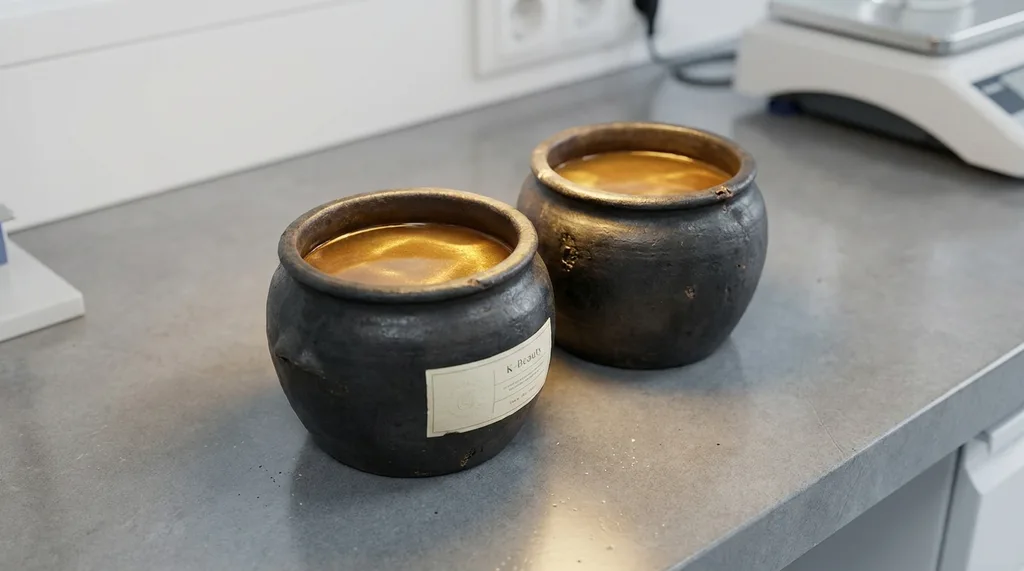
Here's where marketing claims and clinical data diverge most dramatically — and where the 코덕 (ko-deok) community, Korea's self-appointed ingredient gatekeepers, earns its reputation as the industry's most rigorous consumer force.
Galactomyces Fermentation Filtrate (GFF) has been positioned in Western markets as a "fermentation-inspired brightening essence," language that makes it sound like a folk remedy in modern packaging. The clinical picture is considerably more interesting. Research shows GFF interacts with the aryl hydrocarbon receptor (AHR) pathway to upregulate filaggrin and loricrin — the proteins that form the physical scaffold of your skin barrier. What's remarkable about this mechanism isn't just moisture retention; it's that GFF appears to maintain the Young's modulus of keratinocytes — a measure of mechanical stiffness — by stabilizing the actin cytoskeleton and increasing focal adhesion proteins. In biomechanical terms, it helps skin cells hold their structural shape under stress. That's not a moisturizing claim. That's materials science applied to biology. GFF also activates NRF2 transcription factors, suppressing the oxidative stress cascade triggered by UV exposure and inflammatory cytokines — what researchers call anti-inflammaging, the prevention of chronic low-grade inflammation that accelerates structural skin aging.
Niacinamide is where most consumers are being quietly misled — not because the ingredient doesn't work, but because they're buying it at the wrong concentration in the wrong formula pH and expecting clinical outcomes.
The clinical consensus from multiple peer-reviewed studies places effective niacinamide in a surprisingly narrow band: 2% to 5%. At 5%, applied consistently for 12 weeks, research documents meaningful reduction in wrinkle depth, skin redness, and melanin transfer — the last mechanism being particularly relevant for managing post-inflammatory hyperpigmentation (PIH), a concern that drives significant dermatology traffic in Korea. The mechanism is elegant: niacinamide inhibits the transfer of melanosomes from melanocytes to keratinocytes, reducing pigmentation at the cellular handoff point before it even reaches the surface.
But here's the part that almost nobody in the content industry mentions: pH matters as much as concentration. Research indicates that niacinamide at a neutral pH of 7.4 penetrates skin at roughly twice the rate of the same concentration in an acidic pH 5.0 formula. This means a 3% niacinamide product in an optimally designed neutral formula can outperform a 5% product in a poorly matched acidic one. The number on the label is not the full story.
Centella Asiatica (Cica) rounds out the clinical triad, though with an important caveat that Korean dermatologists are quick to make: cica's evidence base supports barrier soothing and collagen synthesis support — not the dramatic regenerative claims common in Western marketing. Its value in the glass skin context is primarily as a stabilizer: reducing the inflammatory interference that blocks GFF and niacinamide from doing their work.
| Ingredient | What the Science Supports | Effective Range | Onset (consistent use) |
|---|---|---|---|
| GFF (Galactomyces Filtrate) | Barrier protein expression, mechanical skin firmness, anti-inflammaging via NRF2 | Varies by product; look for it in the first 5 ingredients | 8–12 weeks |
| Niacinamide | Melanin transfer inhibition, NAD+ cellular energy, barrier repair, wrinkle depth reduction | 2%–5% at near-neutral pH | 4–12 weeks |
| Centella Asiatica | Barrier soothing, collagen support, inflammation reduction | Depends on active fraction (madecassoside/asiaticoside) | 4–8 weeks |
Note: Marketing claims for all three often outpace the available human clinical data, particularly for long-term outcomes beyond 12 weeks.
🎵 K-Mono Lofi — Seoul Study Beats
Read deeper with Seoul lo-fi in the background — curated by K-Mono Lofi
The Protocol Korean Women Actually Follow — And What the Data Shows About It
The concept of layering in K-Beauty is real science, imperfectly understood outside Korea. The principle — applying products from thinnest to thickest consistency, giving each layer time to partially settle before the next — isn't arbitrary ritual. It's designed to maximize the concentration gradient that drives each molecule toward the deeper skin layers.
What the data from platforms like Hwahae (Korea's leading ingredient-verification app, think of it as a clinical fact-checker for consumers) consistently shows is that Korean skincare enthusiasts who achieve the most stable, long-term glass skin results are not the heaviest users. They're the most selective users — people who can read a label, verify a concentration, and stop before their barrier signals distress.
The practical protocol that emerges from Korean clinical and community sources runs like this:
Morning: Gentle pH-balanced cleanser. One hydrating toner (HA-based, layered 2–3 times if addressing sok-geonjo). Niacinamide serum (2–5%, pH-checked). Moisturizer. Broad-spectrum SPF — non-negotiable. The Korean sunscreen market has driven some of the most sophisticated UV filter chemistry in the world, and Korean dermatologists consider sun protection not as the last step of a routine but as the primary anti-aging intervention.
Evening: Oil cleanse to remove SPF. Water cleanse. GFF-forward essence (look for it listed early in the ingredient hierarchy). Cica or centella-based serum on nights when skin feels reactive. Moisturizer, occlusively sealed if the environment is dry.
That's it. Not ten steps. Five or six, executed with precision and ingredient literacy.
[K-Beauty 101] 코덕 (Ko-deok) — Korea's self-appointed beauty obsessives who memorize ingredient lists and collectively determine which products actually work. Their community-verified standards on Hwahae and Naver forums represent the closest thing K-Beauty has to independent clinical peer review.
The question of inner beauty supplements — collagen peptides, ceramide capsules, astaxanthin — is one that Korean dermatologists are increasingly fielding as the market expands. The clinical picture here is more cautious. Collagen peptide studies show promising results for skin hydration and elasticity at doses of 2.5–10g daily over 8–12 weeks, but the mechanism (whether oral collagen meaningfully reaches the dermis, or whether it works primarily through amino acid availability) remains debated. Korean clinics that recommend these supplements tend to position them as support for a solid topical protocol — not as a replacement for the barrier-level work that GFF and niacinamide do directly.
The best version of a glass skin supplement stack, according to the clinical consensus emerging from Seoul, is simple: protect the barrier topically, reduce systemic inflammation through diet and targeted antioxidant support, and don't add anything — topically or orally — that your skin didn't ask for.
Where to Source These Ingredients Without the Retail Markup
Here's a practical reality for global K-Beauty enthusiasts: the products containing meaningful concentrations of these actives are often available internationally at a fraction of Korean retail prices — particularly through iHerb, which sources directly and ships to over 180 countries. For supplements specifically (collagen peptides, ceramide supplements, niacinamide in oral form), iHerb's direct-sourcing model also addresses the authenticity concern that makes the supplement market genuinely risky when buying from unverified resellers.
🔬 For Barrier Repair
GFF essences + niacinamide serums (2–5%). Search: "galactomyces essence," "niacinamide serum." Verify pH is close to neutral for maximum penetration.
🌿 For Soothing Support
Centella Asiatica serums and cica creams. Look for madecassoside or asiaticoside listed as active fractions — not just "centella extract."
💊 Inner Beauty Supplements
Marine or bovine collagen peptides (2.5–10g daily), ceramide capsules, astaxanthin as an antioxidant adjunct. Use code QAK3042 at iHerb for a first-order discount.
One thing worth flagging for anyone sourcing niacinamide products specifically: the ingredient is widely available at excellent price points, but the formula design — particularly pH — is rarely disclosed on product pages. If a brand isn't transparent about their pH, a simple at-home pH strip test on the product costs less than a dollar and tells you something a $50 serum's marketing won't.
Before You Layer Anything — The Safety Framework Korean Clinics Lead With
None of this works if the barrier is already compromised — and a significant portion of readers arriving at a glass skin guide will have compromised barriers without knowing it. Korean dermatologists report this as one of the most consistent findings in new patient consultations: people who have been "doing skincare" for years but whose barrier function, measured by TEWL, is worse than someone who uses nothing.
The safety framework, before any active is added:
Who should approach cautiously: Anyone with diagnosed rosacea should treat niacinamide-heavy routines carefully — flushing responses, though less common at concentrations under 5%, are individual and real. Those on prescription retinoids should consult their dermatologist before layering GFF essences, as the combined effects on skin cell turnover aren't uniformly studied. Pregnant or nursing individuals should treat any supplement (collagen, astaxanthin, ceramide capsules) as requiring physician consultation — "natural" or "food-derived" does not mean clinically cleared for pregnancy.
Drug interactions to watch: Oral niacinamide at high doses can interact with anticoagulants and diabetes medications. At the topical doses found in skincare, systemic absorption is minimal — but oral niacinamide supplements are a different conversation entirely. If you're taking any medication that affects blood sugar or clotting, speak to a physician before adding niacinamide orally.
The one rule Korean clinics universally enforce: Introduce one new active at a time. Two weeks minimum per introduction. If anything changes — new sensitivity, new texture, new reactivity — you'll know exactly what caused it. The Korean approach to 가성비 (gaseongbi), maximizing value per investment, applies here: one ingredient that works costs infinitely less than five ingredients that collectively cause a problem you spend months diagnosing.
Glass skin isn't a product. It's not a routine number. It's the appearance of skin that has stopped fighting itself — skin whose barrier proteins are intact, whose moisture gradient holds, whose inflammatory signals are quiet. The ingredients that get you there are proven, accessible, and unsexy in the best possible way. They don't need ten steps. They need the right science, applied with patience, in a formula your skin can actually use.
That's what the doctors in Gangnam have been saying all along. The rest was always packaging.
⚠️ Medical Disclaimer: This article is for educational and informational purposes only and does not constitute medical advice. Skincare actives including niacinamide, galactomyces fermentation filtrate, and centella asiatica can cause reactions in sensitive individuals — always perform a patch test before full application. Individuals with skin conditions such as rosacea, eczema, or active acne should consult a board-certified dermatologist before introducing new actives. Oral supplements including collagen peptides, ceramide capsules, and astaxanthin should be discussed with a physician before use, particularly for pregnant or nursing individuals, those with chronic health conditions, or those taking prescription medications. Price comparisons and product availability are subject to change. iHerb affiliate links in this article support the channel at no additional cost to you.
✓ Researched and compiled using verified data as of the publication date.
 Operated by: Quiet Korea | Contact: rsl.2001.1975@gmail.com
Comments
Post a Comment