Beyond the Bottle: The Korean Clinical Approach to Skin Supplements
Walk into any high-end dermatology clinic in Seoul’s Gangnam district, and you will notice a recurring theme that diverges sharply from Western aesthetic practices. While Western dermatology is often synonymous with aggressive, singular interventions—a chemical peel here, a high-potency retinoid prescription there—the Korean clinical protocol views the skin as a delicate, internal ecosystem. According to top-tier aesthetic practitioners in Seoul, topical treatments are only half the battle. The other half? A highly systematic approach to what Koreans call "inner beauty" (inner-byuti).
In Korea, the skin is rarely treated in isolation. Dermatologists there often emphasize that long-term radiance—the elusive, dewy "glass skin" look—is a reflection of systemic metabolic health. This is why a post-procedure care plan at a clinic in Seoul almost always includes a tailored regimen of oral supplements designed to reduce systemic inflammation and support the skin’s structural integrity from within.

The Clinical Logic of Internal Repair
Why do Korean women in their 40s often maintain better skin elasticity than their counterparts elsewhere? The answer isn't hidden in a single, miracle-working serum. It is found in the Korean belief in Pibu-jangbyeok (skin barrier) maintenance. When the barrier is compromised—whether through environmental stressors, improper exfoliation, or post-procedure trauma—the skin enters a state of chronic micro-inflammation.
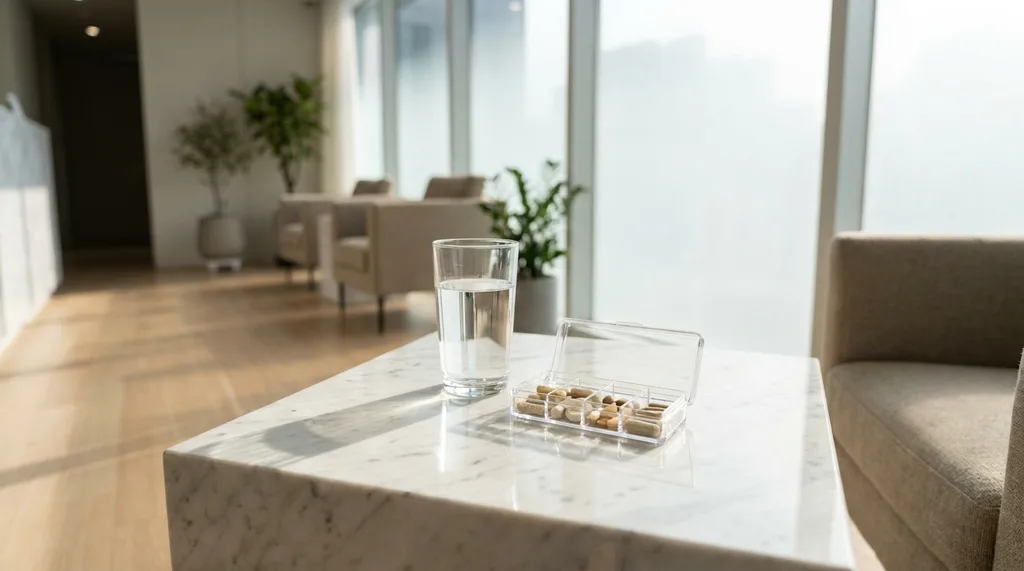
Korean clinics frequently recommend specific oral supplements to combat this, treating the skin as an organ that requires nutritional fuel to repair its cellular matrix. Unlike the broad-spectrum vitamin approach common in many Western pharmacies, the Korean approach is granular and outcome-focused. It centers on three primary pillars: structural proteins to support the dermis, antioxidants to neutralize oxidative stress, and specialized hydrating molecules that improve the skin’s moisture retention capacity.
The science behind the Korean "Inner Beauty" protocol →
Bridging the Gap: What Actually Works?
Navigating the supplement aisle can be paralyzing. However, by filtering out marketing fluff and focusing on ingredients with established efficacy, a clearer picture emerges. The following table synthesizes the clinical consensus regarding ingredients that genuinely support the skin's biological functions.
| Ingredient | Primary Clinical Benefit | Typical Daily Dose | Targeted Outcome |
|---|---|---|---|
| Hydrolyzed Collagen | Dermal density support | 2,500mg – 5,000mg | Improved elasticity |
| Ceramides (Phytoceramides) | Barrier lipid reinforcement | 30mg – 70mg | Reduced TEWL* |
| Glutathione | Systemic antioxidant/brightening | 250mg – 500mg | Tone evening |
*TEWL: Transepidermal Water Loss. This is the amount of water that evaporates through the skin, a key metric for barrier health.
It is vital to note that not all supplements are created equal. Many products marketed for "glowing skin" contain proprietary blends that fail to meet the clinical thresholds for efficacy. If a product label does not disclose the dosage of the active ingredient, it is essentially a marketing vehicle rather than a clinical tool.
Establishing Your Own Routine
In Korea, a routine is defined by its consistency and timing. The "Korean Beauty Formula" for supplements is simple: treat it like an extension of your skincare layering.
- Timing matters: Antioxidants like Glutathione are often recommended in the morning to provide a protective shield against UV-induced oxidative stress throughout the day.
- Structural support: Collagen and Ceramides are best absorbed when taken consistently, often recommended with an evening meal to align with the body’s nocturnal repair cycles.
- The "Sok-geonseong" (Inner Dryness) test: If your skin feels tight or dehydrated despite heavy moisturizing, Korean experts often look at your intake of essential fatty acids and ceramides. This is the classic sign of "inner dryness," where the barrier is failing to hold moisture regardless of external application.
The goal of this regimen is not immediate transformation. It is the steady, incremental improvement of skin quality over an 8-to-12-week cycle—the time required for a full cycle of epidermal turnover.
If you are ready to move beyond the surface and adopt the rigorous, results-oriented mindset of a true Seoul skincare expert, join our private community. We dissect the latest clinical trials and cut through the marketing noise to give you the objective truth on what works.
Accessing Quality: The Global Perspective
One of the biggest hurdles for global enthusiasts is access. Many of the high-purity, clinic-grade formulations favored by Korean experts are either unavailable in Western retail or heavily marked up. Because supplements are largely unregulated in many regions, purchasing from a trusted, transparent source is a safety imperative.
A Final Word on Safety
Before introducing any supplement into your daily routine, remember that your body is not a laboratory. What works for one person’s metabolic profile may cause reactions in another.
- Interaction warning: High-dose antioxidants can interact with various medications. Always consult with your primary care physician, especially if you are taking blood thinners, immunosuppressants, or undergoing current medical treatments.
- The Patch Test Principle: Even with supplements, start with a lower dose to monitor your digestive response.
- Medical Disclaimer: This article is for educational purposes only and does not constitute medical advice. Never replace professional medical diagnosis or treatment with skincare supplements. Always consult a board-certified dermatologist or healthcare provider before starting any new regimen, particularly if you are pregnant, nursing, or have existing health conditions.
⚠️ Disclaimer: The information provided here is based on clinical research and industry-standard practices, not a substitute for professional medical advice. Always consult your physician before starting any new supplement regimen to ensure it is safe for your specific health needs and medications.
✓ Researched and compiled using verified data as of the publication date.
 Quiet Korea | Contact: rsl.2001.1975@gmail.com
Comments
Post a Comment