The 500 Dalton Problem: Why Your Skincare Layering Order Is Either Physics or Theater
There's a number that the Korean skincare industry quietly knows about and almost never mentions in its marketing copy. It isn't a concentration percentage or a star-rating average. It's 500. Specifically, 500 Daltons — the molecular weight threshold above which the human stratum corneum, that outermost fortress of skin, simply will not let a molecule through. Not through encouragement, not through layering tricks, not through premium price points. The door is closed.
Understanding that one number changes everything about how you look at your bathroom shelf.
Korean skincare enthusiasts — the self-appointed quality gatekeepers the community calls ko-deok — have known for years that the 10-step routine was never really about the number ten. It was always about something more precise, more physical, more quietly ruthless than any marketing campaign cared to explain. What insiders discovered, through late-night ingredient deep-dives on Korean beauty forums and frank conversations with dermatologists in Seoul, is that every product in a skincare routine is either delivering an active to the skin, priming the skin to receive it, or sealing it in afterward. The order those things happen in is not aesthetic preference. It is physics.
And physics, unlike marketing, does not make exceptions.
The Jar on Your Nightstand Has a Secret
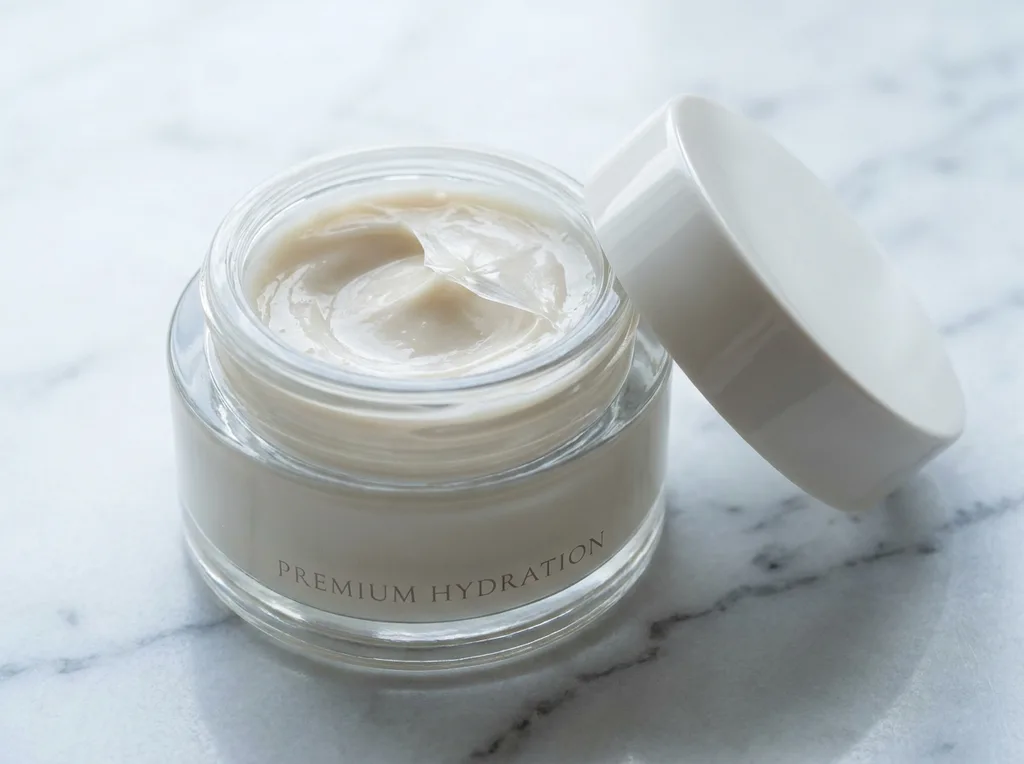
Consider collagen. Native collagen — the structural protein that keeps skin firm and elastic — has a molecular weight of approximately 300,000 Daltons. Compare that to the 500 Dalton threshold the skin's stratum corneum enforces. That's not a small gap. That is the difference between a grain of sand and a bowling ball trying to pass through the eye of a needle.
What this means, in practice, is that the vast majority of traditional collagen creams do not deliver collagen to the skin. They cannot. The molecules are hundreds of times too large to penetrate even the outermost layer of the epidermis. What they are doing — and they are doing something, to be fair — is sitting on the skin's surface, reducing water evaporation, and creating a temporary plumping effect through sheer occlusion. That's not nothing. But it is a fundamentally different mechanism than what the label implies, and it is worth every consumer understanding the distinction.
Korean dermatologists have been discussing this gap between marketing claims and molecular reality for years. The clinical consensus in Seoul increasingly points toward ultra-low molecular weight collagen technology — engineered fragments that reach as low as 243 Daltons — which can genuinely penetrate the stratum corneum and have been shown in research settings to stimulate collagen synthesis. The innovation is real. But the innovation is also rare, and finding it requires reading beyond the front-of-package promise of "collagen-boosting" to understand the actual molecular weight of the form used.
This is the open loop that runs beneath the surface of virtually every K-Beauty layering conversation: if penetration is governed by molecular weight, then the question isn't just what you apply — it's when, in what order, and whether the relevant molecules are even small enough to go anywhere.
The answer to that last question is more sobering than the industry generally admits.
[K-Beauty 101] 속건성 (Sok-geon-seong) — Inner dryness. A condition where the skin feels tight and parched in its deeper layers, even when the surface appears dewy or oily. It reveals the K-beauty philosophy that surface-level hydration is never enough — real moisture must be delivered before the barrier seals it out.
The Skin Doesn't Read the Label — It Reads the Weight
The "thinnest to thickest" rule has been repeated so many times it has become rote — a mantra recited without its underlying reason. What that rule is actually describing is a physical sequence: water-based, low-molecular-weight actives must reach the skin's surface before oil-based occlusives create a lipid-rich barrier that stops everything else cold.
Apply your serum after your cream, and you haven't just made a sequencing error. You've applied an active to the top of a closed door.
Korean skincare consultants and formulators describe this as a delivery window — a brief period after cleansing when the stratum corneum is relatively permeable and receptive. The K-beauty technique known as the 3-second rule formalizes this insight: hydrating products, particularly toners and essences, should be applied within three seconds of cleansing while the skin is still slightly damp. The reasoning is clinical — moisture evaporates from the skin's surface almost immediately after washing, and that evaporation creates what Korean dermatology calls sok-geon-seong, or inner dryness. The 3-second application essentially outpaces the evaporation.
What follows after that window is a hierarchy built on texture and molecular weight together.
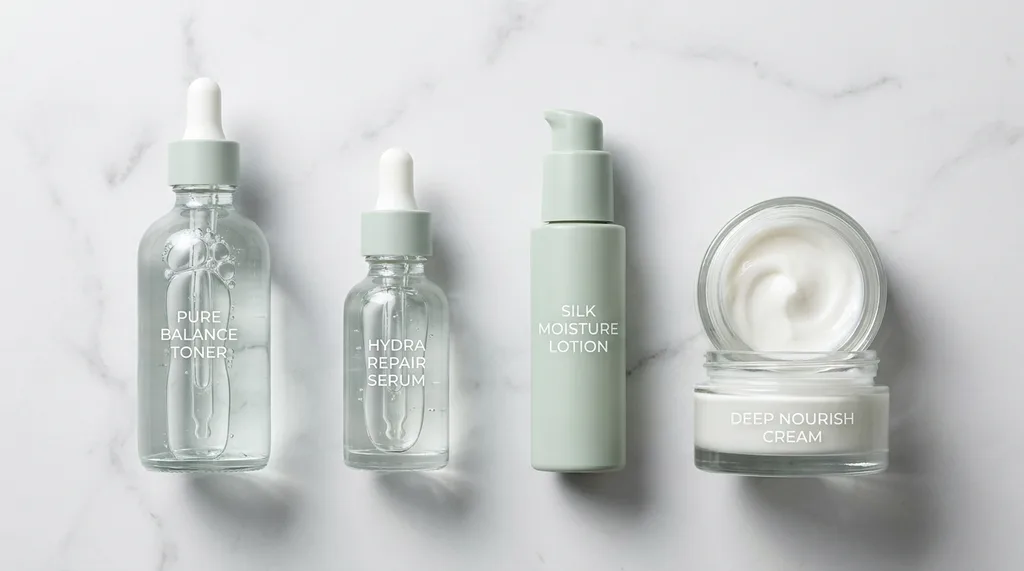
The practical hierarchy that Korean skincare devotees apply — toner → essence → serum → emulsion → cream → oil — maps almost perfectly onto a descending molecular weight, ascending viscosity sequence. Each layer is physically compatible with sitting on top of the previous one. More importantly, each layer closes off some degree of access to the skin below it.
This is why applying a facial oil before a serum, or a heavy cream before an essence, isn't just inefficient. The heavier formula's lipids create an occlusive barrier at the surface level that the water-based actives following it simply cannot penetrate. The serum sits, politely, on top of the cream, until it evaporates.
[K-Beauty 101] 발림성 (Bal-lim-seong) — Spreadability. How smoothly a formula glides across the skin without resistance. In Korean product evaluation, high spreadability signals that a formula has the right viscosity to be applied at its intended layer — heavy friction often means a product is fighting the film below it, a sign of application error.
The 7-Skin method — where toner is layered seven consecutive times — becomes legible through this lens. The technique isn't an act of excess. It's a precise strategy for maximizing the delivery of low-molecular-weight hydrating molecules while the skin's surface is still accessible, before any occlusive is applied. What reads as maximalism to an outsider is, structurally, a focused hydration protocol.
The delivery window science — and why low-MW hyaluronic acid changes the calculus →
When More Layers Becomes the Worst Skincare Decision You Make
There is a danger embedded in the logic of K-beauty layering that the industry doesn't advertise, and that Korean skin experts have increasingly started to name directly. It's called 오버케어 — over-care — and its victims tend to arrive at dermatology clinics with inflamed, sensitized, barrier-compromised skin, surprised to learn that their rigorous 10-step regimen was the cause, not the cure.
The skin barrier — what Korean skincare culture calls pibu-jangbyeok, treating it with the reverence of a structural fortress — has a finite tolerance for product load, active concentration, and mechanical disruption. A routine that layers multiple exfoliating acids, several vitamin C derivatives, and a retinol serum before a peptide cream is not a powerful stack. It is a recipe for cumulative irritation that the barrier eventually stops being able to absorb.
Dermatologists in Seoul report that the patients coming in with "sensitive skin that appeared suddenly" are disproportionately people who adopted multi-step routines without understanding the interaction between active concentration and barrier integrity. The skin was never inherently sensitive. It became sensitive because it was never given a recovery window.
The global skincare market is registering this correction in real time. The pivot toward what trend analysts call "skinimalism" — barrier-first, ingredient-conscious, genuinely minimal routines — is not a passing aesthetic. It represents a population of consumers who over-invested in complexity, observed the damage, and recalibrated. According to market research, the global skincare sector is growing at approximately 6.6–7.4% annually, but the fastest-moving product subcategories are not complexes and multi-active treatments — they're streamlined, transparent, single-hero-ingredient formulations where the consumer can actually track what is doing what.
| Layering Stage | Primary Function | Key Molecule Type | Applied If: |
|---|---|---|---|
| Toner / 3-Second application | Opens delivery window, first hydration | Low MW water-based | Always, immediately post-cleanse |
| Essence / Serum | Active delivery (retinol, niacinamide, peptides) | Low-to-mid MW actives | Skin barrier is intact, no open wounds |
| Emulsion / Lotion | Mid-weight moisture + light occlusion | Emulsified water + oil | Needed in AM or dry skin types |
| Cream | Occlusive seal, surface moisturizing | High MW, lipid-based | PM routine, or after actives are fully absorbed |
| Facial Oil | Final seal, prevents TEWL | Lipophilic, occlusive | After cream, never before serums |
The honest read of this sequence: most people need two to four of these steps functioning correctly, not all five stacked daily. The routine's architecture matters. The number of jars does not.
The One Rule the Products Can't Break for You
What the science of layering ultimately reveals isn't a 10-step formula or a perfect product stack. It's something simpler and harder to sell: the skin operates on physical laws that marketing cannot renegotiate.
The 500 Dalton Rule doesn't care about packaging. The delivery window doesn't extend because a serum costs more. And the stratum corneum doesn't relax its barrier function out of loyalty to a brand that's been producing skincare since 1995. Korean skincare culture, at its most honest — the culture the ko-deok actually live by, stripped of the aspirational product hauls and sponsored routines — is not about having ten steps. It's about knowing which two or three things are genuinely reaching the skin and optimizing every other decision around making those work better.
The rest is texture, sequence, and physics. In that order, always.
⚠️ Disclaimer: The ingredient science discussed in this article is intended for general educational purposes and reflects current cosmetic research, not clinical medical advice. Molecular weight data and skin penetration thresholds vary based on formulation technology, skin condition, and individual barrier integrity — a figure that applies to standard native collagen may not apply to hydrolyzed or engineered variants in specific products. If you are experiencing skin barrier damage, sensitivity, or dermatological concerns, consult a licensed dermatologist before modifying your routine or introducing new active ingredients. Patch-test all new products before full-face application, particularly if your skin is currently compromised or reactive.
✓ Researched and compiled using verified data as of the publication date.
 Operated by: Quiet Korea | Contact: rsl.2001.1975@gmail.com
Comments
Post a Comment