[Dupe Finder] Inclusive Beauty: Finding Clinical Efficacy Beyond the Price Tag
Walk into any high-end department store in Seoul, and you will see shelves lined with gold-embossed bottles promising miracles for the skin. For years, the K-Beauty industry leaned on a singular, narrow definition of "perfect skin." But the global market is shifting. The modern enthusiast understands that the true magic of Korean skincare isn't found in the prestige of a brand name or the weight of a glass jar, but in the specific, measurable impact of its active ingredients on the skin’s biological foundation.
If you have ever felt excluded by the industry’s obsession with a single aesthetic—or worse, suffered from hyperpigmentation because a "cult favorite" product was designed for a skin type that bears no resemblance to your own—you have likely realized that the most expensive bottle is not always the best one.
Why do some formulations trigger inflammation in melanin-rich skin while others act as a soothing shield? The answer is buried in the ingredient list, not the marketing copy.
The Ingredient Autopsy: What You Are Actually Paying For
When you look at luxury serums, you are often paying for the "base"—the proprietary blend of essential oils, sophisticated textures, and the brand's heritage. But your skin only cares about the active molecules.
Take the industry standard for brightening and barrier support: Niacinamide (Vitamin B3). In many high-end Korean formulations, this is the star. When combined with Centella Asiatica—a botanical staple for anti-inflammatory healing—the formula becomes a powerhouse for barrier repair.
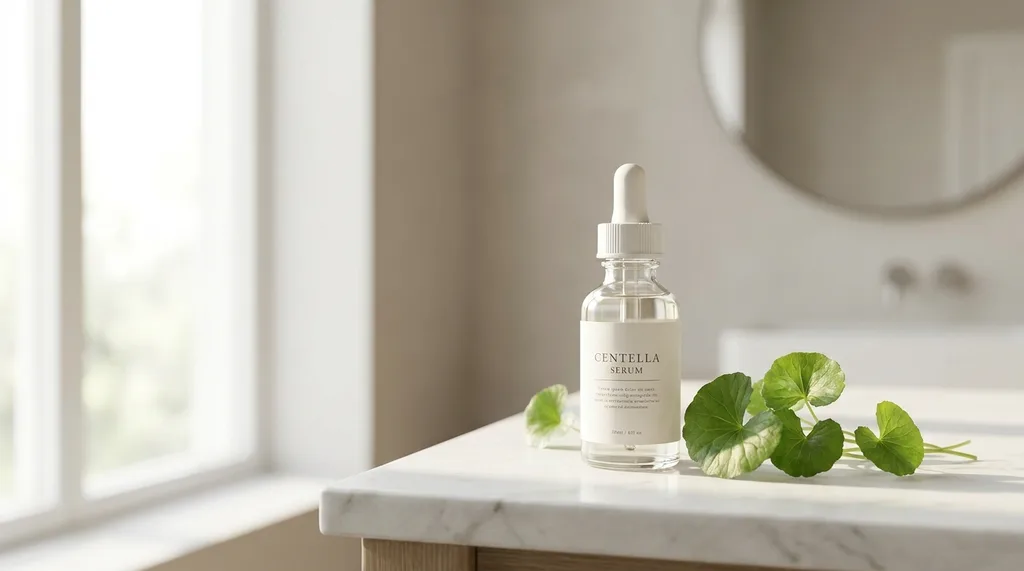
[K-Beauty 101] Centella (센텔라) — A botanical staple for 'soothing' (진정). It represents the intersection of traditional folk medicine and modern K-Beauty’s focus on gentle, non-irritating solutions for barrier repair.
For melanin-rich skin, the stakes are higher. Aggressive treatments or high-concentration acids can trigger inflammation, which leads directly to post-inflammatory hyperpigmentation (PIH). The K-Beauty philosophy of "low-and-slow" barrier maintenance is actually more medically relevant for deeper skin tones than for lighter ones. If a product is formulated with a heavy emphasis on chemical exfoliants under the guise of "brightening," you are paying for a product that might actually be doing more harm than good.
For a deeper understanding of how these mechanisms translate into real-world skin health, read: Inclusive Beauty.
The Honest Comparison: Prestige vs. Performance
We often assume that a higher price tag implies a more potent concentration of active ingredients. In reality, manufacturing costs for niacinamide or centella are relatively standardized. When you pay a premium, you are often paying for the "experience."
| Feature | Prestige Serum | Clinical Alternative |
|---|---|---|
| Core Active | Niacinamide / Centella | Niacinamide / Centella |
| Clinical Efficacy | High | High |
| Fragrance/Additives | Often present | Minimal/None |
| Cost Per Ounce | $$$$ | $ |
The "dupe" is rarely about finding a fake; it is about finding a formula that respects your budget while delivering the same biological benefit. If a budget-friendly option uses the same percentage of Niacinamide as the luxury bottle, the clinical result for your skin barrier will be statistically identical.
The Verdict: How to Choose Wisely
Not all dupes are created equal. Sometimes, the expensive option is worth the money—not because the ingredients are "more magical," but because the formulation is more stable or the texture is significantly more elegant, which encourages consistent daily use.
- If you are on a strict budget: Look for single-ingredient, high-purity serums from established clinical brands. You are bypassing the marketing and paying for the molecule.
- If you have sensitive, reactive skin: Avoid dupes that use fragrance or essential oils to mimic the "spa-like" sensory experience of the prestige version. Stick to "fragrance-free" even if it costs a few dollars more.
- If you crave the experience: There is no shame in buying the luxury bottle. If the ritual of the glass, the scent, and the brand identity helps you maintain your routine for six weeks straight, then that "extra" cost is actually an investment in your consistency.
Consistency is the only "secret" in skincare. Whether you are using a $10 bottle or a $100 one, the results of Niacinamide and Centella only manifest after months of dedication. Do not let the industry convince you that you need to be a chemist to have healthy skin—you just need to be a detective of your own ingredient list.
⚠️ Medical & Financial Disclaimer: This guide is for educational purposes and does not constitute medical advice. Always perform a patch test when introducing new active ingredients, especially if you have a history of hyperpigmentation or reactive skin. Consult a board-certified dermatologist before beginning intensive treatment regimens. Prices and availability of products may fluctuate; always verify ingredient labels independently.
✓ Researched and compiled using verified data as of the publication date.
 Operated by: Quiet Korea | Contact: rsl.2001.1975@gmail.com
Comments
Post a Comment