The Great Divide: K-Beauty’s Promise and the Inclusive Reality
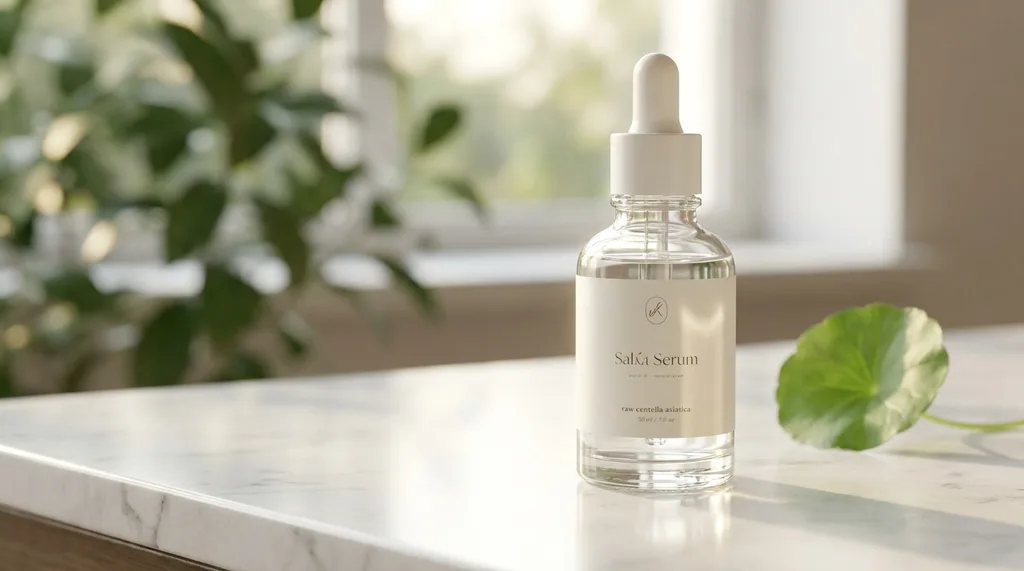
Walk into any Olive Young in Seoul at midnight, and you are surrounded by the frantic, hopeful energy of a beauty culture that views skin not as a surface, but as a project. There is a specific, quiet intensity to the way a shopper pauses before a shelf of toners, searching for the exact concentration of Centella Asiatica to soothe a temperamental barrier. For years, the global narrative around this obsession was simple: if you follow the steps, you achieve the glow. But as K-Beauty has moved from Seoul’s backstreets to the global stage, a friction has emerged. For those with melanin-rich skin, the "miracle" of K-Beauty hasn't always been universal. It has often been a mix of life-changing barrier repair and frustrating, systemic exclusion.
The truth is that the science of K-Beauty is profoundly, stubbornly skin-type agnostic. Its obsession with hydration, low-pH cleansing, and the fundamental integrity of the pibu jangbyeok (skin barrier) is not just a trend—it is a dermatological necessity for anyone, regardless of skin tone. When the skin barrier is compromised, the body triggers an inflammatory response. On lighter skin, this shows up as redness. On melanin-rich skin, that same inflammation almost inevitably triggers post-inflammatory hyperpigmentation (PIH). In this way, Korean skincare’s laser focus on non-stripping, calming ingredients is actually more surgically relevant to darker skin tones than the aggressive, alcohol-heavy "acne-fighting" protocols that have dominated Western dermatology for decades.
Yet, here is the crack in the foundation: while the skincare philosophy is universal, the cosmetic reality is anything but.
The Science of Suppression vs. The Science of Repair
When we talk about hyperpigmentation or gimi (melasma/dark spots), the K-Beauty industry often leans heavily on traditional botanical wisdom—what locals call Donguibogam—now backed by modern clinical validation. But there is a hidden danger in this pursuit. Walk into a clinic in Gangnam, and you might be offered a cocktail of lasers and potent actives. While these can be transformative, they carry a "tax" for those with high melanin content.
Aggressive surface-level peels or high-strength retinoids, if not calibrated correctly for melanin-rich skin, can lead to a rebound effect where the skin, sensing trauma, produces even more pigment. The most sophisticated, honest K-Beauty routines for diverse skin tones today are moving away from "whitening"—a dated term that prioritized bleaching—and toward the regulation of the melanocyte through ingredients like niacinamide.
[K-Beauty 101] 나이아신아마이드 (Niacinamide) — Vitamin B3. In Korean formulations, it is often paired with panthenol to ensure that while the pigment production is being regulated, the barrier remains soft and supple, preventing the irritation that leads to further darkening.
Where the Industry Must Pivot
The industry is currently in a state of rapid, sometimes painful, evolution. As the market value of K-Beauty pushes toward an estimated USD 275.6 billion by 2035, the "all-inclusive" R&D shift is no longer a corporate choice; it is a financial requirement.
However, we must be wary of the "inclusive" label. Currently, many brands are simply slapping the word "inclusive" on existing lines without altering their fundamental color testing. To genuinely serve a global audience, Korean R&D must move beyond the "East Asian baseline" for photographic testing and ingredient stability.
If you are navigating this space, your best defense is to look for the "functional cosmetic" certification from the Sik-yak-cheo (Ministry of Food and Drug Safety). This is not just a badge; it is a legal requirement that the ingredient concentration and efficacy claims have been verified. It is the most reliable tool you have for separating science-backed results from marketing noise.
Taking Control of Your Routine
You do not need to abandon the K-Beauty philosophy to accommodate your unique needs. You simply need to curate it.
- Prioritize the Barrier: If you have suboji (oily-dehydrated) skin, avoid the trap of "oil control" products that strip the face. Focus on multi-layered hydration—layering thin, watery essences—to keep the barrier plump.
- Patch Test Everything: This is non-negotiable. If you are experimenting with a new potent active like a high-concentration Vitamin C or a refined retinol, apply it behind the ear for 48 hours. If you feel even a hint of stinging, your skin is signaling an inflammatory threat that will eventually manifest as a dark spot.
- Ignore the "Whitening" Claims: Focus on terms like "Brightening," "Clarifying," or "Even Tone." In the Korean market, these labels usually point toward niacinamide or ferments, which are far safer for melanin-rich skin than traditional pigment inhibitors.
The goal of a perfect routine isn't to look like a filtered image from a K-Drama; it is to reach a state where your skin—in all its richness and complexity—is calm, hydrated, and resilient. That is the true, quiet promise of K-Beauty, and it is one that belongs to everyone who takes the time to listen to their own skin's needs.
⚠️ Medical & Financial Disclaimer: This article provides analysis for educational purposes and does not constitute medical advice. Skincare formulations, particularly active ingredients like retinoids or high-dose Vitamin C, can interact differently with melanin-rich skin; always conduct a patch test. If you are considering clinical procedures, consult with a board-certified dermatologist who has specific experience with diverse skin tones. Purchases made based on this analysis should be treated as consumer choices, not medical prescriptions.
✓ Researched and compiled using verified data as of the publication date.
 Operated by: Quiet Korea | Contact: rsl.2001.1975@gmail.com
Comments
Post a Comment