Inclusive Beauty
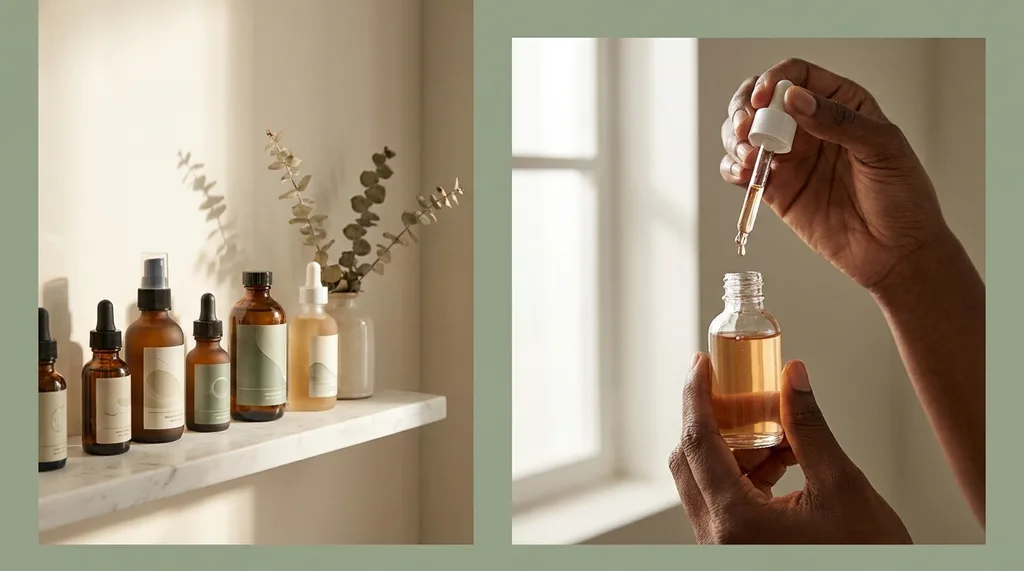
Walk into the dermatology district in Gangnam on any Tuesday afternoon and you'll notice something that never makes it into the K-Beauty YouTube videos: the consultation cards. Printed on thin cardstock and handed to patients before they see the doctor, these intake forms don't ask about your skin tone or ethnicity. They ask about your skin's behavior — how it responds to friction, to cold air, how quickly it bounces back after a breakout, whether it feels tight despite looking oily. Korean dermatology, at its clinical core, has always cared about what your skin does, not what it looks like.
That philosophy — behavioral, functional, barrier-first — is what makes K-Beauty's skincare science one of the most universally applicable systems in modern cosmetic history. And it's precisely what makes the industry's failure to include darker skin tones all the more strange, and all the more costly.
Here's what nobody in the K-Beauty space will say plainly: the routine Korean dermatologists built to protect pale skin from Seoul's bitter winter air may actually matter more — mechanically, measurably more — for melanin-rich skin than for the people it was originally designed to serve. The reason isn't cultural. It isn't marketing. It's biology.
The Skin Barrier Doesn't Discriminate
[K-Beauty 101] Pibu jangbyeok (skin barrier) — The lipid matrix that keeps moisture in and irritants out. In Korean skincare philosophy, this isn't a footnote — it's the entire foundation. Protect the barrier first, and almost everything else follows.
The South Korean government's Ministry of Food and Drug Safety (MFDS) created something unusual: a formal regulatory category called gi-neung-seong hwa-jang-pum — Functional Cosmetics. To earn this designation, a product must provide government-recognized clinical benefits in specific categories: UV protection, anti-aging, and — critically — hyperpigmentation reduction. Manufacturers either use pre-approved ingredients at standardized concentrations or submit full clinical dossiers before they're allowed to put that claim on a label. This is the cosmeceutical middle ground that sits between drugstore moisturizer and prescription medicine. No other major beauty market regulates this category with the same clinical rigor.
The practical result: Korean brands have spent decades developing and refining ingredients specifically validated for reducing uneven pigmentation, and doing so without disrupting the barrier in the process. That dual mandate — efficacy plus barrier preservation — is where everything gets interesting for melanin-rich skin.
The PIH Problem Nobody Priced In
When the skin barrier is compromised, even briefly, the skin triggers an inflammatory response. In all skin types, that inflammation fades and the barrier repairs. But in melanin-rich skin — Fitzpatrick types IV through VI — melanocytes are more abundant and more reactive. Inflammation sends a signal, and melanocytes respond by producing pigment, sometimes far beyond the original site of disruption. The dermatological term is post-inflammatory hyperpigmentation (PIH), and the darker the skin tone, the more severe and lasting that response tends to be.
This is why the Western dermatological playbook — high-strength acid peels, aggressive retinol introductions, foaming high-pH cleansers — has a documented history of backfiring on darker skin. The treatment causes the very condition it was meant to fix. A well-intentioned glycolic acid peel that a fair-skinned client walks away from with a glow can leave someone with deeper melanin staring at a darkened patch that won't fade for six months.
Korean skincare never went down that road. Not because the industry was thinking about skin-of-color inclusivity in the 1990s — it wasn't. But because Korean skin culture obsessed over any dark spot on any skin, and responded by building formulas that were effective without being aggressive. Low-pH cleansers that don't strip the acid mantle. Essence layers that flood the barrier with humectants before actives touch it. Niacinamide at concentrations that are clinically relevant — not the decorative 1% that appears on Western labels.
The 5-step core that Korean skincare has converged on in 2025 — cleanser, toner, serum, moisturizer, SPF — is not a trend or a marketing framework. It is a minimal viable barrier-protection protocol, and it works on skin regardless of melanin content. The Hwahae platform, where Korean consumers validate ingredient lists with the same energy they'd bring to a product's clinical dossier, surfaces this reality plainly: the top-performing formulas in hydration, barrier repair, and pigmentation categories consistently use ingredient combinations that benefit all skin types. The science was never exclusionary. The industry around it was.
Where the Industry Built a Wall
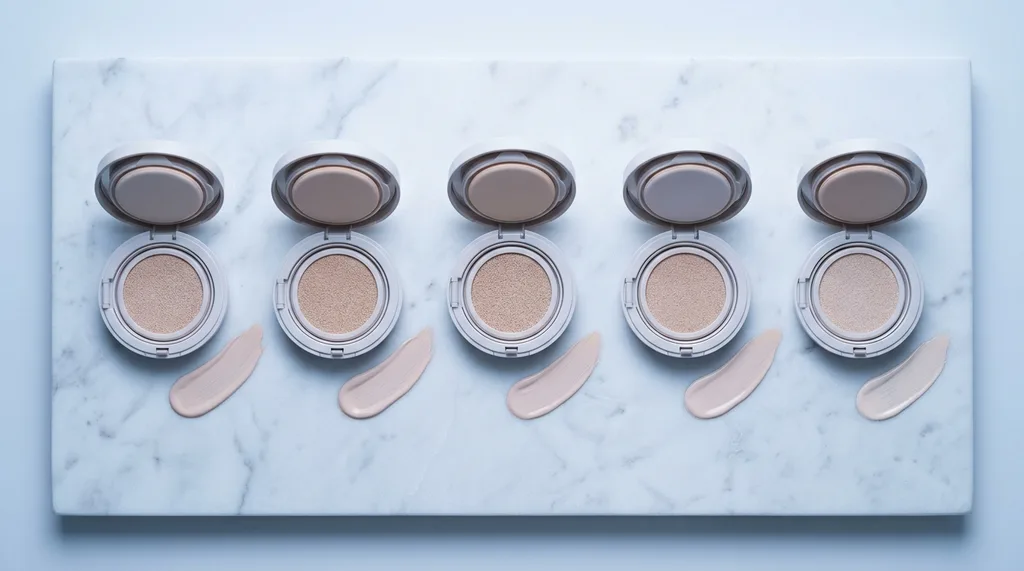
The clinical side of K-Beauty — functional cosmetics, barrier repair, validated actives — is largely skin-agnostic. The cosmetics side is a different animal entirely.
Korean beauty standards have, historically, centered on a specific ideal: pale, cool-toned, flawlessly even skin. That aesthetic preference shaped product development in ways that weren't consciously exclusionary so much as casually blind. Foundation shade ranges at most Korean brands still compress heavily toward lighter shades, with three or four options where global counterparts offer thirty. BB cushions — one of K-Beauty's most celebrated innovations — were engineered around a single undertone family. The photographic testing used to develop and market these products was conducted under bright white studio light, which makes products look very different on deeper complexions than they do in real life.
[K-Beauty 101] Suboji (combination-dehydrated skin) — Oily on the surface, parched underneath. This skin presentation is common across all skin types but is systematically misdiagnosed in melanin-rich skin — often labeled simply "oily" by Western practitioners, leading to stripping routines that damage the barrier and trigger PIH. Korean diagnostic frameworks tend to catch this more accurately.
The Whitening Paradox
There's a translation problem embedded in K-Beauty's most contested category. The Korean regulatory term mibaek — often rendered in English as "whitening" — legally refers to the reduction of melanin-produced dark spots and uneven tone. It does not refer to altering overall skin pigmentation. A mibaek serum has been clinically validated to fade post-acne marks and sun spots. Korean dermatologists recommend them broadly across all skin types, including darker ones, for exactly that reason.
But when that same product reaches international shelves labeled "whitening," the cultural baggage transforms the message entirely. For consumers outside East Asia, "whitening" carries a history of colorist harm — products that have genuinely been used to pursue lighter overall skin tone as a beauty ideal in South and Southeast Asia, often with dangerous ingredients. The mistrust is earned and historically grounded.
The irony is brutal: one of the most clinically rigorous hyperpigmentation-reduction categories in global cosmetics got lost in translation, and the people who could benefit most from it were the ones most likely to walk past it on the shelf.
What the industry got wrong, specifically, breaks down like this:
| K-Beauty Skincare Science | K-Beauty Color Cosmetics |
|---|---|
| Low-pH cleansing — works on all skin types | Foundation shade ranges concentrated in light-to-medium |
| Barrier repair philosophy — reduces PIH risk | Undertone assumptions default to cool/pink |
| Niacinamide at 5–10% — validated for hyperpigmentation | BB/CC cushions developed for a single undertone family |
| Layered hydration — skin-type agnostic | Photographic testing in bright white studio light |
| MFDS functional cosmetics framework — requires clinical proof | "Whitening" label lost in translation globally |
| Bakuchiol, PDRN, Azulene — gentle efficacy across skin types | Color-matching technology rarely tested on deeper tones |
The separation matters. Dismissing all of K-Beauty because the cosmetics failed darker skin is like refusing all Korean food because one dish had an ingredient you can't eat. The skincare science deserves a different verdict.
What's Actually Working Right Now
The 2025 K-Beauty market has started moving, however unevenly. The global expansion — a market that researchers now value at $16.26 billion with projections pointing toward $38.29 billion by 2033 — has created commercial pressure that pure aesthetics couldn't. North American K-Beauty sales grew nearly 10% year over year. That growth doesn't come from a single demographic, and brands paying attention to their customer data know it.
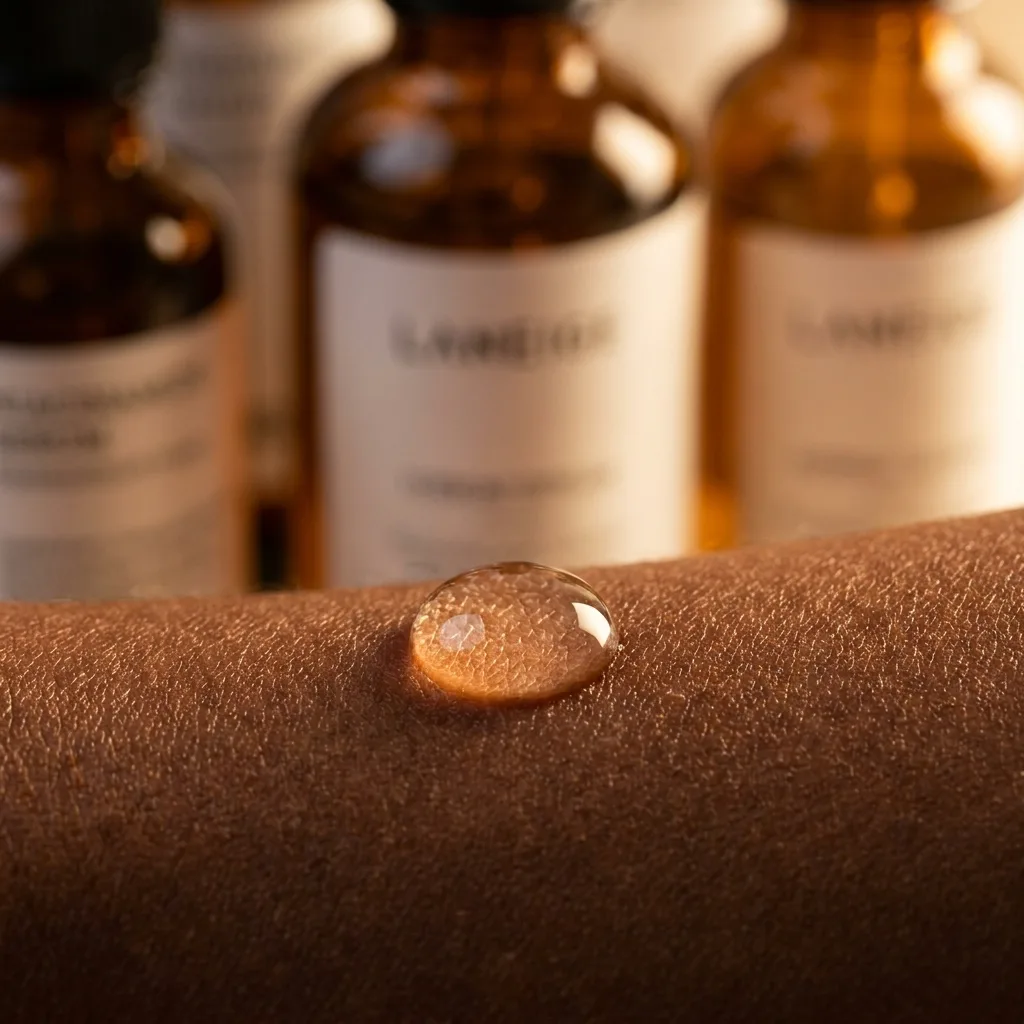
The ingredient conversation is where the honest progress lives. Niacinamide — known in Korean formulation as na-i-a-sin-a-ma-i-deu, vitamin B3 — has become the clearest bridge between K-Beauty's strengths and the specific needs of melanin-rich skin. Korean formulations deliver it at 5% to 10% concentrations, often paired with barrier-supporting ingredients that amplify its efficacy rather than competing with it. Clinical evidence for niacinamide's effects on hyperpigmentation is solid: it inhibits the transfer of melanin from melanocytes to keratinocytes, reduces sebum production, and reinforces the barrier simultaneously. It is one of the rare active ingredients that does useful things for every Fitzpatrick type without requiring different concentration thresholds.
Sun care is the other pillar. Brands like Beauty of Joseon, Round Lab, and Skin1004 hold top rankings on international retail platforms in 2025 precisely because their water-fit sun serums solved a texture problem that Western SPF formulations never bothered to address. Heavy, white-casting sunscreens have historically been a compliance disaster for darker skin — if the product leaves a visible grey cast, people don't reapply, and consistent SPF is arguably the single most effective PIH-prevention intervention available without a prescription. Korean-formulated sunscreens, developed under an SPF-obsessed culture that treats sun protection as skincare rather than a last step, largely sidestep the white cast problem. For melanin-rich skin, that functional improvement has real dermatological stakes.
The 속건성 (inner dryness) diagnosis — and why it changes everything for darker skin →
What's genuinely changing: the Hwahae validation model has a global version. Consumers with darker skin tones are building ingredient-literacy communities that operate with the same analytical rigor — scanning ingredient lists, comparing niacinamide concentrations, cross-referencing active percentages against clinical literature. The beauty of approaching K-Beauty through a science-first lens is that the science doesn't require you to accept the industry's historical aesthetic assumptions. You can take the barrier repair philosophy, the low-pH cleansing protocol, the niacinamide serum, and the Korean-formulated SPF — and leave behind the cushion foundation that doesn't match you, the toner marketed with imagery that never showed your face.
That selective adoption is not a compromise. It is the most intelligent way to engage with any beauty system.
The Moves Worth Making Right Now
The skincare science is on your side. Here's how to use it:
Start with the barrier. If your current routine uses a foaming cleanser, check its pH. Anything above 5.5 is disrupting your acid mantle. A low-pH cleanser — the category Korean beauty engineered with exceptional care — is the single highest-leverage swap available, and it's inexpensive.
Treat SPF as skincare, not afterthought. Water-fit Korean sunscreen formulations were engineered to be invisible. For melanin-rich skin, where consistent SPF application is a clinical PIH-prevention tool, this matters more than the marketing suggests. Find one that disappears on your skin and actually wear it daily.
Look for niacinamide above 5%. Korean formulations reliably deliver it at therapeutic concentrations. Below 2%, the anti-hyperpigmentation effect is decorative. At 5% and above, paired with a healthy barrier, it genuinely shifts tone over time.
Use Hwahae's ingredient analysis in English. The platform surfaces what's actually in a formula. For melanin-rich skin evaluating Korean products, ingredients that warrant close attention include alcohol denat (barrier-disrupting at high concentrations), high-dose ascorbic acid without adequate barrier preparation, and unverified "whitening" complex blends where the active isn't specified.
Skip the color cosmetics until Korean brands close the gap. A few brands are moving in the right direction — but slowly, and with uneven execution. The skincare is ready for your skin today. The foundations are still catching up.K-Beauty's skincare revolution was built on one refusal: the refusal to accept that effective skin treatment had to damage the skin in the process. That refusal turns out to be universally useful. The industry just forgot to say so.
Medical & Financial Disclaimer:
⚠️ Disclaimer: This article is for educational and informational purposes only and does not constitute medical or dermatological advice. Skincare responses vary significantly across individuals, skin types, and Fitzpatrick skin tones. If you experience irritation, worsening hyperpigmentation, or adverse reactions from any skincare product, discontinue use and consult a board-certified dermatologist. For concerns related to post-inflammatory hyperpigmentation or active skin conditions, seek evaluation from a licensed dermatologist experienced with melanin-rich skin before beginning any new active-ingredient regimen. Product prices, availability, and formulations are subject to change.
✓ Researched and compiled using verified data as of the publication date.
 Operated by: Quiet Korea | Contact: rsl.2001.1975@gmail.com
Comments
Post a Comment