[Dupe Finder] Inclusive Beauty
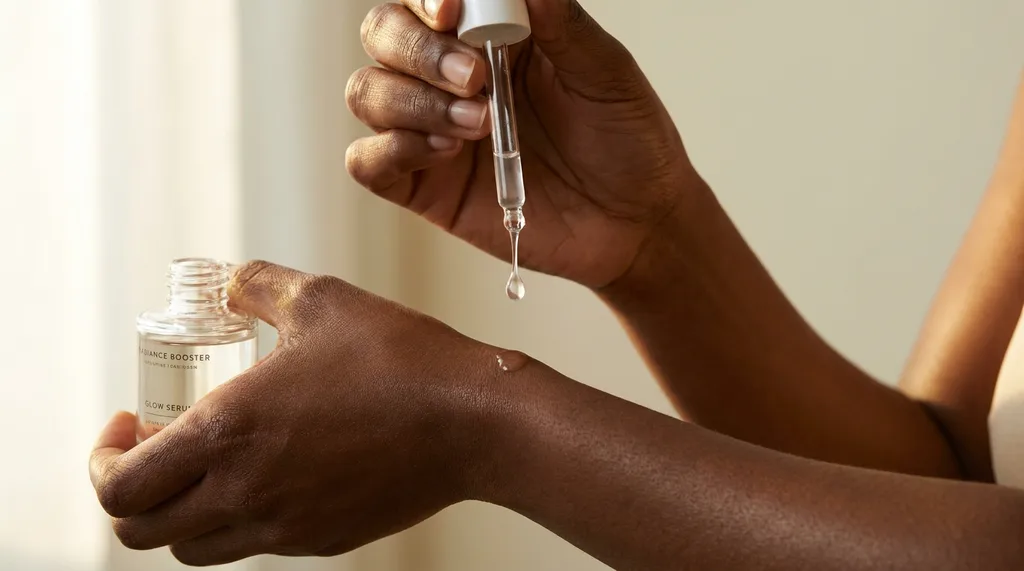
Here's what nobody in either camp will tell you: the K-Beauty philosophy that built glass skin on Korean women may actually be more scientifically relevant for melanin-rich skin than for the skin type it was originally built around — and the reason has nothing to do with the products themselves, and everything to do with what happens when your skin's defenses break down.
Walk into any Olive Young on a Tuesday afternoon and you'll see the assumption operating in real time. The shade range caps out at a range that reads "porcelain to light beige." The sunscreen display shows rows of milky-white formulas. The foundation display doesn't make it to the wall where your undertone lives. And yet — the serums, the cleansers, the barrier creams, the layered toner rituals — those are doing something genuinely powerful for every skin type on the planet. The cosmetics and the skincare are two completely different conversations, and almost no one has bothered to have them separately.
This guide does exactly that. It dissects what's worth your money, what isn't, and — using the same ingredient-science logic that Korean consumers use on Hwahae (the Korean ingredient analysis platform that functions like a forensic lab for beauty shoppers) — it shows you which accessible products deliver the same clinical function as the expensive ones, without the shade-range exclusion tax.
The Ingredient Autopsy: What's Actually Working in That Bottle
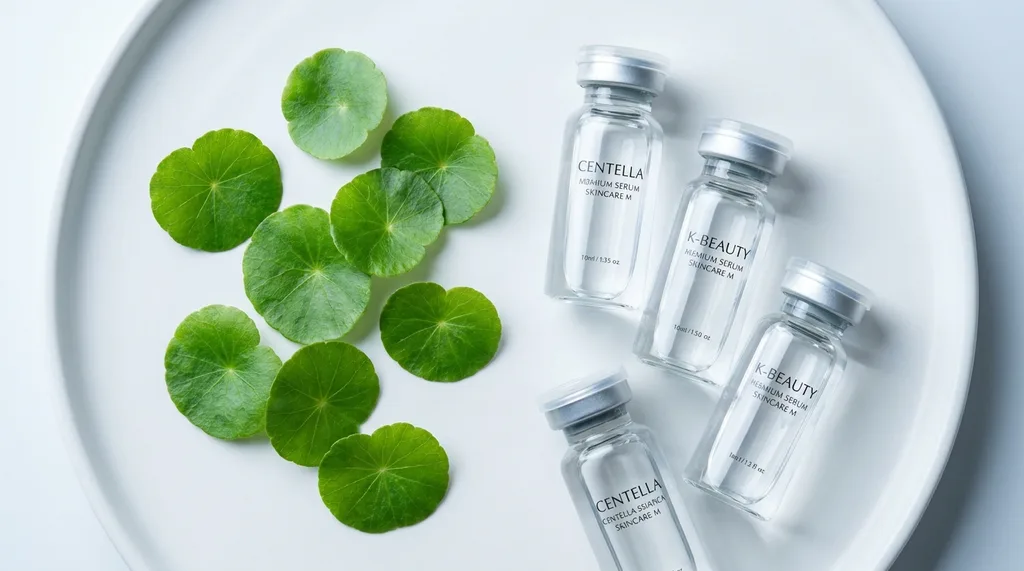
The South Korean Ministry of Food and Drug Safety operates a regulatory category called gi-neung-seong hwa-jang-pum — functional cosmetics. Unlike the loosely governed "cosmeceutical" claims you'll find on a Western drugstore shelf, Korean functional cosmetics must either use pre-approved actives at standardized concentrations, or submit a full clinical dossier before market authorization. This creates something rare: a consumer market where the skincare science isn't just marketing copy.
For melanin-rich skin, this matters enormously — because the concerns that K-Beauty's functional cosmetics were designed to address overlap almost perfectly with the concerns that deeper skin tones experience most acutely.
Start with the skin barrier. In Korean skincare philosophy, the pibu jangbyeok — the lipid layer that keeps moisture in and irritants out — is treated as sacred. Every routine decision radiates from the question: does this protect the barrier, or does it compromise it? This is not skincare aesthetics. This is clinical strategy. And here's where the science gets counterintuitive: melanin-rich skin experiences post-inflammatory hyperpigmentation (PIH) at significantly higher rates than lighter skin tones, and PIH is triggered primarily by barrier disruption. Inflammation cracks the barrier. The barrier breach signals melanocytes to overproduce. The result is the dark spot that lasts six times longer than the original blemish.
The K-Beauty barrier obsession didn't set out to solve PIH. But it did. Every low-pH cleanser, every ceramide-loaded moisturizer, every "skip-care" approach that strips unnecessary steps rather than stripping skin — these are PIH intervention strategies in disguise.
Then there's niacinamide. This is where the overlap becomes impossible to ignore.
[K-Beauty 101] Niacinamide — Vitamin B3, the backbone of K-Beauty's brightening philosophy. Clinically validated for melanin transfer inhibition, sebum regulation, and ceramide synthesis. Korean formulations frequently deliver it at 5–10% concentrations — often better-supported by barrier-compatible vehicles than Western alternatives at equivalent strength.
Korean formulators have spent decades optimizing niacinamide delivery systems. The concentrations are high. The pH compatibility with surrounding actives is carefully considered. And the efficacy for reducing hyperpigmentation — a concern that Korean consumers prioritize for their own skin — makes this one of the clearest ingredient overlaps between K-Beauty priorities and the specific needs of deeper skin tones.
The piece that does not transfer as cleanly? Cosmetics. Shade matching. Foundation undertones. And critically, sunscreen — where most Korean SPF formulas still rely on physical UV filters that scatter light and leave a visible white cast on deeper skin. That's not a formulation oversight. It was a testing condition decision: if you only photograph efficacy on one skin tone, the visible residue on others simply doesn't show up in your quality control data.
For a fuller map of how K-Beauty's skincare science works — and where the industry's assumptions break down by design — the breakdown at Inclusive Beauty is worth the read before you start building a cart.
The Honest Comparison: What Costs More vs. What Earns More
The K-Beauty dupe question for melanin-rich skin isn't usually "which cheap product looks like this expensive one." It's more specific: which affordable product delivers the same active ingredient, at the same concentration, in a vehicle that won't trigger PIH? That's a chemistry question. And chemistry doesn't care about the packaging.
Here's how the major functional categories stack up:
| Category | Luxury Tier Function | Accessible K-Beauty Alternative | Key Ingredient Match | The Real Difference |
|---|---|---|---|---|
| Barrier repair | High-dose centella + ceramide, $45–80+ | Skin1004, Round Lab cica lines | Centella Asiatica extract, madecassoside | Formulation elegance, not efficacy delta |
| Niacinamide brightening | 10% niacinamide serum, $40–65 | Anua, COSRX niacinamide serums | Vitamin B3, often 5–10% | Delivery system; both clinically relevant |
| Low-pH cleansing | Amino acid-based, $30–55 | Multiple accessible options across Olive Young tiers | pH 4.5–5.5, non-stripping surfactants | Almost none — the science commoditized fast |
| Sunscreen (darker skin) | Chemical UV filters, no white cast, $30–50 | Beauty of Joseon Relief Sun, Round Lab Birch Juice Sun | Tinosorb, Uvinul, chemical filter blends | This is where luxury tier actually earns the price gap |
| Targeted PIH treatment | PDRN-based regeneration serum, $60–120+ | Niacinamide-forward budget serums | Active concentration is the variable | For active PIH lesions, the investment often pays off |
The combination skin conundrum deserves a specific mention here. Korean dermatologists diagnose a condition they call suboji — combination-dehydrated skin that reads oily at the surface but is parched underneath. Western dermatologists frequently misread this on melanin-rich patients as simply "oily skin" and prescribe stripping routines. Those routines compromise the barrier. Barrier compromise triggers PIH. The skin gets worse. The patient gets more stripping products. It's a cycle that K-Beauty's diagnostic framework would have interrupted from the start.
[K-Beauty 101] Suboji (combination-dehydrated) — Skin that presents with surface oil but suffers from deep dehydration simultaneously. For melanin-rich skin, this pattern is common and frequently misdiagnosed, leading to routines that accelerate hyperpigmentation. Barrier-first K-Beauty protocol directly addresses this cycle.
The honest tension in this comparison is worth naming directly: K-Beauty's functional cosmetics tier (the skincare, not the makeup) was never exclusive by design. It was exclusive by assumption — tested on one demographic, photographed under one set of lighting conditions, sold in shade ranges calibrated for one market. The science underneath? Largely universal. The gap between what the science can do and what the marketing communicated is where this dupe guide lives.
The Verdict: Who Buys What, and Why
The K-Beauty dupe landscape for melanin-rich skin splits cleanly into three buyer profiles. This matters because the "right" accessible alternative depends entirely on what you're actually trying to fix.
If your primary concern is barrier repair and PIH prevention: The accessible K-Beauty tier is your best value on the planet, full stop. Centella Asiatica serums and moisturizers from brands like Skin1004 deliver clinically meaningful concentrations of madecassoside and asiaticoside — the compounds that signal skin repair — at price points that make consistent daily use realistic. Consistency matters more than concentration for barrier work. The luxury version may have better fragrance engineering. It does not have meaningfully better barrier outcomes.
If your primary concern is active hyperpigmentation: This is where the investment tier earns its premium. PDRN (salmon DNA-derived polynucleotides) for cellular regeneration and higher-concentration niacinamide in barrier-compatible vehicles do show dose-dependent efficacy. If you have active PIH lesions from recent breakouts or irritation, the accessible alternative is still better than doing nothing — but the luxury tier's formulation precision makes a genuine clinical difference on a shorter timeline.
If your primary concern is daily sun protection without white cast: Do not default to the budget tier without reading the INCI list first. This is the category where K-Beauty's accessible tier most frequently uses physical UV filters by default, precisely because the white-cast issue was never a priority in the domestic testing environment. Brands like Beauty of Joseon and Round Lab have released chemical-filter variants — but they require active identification. Search specifically for formulas listing Tinosorb or Uvinul actives. The right affordable SPF exists. You just have to know what to look for.
The most important thing the accessible K-Beauty tier does for melanin-rich skin is give you the frequency of use that skincare science actually requires. A $90 centella serum used three times a week when you can bring yourself to reach for it will always underperform a $22 centella serum used every single morning without hesitation. Consistency beats concentration. The science has always said this.
The beauty of this ingredient-science framework is that it scales. Once you understand what centella, niacinamide, and barrier-compatible pH are actually doing at the cellular level, every new product becomes readable. The marketing stops mattering. The INCI list tells you everything.---
Building the Complete Routine: Your Actual Starting Point
The K-Beauty routine for melanin-rich skin doesn't need ten steps. It needs four executed correctly, in this order:
1. Low-pH amino acid cleanser. pH 4.5–5.5 range. This is non-negotiable. A high-pH cleanser disrupts the acid mantle, which directly compromises the barrier, which directly risks PIH on any trigger. The accessible tier here is excellent and the luxury tier earns nothing extra.
2. Niacinamide serum. 5–10% concentration. Applied before heavier moisturizing layers. This is where the "hwa-jal-meok" principle applies — creating a skin surface that drinks up everything you layer on top. Search iHerb specifically for formulas with niacinamide listed in the first five INCI positions.
3. Centella-based moisturizer. This is your barrier investment. Every night. Every morning. The PIH prevention work happens here, daily, invisibly.
4. Chemical-filter SPF. Identified specifically by INCI, not by packaging promise. This is your single most important anti-hyperpigmentation product. A missed morning of SPF undoes more barrier work than almost any other single factor.
The five-step K-Beauty core — cleanse, tone, serum, moisturize, protect — was distilled from the original ten precisely because what was left was what actually worked. For melanin-rich skin, that distillation removed the steps most likely to cause problems and kept the ones with universal clinical relevance.
The science was always for you. The marketing just didn't know it yet.
Medical & Financial Disclaimer:
⚠️ Disclaimer: This article is for educational purposes only and does not constitute medical or dermatological advice. Individual skin responses to active ingredients like niacinamide, centella asiatica, and chemical UV filters vary. If you experience irritation, increased hyperpigmentation, or allergic reactions, discontinue use and consult a board-certified dermatologist — ideally one with demonstrated experience treating melanin-rich skin tones. Post-inflammatory hyperpigmentation is a medical concern that may require prescription-strength treatment beyond topical OTC skincare. Patch-test all new products on a small area before full application. Product availability, formulations, and prices change; verify current INCI lists before purchasing. Affiliate links in this article may generate commission for the publisher at no additional cost to you.
✓ Researched and compiled using verified data as of the publication date.
 Operated by: Quiet Korea | Contact: rsl.2001.1975@gmail.com
Comments
Post a Comment