Korean Heritage
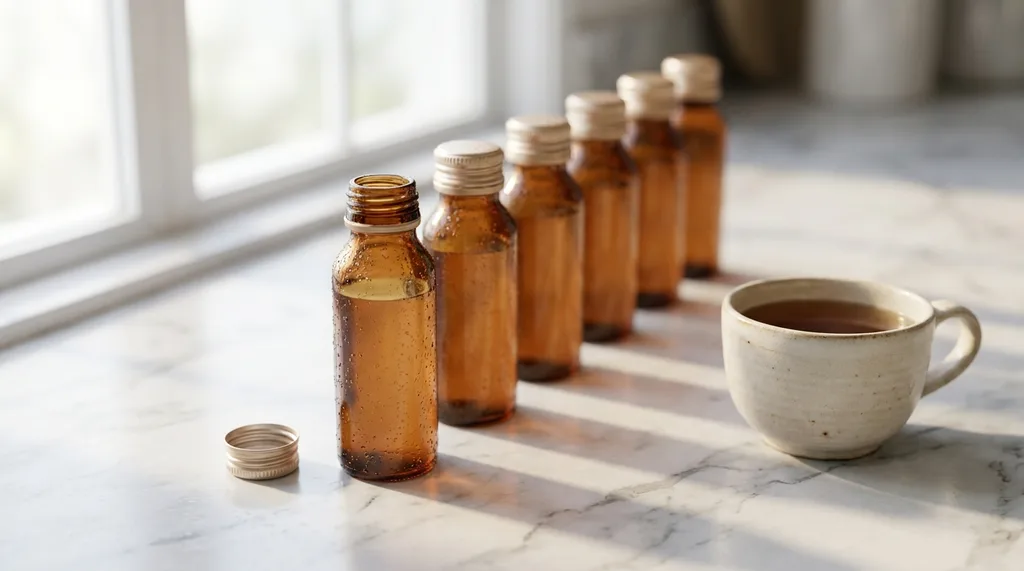
Walk into any Olive Young on a Tuesday morning and you'll find the same thing near the supplements aisle: women in their 30s, work bags still on their shoulders, turning over small amber bottles with the deliberateness of someone making a genuinely consequential decision. Not browsing. Deciding. The bottles are collagen drinks — some chilled, some stacked in neat promotional towers — and the women checking them are not doing so out of passing curiosity. This is infrastructure maintenance. This is what it looks like when a culture treats skin not as an aesthetic project but as a long-term biological investment.
Here's the thing nobody in the West's K-Beauty content stream ever quite explains: Korean women don't drink collagen to get better skin. They drink it to stop losing what they already have. That distinction — prevention versus rescue — is the entire philosophical gap between Korean inner beauty culture and everything else. And it is, quietly, why the collagen drink conversation in Korea is less about miracle transformations and more about doing the math.
The math is brutal and simple. After your mid-20s, your body's natural collagen production declines at roughly 1% per year. Not dramatically. Not visibly. Just steadily, year over year, the structural scaffolding beneath your skin gets incrementally thinner. By the time most people in the West notice the difference — the subtle loss of bounce, the slight deepening of expression lines — a decade's worth of decline has already happened. Korean inner beauty culture starts the counter-strategy around age 25 to 30, not 45. That head start isn't a secret product. It's a decade of compounding biology.
But here's what the market won't tell you, and what the clinical consensus is beginning to make impossible to ignore: not all collagen drinks are running the same race.
The 300 Dalton Problem (Or: Why Most of Your Collagen Drink Stayed in Your Gut)
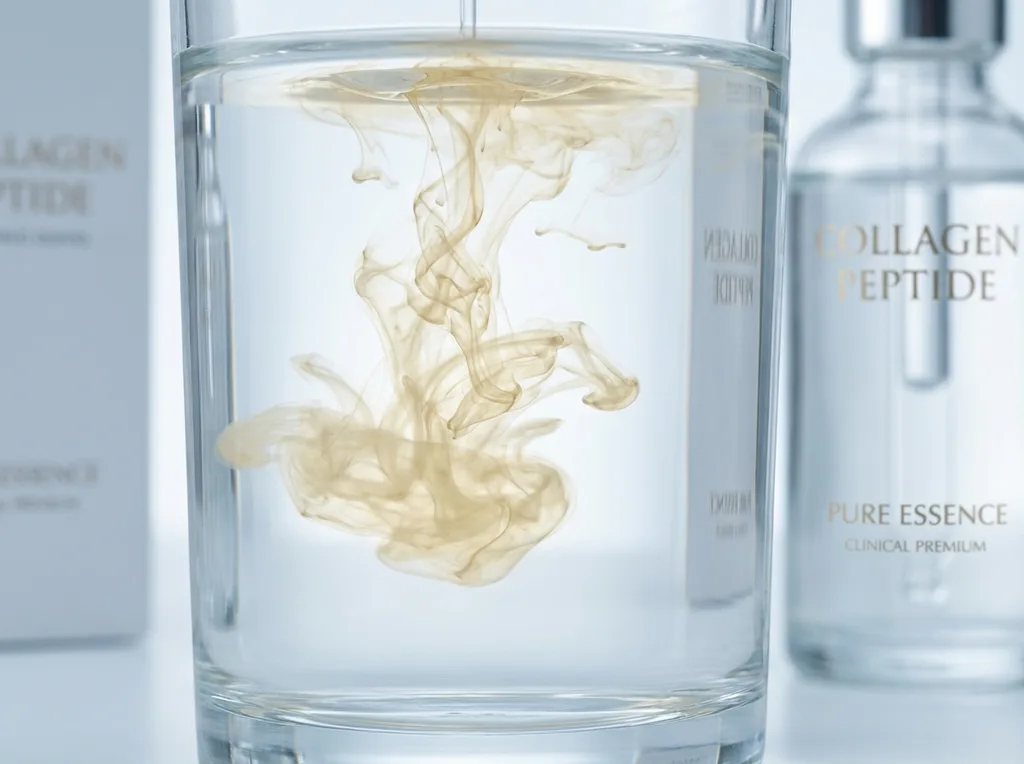
The word "collagen" on a label tells you almost nothing useful. What matters — what the more sophisticated corner of Korea's inner beauty market has understood for years — is molecular weight. Standard collagen molecules are enormous. Too enormous to cross the intestinal lining and enter systemic circulation. They don't reach your dermis. They reach your toilet.
The Korean preference, increasingly backed by consumer awareness and clinical discussion, is for low-molecular-weight collagen peptides — ideally fish-derived, broken down to roughly 300 Daltons or below. At that particle size, the peptides can actually be absorbed into the bloodstream, travel to the dermis, and do the work they're advertised for: stimulating fibroblasts, supporting skin density, and contributing to moisture retention. The difference between a 10,000-Dalton product and a 300-Dalton one isn't a marketing nuance. It's the difference between a supplement that works and one that is, functionally, an expensive way to hydrate.
This is why Korean women checking bottles in Olive Young are reading the fine print on molecular weight the same way someone else might check a nutritional label for sugar content. They've been taught to.
[K-Beauty 101] 이너뷰티 (Inner Beauty) — Ingestible beauty supplements including collagen, glutathione, and probiotics consumed to improve skin from within. More than a trend, this represents a cultural conviction that the skin's condition is ultimately the output of internal health, not the input of topical products.
And even at the right molecular weight, collagen doesn't work in isolation. This is where the synergy story becomes genuinely interesting — and where the cheapest options on the shelf quietly fail.
Clinical research on oral collagen supplementation consistently points to a formulation truth that solo-collagen products ignore: the body cannot synthesize collagen without Vitamin C as a cofactor. It's not optional biochemistry. Vitamin C is a literal requirement in the hydroxylation process that turns procollagen into usable structural collagen. A collagen drink with no Vitamin C is asking your body to build something while withholding one of the raw materials. Ceramides, included in more sophisticated formulations, support the skin barrier from within, preventing the transepidermal water loss that undermines everything else you're doing. Biotin rounds out the triangle for hair and nail co-benefits. The products that Korean consumers are increasingly gravitating toward — and the ones that brands like AmorePacific and CJ CheilJedang have invested in developing — are multi-ingredient systems, not single-hero shots.
The "slow-aging" positioning isn't just marketing language here. It reflects a genuine consumer philosophy: that the goal is to compress the morbidity curve of skin aging, not chase a reversal of damage that's already done.
The most honest version of what inner beauty collagen actually offers looks something like this:
| What It Can Do | What It Cannot Do |
|---|---|
| Support skin density and elasticity over 8–12 weeks of consistent use | Reverse years of sun damage or deep structural volume loss |
| Contribute to moisture retention alongside topical hydration | Replace professional procedures for immediate lifting |
| Slow the rate of collagen decline when started preventatively | Work meaningfully as a standalone supplement without Vitamin C |
| Improve nail and hair resilience with biotin co-formulation | Produce results visible in weeks rather than months |
This is not a pessimistic table. It is an honest one — and it's the reason women who understand the science are not disappointed by their collagen regimens. They knew what they were buying.
What Korean Consumers Know About Labels That Most Buyers Don't
There's a specific kind of skepticism that has developed in Korea's inner beauty community, and it is worth adopting wholesale. Consumers here have learned to read labels not just for what's in the product, but for what shouldn't be there. Liquid fructose, sucralose, acesulfame potassium — high-load sweeteners that make the drink taste pleasant and mask inferior formulations — are increasingly treated as disqualifying. The reasoning is clean: if you're supplementing for internal health, introducing significant artificial sweetener load may undermine the very metabolic environment you're trying to support. Cleaner formulations cost more. Predictably, the Korean market is moving toward them anyway.
[K-Beauty 101] 콜라겐 (Collagen) — The skin's primary structural protein, and the most commercially significant ingredient in Korea's inner beauty supplement category. Low-molecular-weight fish collagen peptides (around 300 Daltons) are considered the gold standard for systemic absorption, paired with Vitamin C for synthesis support.
There's also a nuanced reality around who benefits most — and the industry's enthusiasm occasionally papers over it. Oral collagen supplementation shows the clearest evidence of benefit in women over 30, where natural production decline has already begun. For younger users, the preventative logic holds philosophically, but the immediate biochemical need is lower. For anyone with specific kidney or metabolic conditions, high-protein supplementation should always be cleared with a physician first — something the convenience-store positioning of these products occasionally obscures.
The integration of oral collagen with professional dermatological procedures is where the most sophisticated Korean consumers are operating. The internal logic goes: clinic treatments like high-frequency lifting or laser procedures can provide immediate structural support, but the body's capacity to heal, maintain, and build on those results is downstream of internal nutrition. The procedure creates the opportunity. The supplement maintains the infrastructure. Neither, alone, is the whole answer.
The Real Secret Is the Calendar, Not the Cabinet
Korean inner beauty culture is not about the product. It is about the time horizon.
The collagen drink trend that the West has absorbed as aesthetic aspiration is, in Korea, a habit that sits alongside fermented foods for gut health, red ginseng for circulation and antioxidant support, and probiotic supplements that address the gut-skin axis. These aren't separate wellness categories that happen to coincide. They're facets of a single operating philosophy: that beautiful skin is what happens when the body's internal systems are working well, sustained over years, not treated in a cosmetic emergency.
What makes Korean inner beauty genuinely different from the global wellness market's version of it is the absence of drama. Nobody is doing a 30-day collagen challenge with before-and-after photographs. The logic of 1% annual decline doesn't lend itself to visible monthly transformations — and Korean consumers largely know this. They are playing a longer game, calibrated to the reality of how biology actually works.
The question worth sitting with, if you've spent money on skincare products that promised more than they delivered, is not whether collagen works. The research is clear enough on that under the right conditions — molecular weight, cofactors, consistency. The real question is whether you've been spending on the last step of a system while neglecting the first ones.
The women in that Olive Young aisle aren't just buying a drink. They're ten years into a decision they made before the problem was visible. That's not a product. That's a philosophy. And it's not available for purchase.
⚠️ Disclaimer: The information in this article is intended for general educational purposes and reflects publicly available research on oral collagen supplementation. It does not constitute medical advice. If you have underlying health conditions — including kidney disease, metabolic disorders, or food allergies — consult a qualified physician or registered dietitian before beginning any collagen or inner beauty supplement regimen. Individuals taking prescription medications should verify potential interactions with a healthcare provider. Results from collagen supplementation vary significantly based on formulation, dosage, individual biology, and consistency of use. This article does not recommend any specific product.
✓ Researched and compiled using verified data as of the publication date.
 Operated by: Quiet Korea | Contact: rsl.2001.1975@gmail.com
Comments
Post a Comment