The Drink Before the Serum: Korea's Inner Beauty Philosophy, Decoded
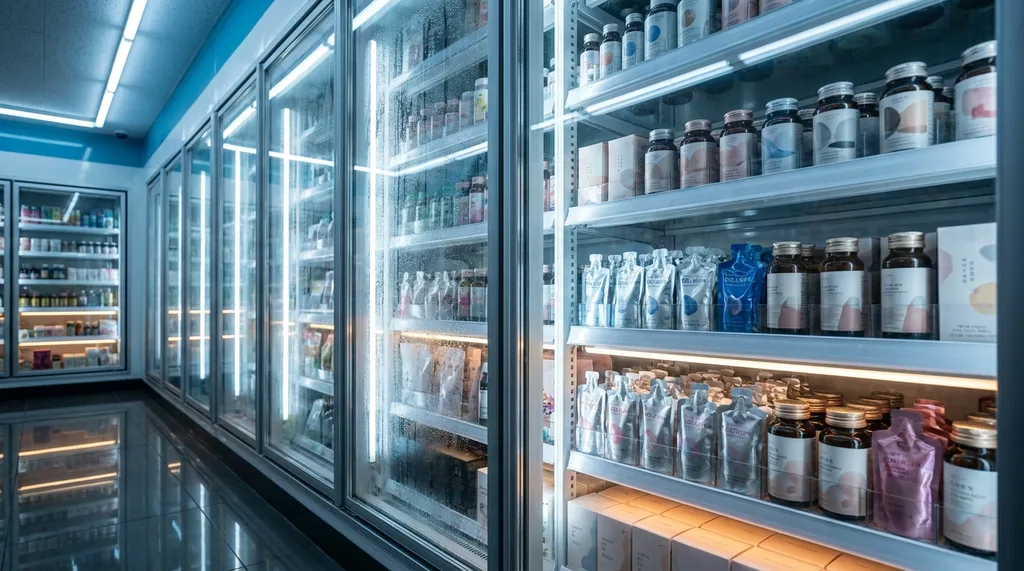
Picture this: it's 11pm in Myeongdong, the kind of hour when most beauty counters in the world have already dimmed their lights. But inside Olive Young, a young woman stands in the supplement aisle — not the skincare aisle — pulling small foil pouches off the shelf, reading the backs with the concentration of someone checking a prescription. Next to her, a woman in her mid-40s does the same, dropping three different collagen drinks into her basket without hesitation. She doesn't look at the toners. She came here specifically for these.
Nobody photographed this for Instagram. Nobody made a tutorial about it. And that, precisely, is the point.
Here's the question worth sitting with: why do so many Korean women in their late 30s and 40s have skin that genuinely defies what topical skincare alone can produce — and why, when you finally get one of them to explain her routine, does half of it involve things she swallows? The answer doesn't start with a serum. It starts with a philosophy that predates every K-Beauty trend by about two thousand years — and the products in that Olive Young aisle are just its most modern expression.
The Philosophy That Predates Every Serum You've Ever Bought
[K-Beauty 101] Hanbang (Han-bang) — Traditional Korean herbal medicine, the ancient root of Korean beauty's holistic philosophy. Where Western beauty has historically separated "health" from "beauty," hanbang never did. The skin, in this framework, is simply the body's most visible organ — and it reports faithfully on everything happening beneath the surface.
The Western beauty industry has spent decades training consumers to think about skin as a surface problem requiring surface solutions. Dull skin? More exfoliation. Dry skin? More moisturizer. Aging skin? More retinol. This is, in the most literal sense, a topical mindset — one that treats the face as a wall to be painted rather than a window to be read.
Korean beauty culture never fully bought this. Partly because of hanbang's long shadow — the idea that ginseng root, fermented herbs, and botanical tonics taken internally build the kind of constitution that glows outward — and partly because Korean dermatology has always sat closer to the internal medicine tradition than its Western counterparts. The distinction is almost philosophical in its implications. Products, in the Korean system, are the last step of a longer sequence. They refine what the body has already been building from within.
[K-Beauty 101] Inner Beauty (Ee-neo-byu-ti) — A comprehensive category of ingestible beauty products: collagen peptides, ceramide capsules, glutathione drinks, fermented probiotic shots. Not supplements in the Western sense of "taking vitamins when you remember" — but a deliberate, ritualized morning practice as foundational to the Korean routine as double cleansing. Walk past the refrigerated section of any Olive Young and you'll understand immediately: this is not an afterthought category.
The inner beauty market in Korea has grown with the kind of momentum that only happens when a cultural behavior — something people were already doing quietly — finally gets packaged and given a name. Major players like AmorePacific, CJ CheilJedang, and LG Chem aren't chasing a trend here; they're formalizing one. The global inner beauty market was projected to surpass $2 billion by 2025, with Korea's sophisticated consumer base among the most discerning drivers of that growth.
But the market size is the least interesting part of this story. What matters is why Korean women take this seriously — and what they actually know that most international consumers don't.
What the Dermatologists Actually Recommend (And Why It's Not What You Think)
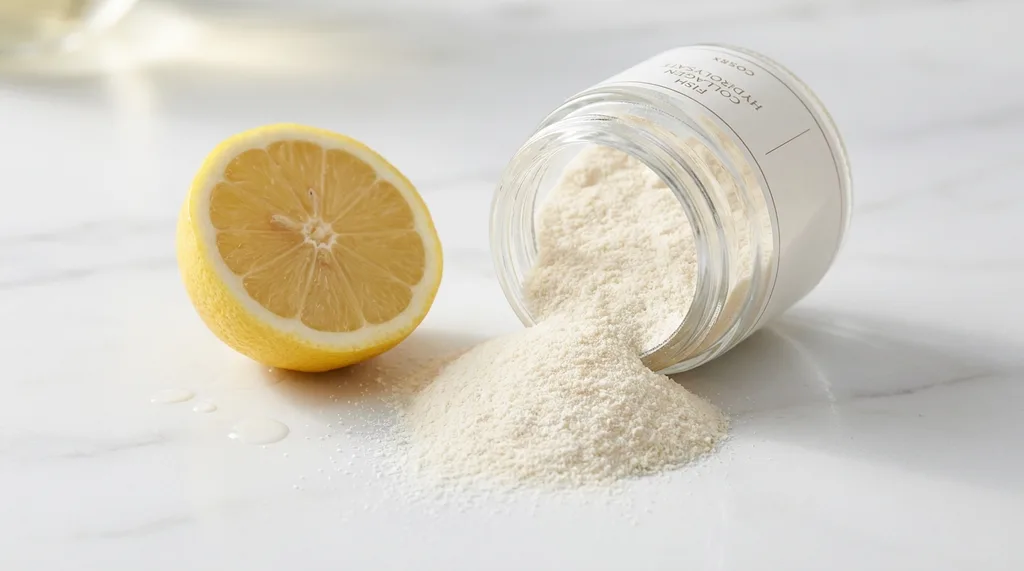
Walk into a Korean dermatology clinic post-procedure — after a laser session, a lifting treatment, a course of peels — and there's a reasonable chance the doctor or attending nurse will hand you a printed sheet alongside your topical aftercare. On it: recommended oral supplements. Not as a vague wellness suggestion. As part of the recovery protocol.
This is the detail that reframes everything. Korean dermatologists frequently recommend oral collagen peptides, ceramides, and Vitamin C not as optional lifestyle add-ons, but as structural support for what the procedure just initiated. The logic is clinical: professional treatments accelerate the skin's renewal processes, but those processes require raw materials. The oral supplements are the raw materials.
This synergistic thinking extends well beyond post-procedure contexts. The Korean clinical preference is for formulations that combine multiple actives with interdependent functions:
| Ingredient | Clinical Role | What to Look For | Honest Note |
|---|---|---|---|
| Collagen Peptides | Structural scaffolding, skin density & elasticity | Low molecular weight (~300 Dalton), fish-derived | Evidence for oral absorption improving skin metrics is accumulating — most convincing in the 2.5–10g/day range over 8–12 weeks |
| Ceramide | Barrier lipid replenishment, moisture retention | Plant-derived (wheat, konjac) or bovine sources | Solid supporting evidence; synergizes well with collagen |
| Vitamin C | Enables collagen synthesis; antioxidant protection | Ascorbic acid or sodium ascorbyl phosphate | Well-established; most collagen products include it because it's not optional |
| Biotin | Hair, nail, and skin cell metabolism | Part of complete B-complex for best effect | Good evidence for deficiency correction; benefit in non-deficient individuals is less clear |
| Glutathione | Antioxidant; skin tone evenness | Reduced form, ideally liposomal for absorption | High consumer demand; absorption from oral forms is an ongoing research area — don't let marketing overclaim |
| Hyaluronic Acid | Deep hydration; moisture-binding | Low-molecular-weight for better systemic uptake | Oral HA for skin hydration has some solid trial support, particularly for dry skin types |
The column you should spend the most time in is "Honest Note." Korean consumers are increasingly doing exactly that — scrutinizing clinical data before purchasing, tracking which claims have actual peer-reviewed support and which are running on marketing momentum alone. The shift toward evidence-based consumption is one of the defining characteristics of the current market.
The Slow-Aging Logic Korean Women in Their 20s Already Understand
Here's the counterintuitive part that takes Western readers the longest to accept: the women making the most sophisticated oral beauty choices in Korea are not, on average, women responding to visible aging. They're preventing it.
Collagen production begins declining at roughly 1% per year from around age 20. Not 40. Not 35. Twenty. Korean beauty culture — shaped by hanbang's long view of the body as something tended over decades, not rescued in a crisis — absorbed this fact early and acted on it accordingly. A 24-year-old in Seoul sipping a collagen drink over her morning rice is not being anxious about aging. She's being rational about biology, the same way she might take iron for energy rather than waiting until she collapses from anemia.
This is the "slow-aging" positioning that Korean inner beauty brands have leaned into — not as marketing language, but as an accurate description of the intent. The product is a maintenance deposit, not an emergency intervention. And the math is simple: starting preventative supplementation at 25 gives you a 15-year head start on starting at 40.
[K-Beauty 101] Collagen (Col-la-gen) — The skin's primary structural protein, responsible for firmness and resilience. In Korean convenience stores and pharmacies, collagen drinks, jellies, and powder sticks are daily staples rather than specialty items — a visible expression of a culture that treats structural skin maintenance as ongoing, not reactive.
The practical Korean routine, refined through years of community sharing on platforms like Hwahae (Korea's major beauty review app) and beauty forums, tends to look something like this:
For foundational skin maintenance (30s and under): - 1 collagen drink or sachet daily, typically with breakfast (food enhances absorption for most formulations) - Combined with Vitamin C, either in-formula or separately - Consistent daily use over minimum 8 weeks before assessing
For post-procedure recovery or intensive repair: - Higher-dose collagen with ceramide support - Glutathione for antioxidant protection during the healing window - Medical consultation recommended for timing relative to specific procedure types
For the anti-aging focused (40s+): - Collagen + ceramide + hyaluronic acid as a triad - Red ginseng (hong-sam) frequently integrated for circulation support and systemic antioxidant benefit - Probiotic (probiotics in Korean: yu-san-gyun) for gut-skin axis support — because Korean beauty culture has long understood that compromised digestion surfaces on the face before it surfaces anywhere else
The Korean community has also developed sharp instincts about what to avoid: products with liquid fructose, sucralose, or acesulfame potassium are increasingly sidestepped in favor of cleaner formulations. If the label reads like a confectionery ingredient list, experienced Korean consumers put it back on the shelf.
What's the single best place to access clinically benchmarked inner beauty supplements outside Korea, shipped to 180+ countries? That's where the infrastructure question gets practical.
The Risks Nobody Puts on the Front of the Pouch
This is the part every sponsored review skips. It matters.
Oral collagen supplementation is, for most healthy adults, well-tolerated. But "most healthy adults" carries significant caveats that the glossy pouch photography doesn't address.
Fish-derived collagen peptides — which dominate the Korean market due to their absorption profile — are a real allergy risk for anyone with fish or shellfish sensitivities. Marine collagen and shellfish-derived glucosamine often share processing facilities, and labeling standards vary internationally. If you have a seafood allergy, verify the source and processing chain before purchasing.
Vitamin C at high doses can cause gastrointestinal distress. The amounts in combination collagen drinks are typically well within safe limits, but if you're already supplementing Vitamin C separately, stacking can push into discomfort territory.
Glutathione supplementation, while popular for skin-tone evenness, has a more complex safety picture than its marketing suggests. High-dose glutathione use over extended periods — particularly intravenous forms sometimes used in clinic settings — has been associated with adverse effects in some populations. Oral forms at standard supplement doses are generally considered lower risk, but anyone with chronic health conditions should discuss this with a physician before starting.
The people who absolutely need a conversation with their doctor before adding any inner beauty supplement to their routine: pregnant or breastfeeding women (collagen sourcing and dosing in pregnancy is not well-established), anyone on blood thinners or immunosuppressants (several botanical additions common in hanbang-influenced formulas can interact), and anyone with kidney disease (high-protein supplementation warrants extra caution).
The Korean clinician's standard is, in fact, exactly this: know your baseline before you build on it. The supplement is only as intelligent as the person taking it.
The Bottle Is Not the Beginning
The woman in the Olive Young supplement aisle at 11pm knows something that most international K-Beauty enthusiasts spend years figuring out: the products on the skincare shelves are answers to questions the body asked earlier. What she's selecting — the collagen peptide drink, the ceramide capsule, the fermented probiotic shot — is the original question. The one you answer every morning, before you apply anything.
Korean skin culture built extraordinary skin not because it found better serums. It built extraordinary skin because it never fully separated beauty from health. The supplements aren't a trend layered on top of a skincare routine. They are the routine — or rather, they're the foundation it rests on.
The bottle is the last step of a system whose first steps started years ago. Buy the supplement if you want to. But buy it knowing that what you're actually purchasing is a philosophy: that the body you want to live in must be tended from the inside out, consistently, long before the consequences of neglect become visible on your face.
That's the answer to the question raised at the start. Korean women in their 40s look the way they do not because they found the right topical product at 42. They started a conversation with their body — through food, through fermented medicine, through oral supplementation — at 22. The skin is just the receipt.
⚠️ Medical & Financial Disclaimer: The information in this article is educational and reflects general patterns in Korean beauty and wellness culture. It does not constitute medical advice and is not a substitute for guidance from a licensed healthcare professional. Oral supplements including collagen peptides, glutathione, ceramides, and herbal formulations can interact with medications and may not be appropriate for all individuals, including those who are pregnant, breastfeeding, have allergies (particularly to fish or shellfish), or have underlying health conditions including kidney disease, autoimmune disorders, or cardiovascular conditions. Always consult your physician or a board-certified dermatologist before beginning any new supplement regimen, especially if you are currently taking prescription medications. Individual results vary and are not guaranteed. Pricing and product availability are subject to change; verify current details directly with retailers.
✓ Researched and compiled using verified data as of the publication date.
 Operated by: Quiet Korea | Contact: rsl.2001.1975@gmail.com
Comments
Post a Comment