The Glass Skin Protocol: What Korean Dermatologists Prescribe That Nobody Translates
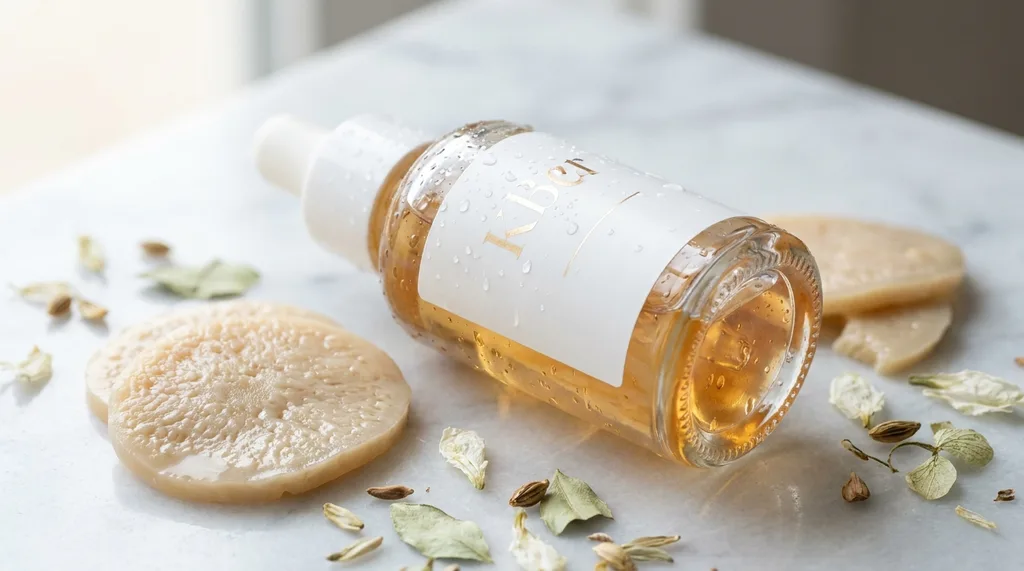
The global K-beauty market crossed $11 billion in 2025. Millions of people have purchased the toners, the essences, the niacinamide serums, the carefully curated ten-step routines — and a significant number of them are still standing at the mirror wondering why their skin doesn't look like anything they were promised.
That frustration is not a personal failure. It's a translation error.
What gets exported from Korea to the rest of the world is almost always the product. What doesn't get exported is the philosophy behind the product — the diagnostic mindset that Korean dermatologists apply before recommending a single ingredient. Understanding that gap is the difference between chasing glass skin aesthetically and actually building it biologically. And it turns out the biology points somewhere most beauty articles never go: inward.
What Seoul Clinics Diagnose Before They Recommend Anything
Walk into a Korean dermatology clinic — not a spa, not a department store counter, a clinic — and the consultation rarely opens with "what products are you using?" It opens with an assessment of the skin's current state: barrier integrity, hydration depth, sebum balance, sensitivity threshold. The approach is diagnostic-first, product-second.
This is the single most important thing that international K-beauty culture has failed to absorb. The ten-step routine was never meant to be a universal template. It was the output of a personalized assessment. When you copy the steps without running the diagnosis, you're reading the prescription without understanding the condition it was written for.
Korean beauty consumers — the ko-deok (cosmetic obsessives who memorize ingredient lists and post detailed feedback before a product has been on shelves a week) — have long understood this. Their collective intelligence drives the Korean beauty market because they treat every product launch like an experiment, not a revelation. They're asking "does the clinical data support this claim?" before they ask "does this smell nice?"
[K-Beauty 101] Pibu-gyeol (피부결) — Skin texture, or more precisely, the "grain" of the skin surface. In Korean beauty culture, refined pibu-gyeol isn't achieved through coverage — it's the visible evidence of healthy cell turnover and a functioning skin barrier. It's what glass skin actually is underneath the aesthetic label.
The diagnostic philosophy matters here because it changes what you optimize for. You stop asking "which essence gives me glass skin?" and start asking "what does my skin barrier need right now?" Those are entirely different questions, with entirely different answers.
The Biology Under the Glow — And the Hidden Culprit Nobody Warned You About
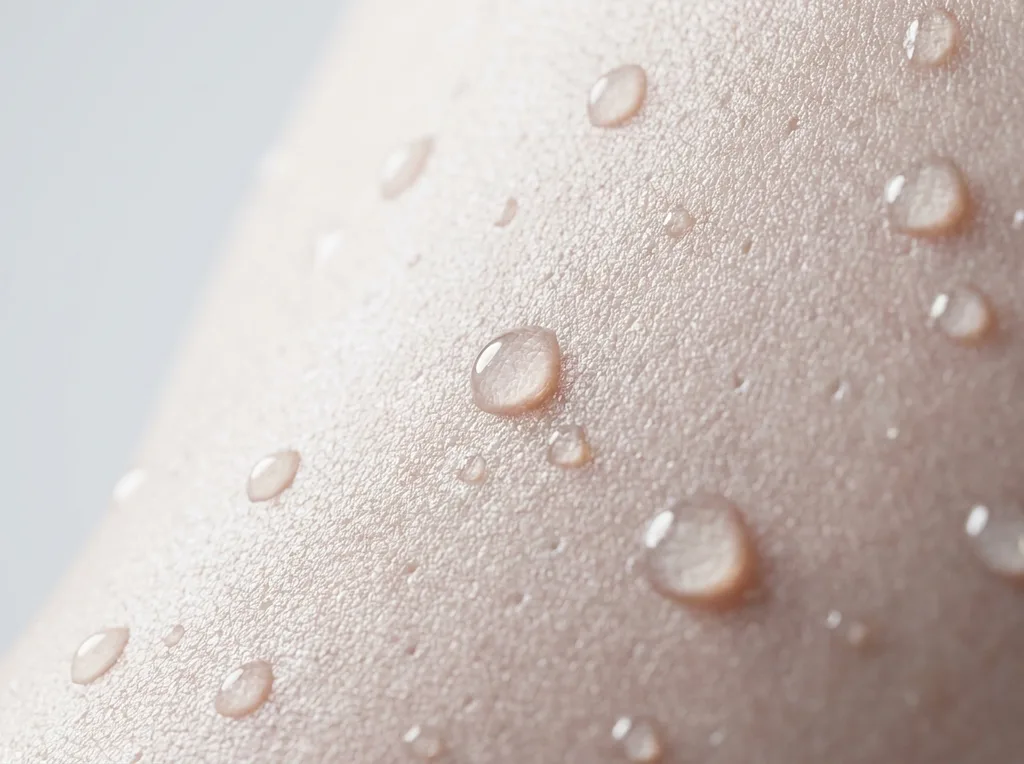
Glass skin, stripped of marketing language, is a visible sign of one specific outcome: a well-functioning epidermal barrier. It is not a product result. It's a biological state.
Here's what actually happens at the cellular level when glass skin appears. Ingredients like Galactomyces Ferment Filtrate — a byproduct of the sake fermentation process that Korean formulators have refined for decades — work by activating the aryl hydrocarbon receptor (AHR). That receptor activation triggers the upregulation of filaggrin, a structural protein that is literally the precursor to your skin's natural moisturizing factors. More filaggrin means tighter expression of barrier proteins called claudin-1 and claudin-4. The result is an epidermal wall that holds moisture in and keeps irritants out. The dewy, almost-translucent finish that defines glass skin is what the skin looks like when that system is working properly.
This is why surface-level moisturizers often disappoint. They don't reach the mechanisms that create the glow. They sit on top of a still-compromised barrier and provide temporary relief.
Then there's the issue that Korean dermatologists name with a precision that English lacks. Sok-geon-jo — inner dryness — is the condition where the skin reads as oily or normal on the surface while being genuinely parched underneath. Users experiencing this often apply more and more product, frustrated that nothing seems to absorb or to last. The skin feels tight an hour after moisturizing. Foundation sits oddly. The surface shines but the skin looks somehow dull rather than luminous.
Sok-geon-jo is solved not by more product volume but by restoring the skin's acid mantle — that slightly acidic pH environment (around 5.5) that keeps the barrier intact. Harsh cleansers that strip the skin to "squeaky clean" are, by Korean dermatological consensus, one of the primary villains. Every time you cleanse above a neutral or alkaline pH, you're disrupting the acid mantle and giving the barrier more to repair.
Now, the niacinamide question — because almost every glass skin article on the internet gets this wrong in one specific, quantifiable way.
Niacinamide (Vitamin B3) is a genuine workhorse ingredient. It supports the barrier, reduces inflammation, and pairs synergistically with hyaluronic acid to target the cellular aging mechanisms that degrade skin structure over time. But the concentration mythology has gotten out of hand. The clinically supported sweet spot is 2–5%. That range delivers barrier support and anti-inflammatory action with minimal risk. Beyond 10%, the research shows irritation increases without proportional clinical benefit. The product boasting "10% Niacinamide" on its label is not delivering twice the result. It's more likely delivering twice the risk of flushing or sensitivity, particularly on a compromised barrier.
The HA story is equally nuanced. High-molecular hyaluronic acid (above 1 MDa) does its best work at the surface — binding moisture, maintaining elasticity in the upper skin layers. Low-molecular hyaluronic acid (around 120 kDa) penetrates deeper, where it supports cell proliferation and dermal thickness. A routine that only uses one molecular weight is running at half capacity. Korean formulators have understood this for years. Most Western consumers are only just beginning to ask about it.
Why Topical Products Are Only Half the Answer
Here is where Korean dermatology parts ways most dramatically with global beauty media. The clinical consensus in Seoul — particularly among dermatologists who work with post-procedure skin recovery — increasingly points to a simple, uncomfortable truth: topical products cannot do the job alone.
The barrier's raw materials — ceramides, fatty acids, the proteins that form tight junctions, the collagen matrix underlying the epidermis — are synthesized internally. Topical application delivers some of these compounds to the skin surface and upper layers, but the skin's ability to generate and maintain its own architecture depends on inputs that arrive through the bloodstream, not the serum dropper.
This is not a fringe view. It is the reason Korean dermatologists frequently pair topical skincare recommendations with what they call inner beauty protocols — specific nutritional supplements targeted at the biological mechanisms that produce healthy skin from the inside out. Post-laser, post-procedure, and general anti-aging consultations in Korean clinics routinely include supplement guidance alongside topical routines.
[K-Beauty 101] Yak-san-seong (약산성) — Slightly acidic, or pH-balanced. In Korean skincare culture, this is the gold standard for any cleanser or toner: formulated to match the skin's natural pH of approximately 5.5. Using alkaline products disrupts the acid mantle, impairs barrier recovery, and — critically — reduces the absorption efficiency of every active ingredient that follows. Yak-san-seong products exist specifically to prevent this.
The gap between what the skin can build and what topical products can deliver is where supplements live. Understanding that gap is what separates the K-beauty practitioner who achieves results from the one who keeps buying new products in hope.
For readers serious about taking this further — the formulation science, the clinical dosing protocols, the ingredient combinations Korean clinics actually use — this is exactly the kind of deep-dive knowledge the Black Book was built to deliver.
The Inside-Out Protocol: Ingredients With Actual Clinical Weight
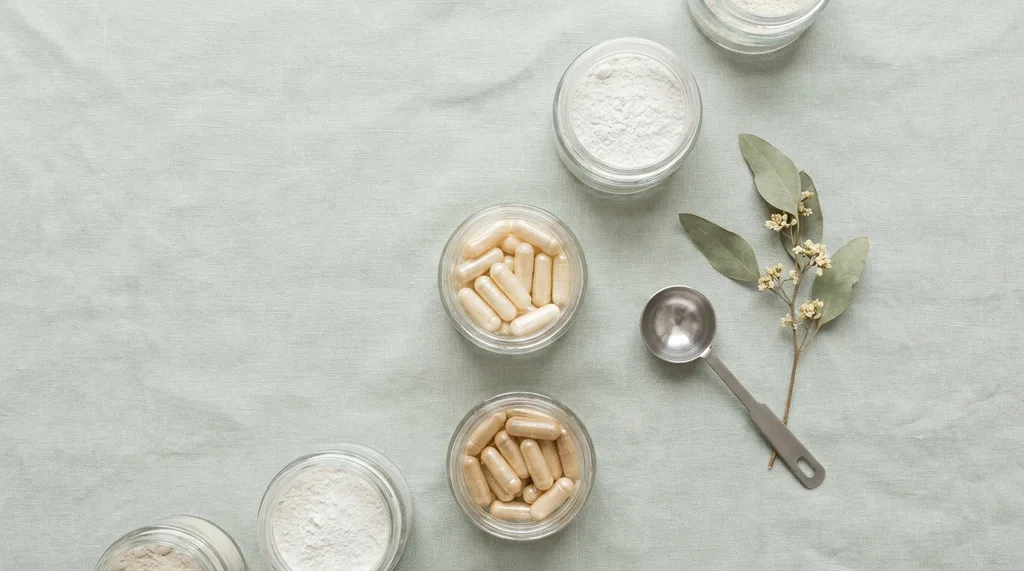
What does the Korean clinical approach to inner beauty actually recommend? The answer isn't a branded supplement stack. It's a set of ingredient categories, each with a defined biological role, a documented efficacy window, and a concentration range where the evidence is real versus where it's marketing.
The table below separates the categories with genuine clinical backing from those where the claims have outrun the science — because knowing the difference is exactly the kind of protection readers deserve.
| Ingredient | Clinical Role | Evidence Quality | Effective Daily Range | Timeline to Results |
|---|---|---|---|---|
| Collagen Peptides (Hydrolyzed) | Stimulates dermal collagen synthesis; improves skin elasticity and hydration | Strong — multiple RCTs | 2.5–10g | 8–12 weeks |
| Ceramide (Oral) | Replenishes skin lipid barrier from within; reduces transepidermal water loss | Moderate — growing evidence | 30–200mg (varies by form) | 4–8 weeks |
| Low-Molecular Hyaluronic Acid | Supports dermal hydration; improves skin moisture content systemically | Moderate — RCT evidence | 120–240mg | 4–8 weeks |
| Niacinamide (Oral) | Anti-inflammatory; supports NAD+ metabolism relevant to skin aging | Strong — well-documented | 500–2,000mg | Variable |
| Astaxanthin | Antioxidant; photoprotection support; reduces UV-induced aging markers | Moderate | 4–12mg | 8–16 weeks |
| Vitamin C (Ascorbic Acid) | Cofactor in collagen synthesis; antioxidant defense | Strong | 500–1,000mg | 8–12 weeks |
A note on honesty here: several categories popular in Korean inner beauty marketing — certain herbal blends, proprietary "skin glow" formulas — have marketing claims that significantly outrun the clinical evidence. The ingredients above have peer-reviewed research behind the mechanisms. The proprietary blends frequently do not. The research discrepancy isn't a minor footnote. It's the most important filter a consumer can apply.
The Korean routine for skin-focused supplement use typically follows a pattern worth noting: oral ceramides and HA are often taken with meals to maximize absorption; collagen peptides are commonly consumed in the morning, dissolved in water or a mild beverage; fat-soluble antioxidants like astaxanthin are paired with a fat-containing meal for the same reason. The timing isn't arbitrary — it reflects the absorption chemistry of each compound class.
The full mechanism: how oral collagen actually reaches the skin (it's not what most people assume) →
Finding These Globally — Without the Counterfeits
One practical reality that Korean beauty insiders raise repeatedly: the supplement market, unlike the cosmetics market, has a significant counterfeiting problem in many global distribution channels. Collagen peptide products especially — sold at aggressive price points through unverified third-party sellers — frequently fail independent purity and concentration tests.
This is why the purchasing channel matters as much as the ingredient choice. Korean consumers ordering internationally consistently cite iHerb as the most trusted platform for supplement authenticity, specifically because of its direct-sourcing model and the product transparency it requires from brands. For readers outside Korea navigating this from scratch, that authentication layer matters.
If you're purchasing for the first time, use code QAK3042 for a discount on your initial order. Not an incentive to buy something you don't need — an incentive to pay less for something you've already decided the science supports.
Before You Start: Who Should Wait, and Why
The clinical enthusiasm for inner beauty supplements in Korea comes with real caveats that responsible prescribers never skip.
High-dose niacinamide (above 1,000mg) can interact with certain medications, including anticoagulants and diabetes drugs. Collagen peptides sourced from marine or bovine sources are not appropriate for individuals with relevant allergies. Astaxanthin, while generally well-tolerated, has limited safety data for use during pregnancy. Anyone taking prescription medications for chronic conditions should consult a physician before beginning any supplement protocol — not because supplements are inherently dangerous, but because the interactions are real and vary by individual.
The symptoms that indicate a topical routine has gone wrong apply here too. If you introduce a new supplement and develop unusual skin reactions, gastrointestinal disruption, or any systemic changes, stop and seek professional guidance. The goal is building health. That requires listening to the signals your body sends.
Glass skin was never the goal. It was always the proof — proof that the barrier is healed, the inflammation has quieted, and the skin is finally receiving what it needed from both directions at once.
⚠️ Medical Disclaimer: This article is for educational purposes only and does not constitute medical advice. The supplement ingredients discussed have varying levels of clinical evidence; individual results depend on health status, genetics, and consistency of use. Before beginning any new supplement protocol — particularly at therapeutic doses — consult a licensed physician or dermatologist, especially if you are pregnant, breastfeeding, managing a chronic health condition, or taking prescription medications. Adverse reactions to any supplement should be addressed with a qualified healthcare provider.
Comments
Post a Comment