The Ingredient Autopsy: How to Dupe Korean Anti-Aging Like a Seoul Skintellectual
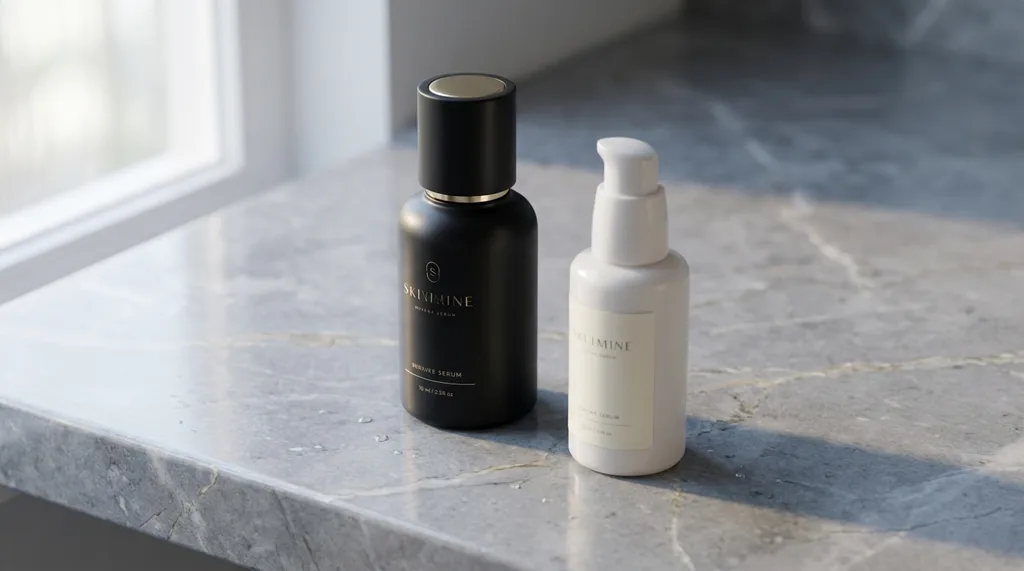
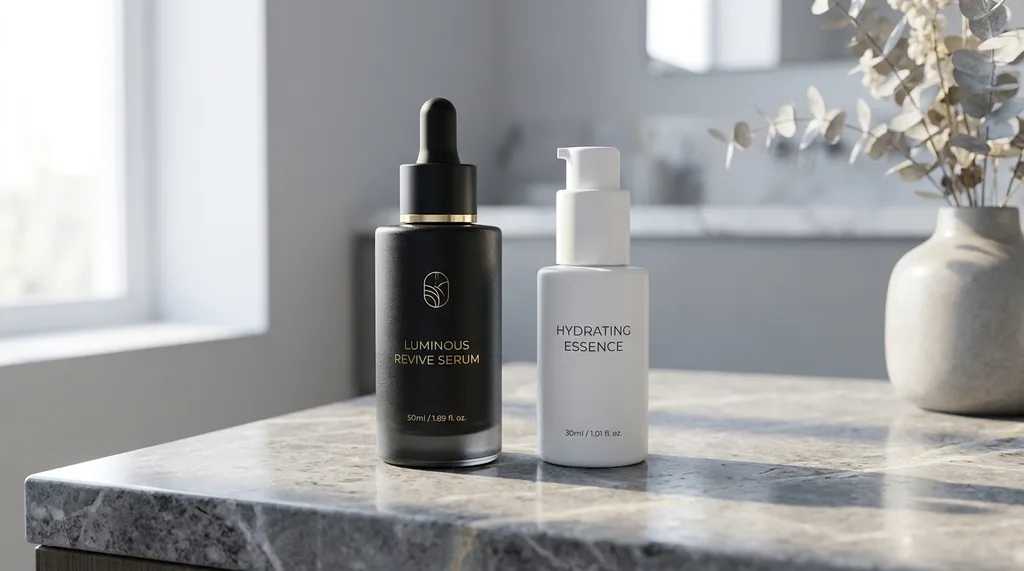
There's a conversation that happens in Korean drugstores that doesn't translate well into Western skincare culture. A woman in her late forties — unhurried, reading glasses on — picks up a $140 fermented ginseng serum from the department store bag she's carrying, then picks up a $22 Olive Young alternative, and holds them side by side. Not to compare the packaging. To compare the INCI list. She already knows what she's looking for. She puts the expensive one back in her bag, buys the $22 version, and leaves.
She isn't settling. She knows something the marketing materials will never tell you.
And that something — the structural truth underneath the entire Korean anti-aging market — is what this guide is actually about.
Why the MFDS Changed Everything (And Why Nobody Told You)
Most "dupe" content compares how things look. OMNIARK compares how things work. To do that for Korean anti-aging, you need to understand one regulatory fact that completely reframes the market.
Korea's Ministry of Food and Drug Safety (MFDS) enforces a category called 기능성화장품 (Gineunseong Hwajangpum) — Functional Cosmetics. Any product that claims to reduce wrinkles, brighten skin, or improve skin barrier function cannot simply say those things on the label. It must prove them. It must use specific, validated active ingredients — and those ingredients must be present at concentrations the MFDS has determined to be effective.
[K-Beauty 101] 기능성화장품 (Gineunseong Hwajangpum) — Functional Cosmetics. Korea's regulatory category for products claiming specific physiological benefits like wrinkle reduction or skin brightening. Unlike most global markets where "anti-aging" is pure marketing language, this classification requires clinical validation — and creates a system where the same approved actives appear across every price tier.
This is the fact that changes everything about how you shop for Korean anti-aging.
The wrinkle-reducing active the MFDS has approved? Adenosine. The brightening active? Niacinamide, among others. When a $140 luxury serum and a $22 drugstore serum both display the MFDS "wrinkle improvement" certification mark, they are — by regulatory necessity — both delivering Adenosine at a functionally validated concentration. The molecule doing the work is identical. The government made sure of it.
So what, exactly, are you paying for in the $140 version?
That's the question the Seoul woman in the drugstore already knows the answer to. Let's work through it properly.
How the MFDS approval system works in practice — for the truly curious →
The Ingredient Autopsy: What Actually Works in Korean Anti-Aging
Before you can find a dupe, you need to know what you're duplicating. Not the product — the mechanism.
Korean anti-aging operates on a fundamentally different philosophy than Western approaches. The goal isn't aggressive cellular turnover (the Western model, built around retinoids and acids). It's what locals call 슬로우 에이징 (Slow-aging) — maintaining the structural integrity of the skin over decades by keeping the barrier intact and hydration deep.
The two actives that anchor this philosophy at every price point:
Adenosine is the MFDS-approved anti-wrinkle workhorse. It supports collagen synthesis and improves skin elasticity — what Korean women in their forties call 탄력 (tallyeok), the skin quality they prioritize above almost everything else. Research supports its role in cellular energy processes that underpin skin repair. It's stable, well-tolerated, and present in products from $12 to $180.
Niacinamide is the brightening and barrier co-anchor. It's among the most extensively studied skincare actives in the world — improving uneven tone, strengthening the skin barrier, and addressing the condition Koreans call 속건성 (sok-geon-seong): that frustrating inner dryness where the skin surface looks fine but feels parched underneath. At concentrations between 2% and 5%, the clinical evidence is strong. Above 10%, you're in diminishing-returns territory with potential for irritation.
These two form the functional core of the vast majority of Korean anti-aging formulations. The luxury tier adds layers — fermented botanicals, PDRN (Polydeoxyribonucleotide, a DNA-repair-supporting ingredient now appearing in topical formulations), and proprietary delivery systems designed to get actives past the skin barrier without disrupting it. Whether those layers are worth the price gap depends on your skin, your budget, and — honestly — what kind of experience you want from your routine.
For a deeper foundation on how Korean anti-aging philosophy differs from Western approaches at every age, read: The Invisible System: What Korean Women Over 40 Actually Do
The Honest Comparison: Three Tiers, One Standard
Here's where most dupe guides go wrong — they treat "affordable alternative" as a euphemism for "inferior." The Gineunseong Hwajangpum framework makes that framing false. The honest comparison is about what you additionally get at each tier, not whether the core function changes.
| What you're comparing | Budget ($10–$30) | Mid-Range ($35–75) | Luxury ($80–200+) |
|---|---|---|---|
| MFDS anti-wrinkle certification | ✅ Yes | ✅ Yes | ✅ Yes |
| Core active (Adenosine) | ✅ Present | ✅ Present | ✅ Present |
| Fermented supporting actives | ○ Minimal | ✅ Often yes | ✅ Extensive |
| Advanced delivery system | ○ Basic | ○ Partial | ✅ Proprietary |
| Next-gen actives (PDRN, Exosomes) | ❌ Rare | ○ Emerging | ✅ Positioned here |
| Texture / sensory experience | Functional | Pleasant | Engineered |
| Elasticity (탄력) focus | Moderate | Strong | Primary emphasis |
The Verdict: Which Tier Actually Belongs in Your Routine
This is where most dupe guides give you a winner and move on. That's not how this works.
The honest answer is: all three tiers have a legitimate place, and the mistake is buying the wrong tier for the wrong reason.
If your skin barrier is currently compromised — sensitized, reactive, post-procedure, or just coming off an over-exfoliation phase — the budget drugstore tier is the correct medical choice, not a budget compromise. A simple Adenosine serum over a ceramide-rich moisturizer is exactly what Korean dermatologists recommend. You don't need fermented ginseng extract and nano-encapsulated peptides when your barrier is already in repair mode. The Gineunseong Hwajangpum certification means the core function is covered.
If your skin is stable and you want to address elasticity (탄력) as your primary concern, the mid-range tier often represents the genuine sweet spot. The addition of fermented botanical actives — ingredients like fermented red ginseng extract, traditionally used in 한방 (hanbang) medicine for adaptogenic properties — does provide antioxidant and supporting anti-aging benefit beyond what Adenosine alone delivers. You're not paying for nothing. You're paying for something real, just not necessarily something only the luxury tier can deliver.
The luxury tier earns its price in specific circumstances. If the formulation includes PDRN (Polydeoxyribonucleotide — a polynucleotide fraction supporting cellular regeneration and collagen signaling) or Exosome-derived actives alongside a clinically validated delivery system, you're working with ingredients that genuinely sit beyond what MFDS certification alone guarantees. These are the frontier of the K-Beauty medicosmetic space. They're not marketing language. They're also not necessary for everyone. If you're in your late 40s with established skin infrastructure and want to address deeper collagen loss, the luxury tier starts to justify itself scientifically. If you're earlier in your anti-aging journey, it's an expensive way to get what a $28 Adenosine serum already provides.
[K-Beauty 101] 탄력 (tallyeok) — Skin elasticity. The quality Korean women in their 40s and 50s cite most frequently as their primary concern — and the target that Korean anti-aging, both topical and clinical, optimizes for. This is why Korean anti-aging results look different from Western results: when you aim at elasticity from the foundation up, the face ages with structural integrity rather than just chasing individual lines.
When to choose the original over the dupe: If the luxury serum you're considering includes fermentation technology that has published clinical data (not just marketing materials citing "centuries of tradition"), or if it contains PDRN or growth-factor actives at concentrations above trace levels, or if the texture and ritual of the experience meaningfully affects your consistency — consistency being the variable that matters most in any anti-aging routine — then the price gap may be worth it. If none of those criteria apply, you're paying for packaging and a department store atmosphere.
The Seoul woman reading the INCI lists knows this. She doesn't reject luxury categorically. She asks whether the delta is worth it for her, right now. Sometimes it is. Often it isn't.
Building the Full Routine Around Your Core Actives
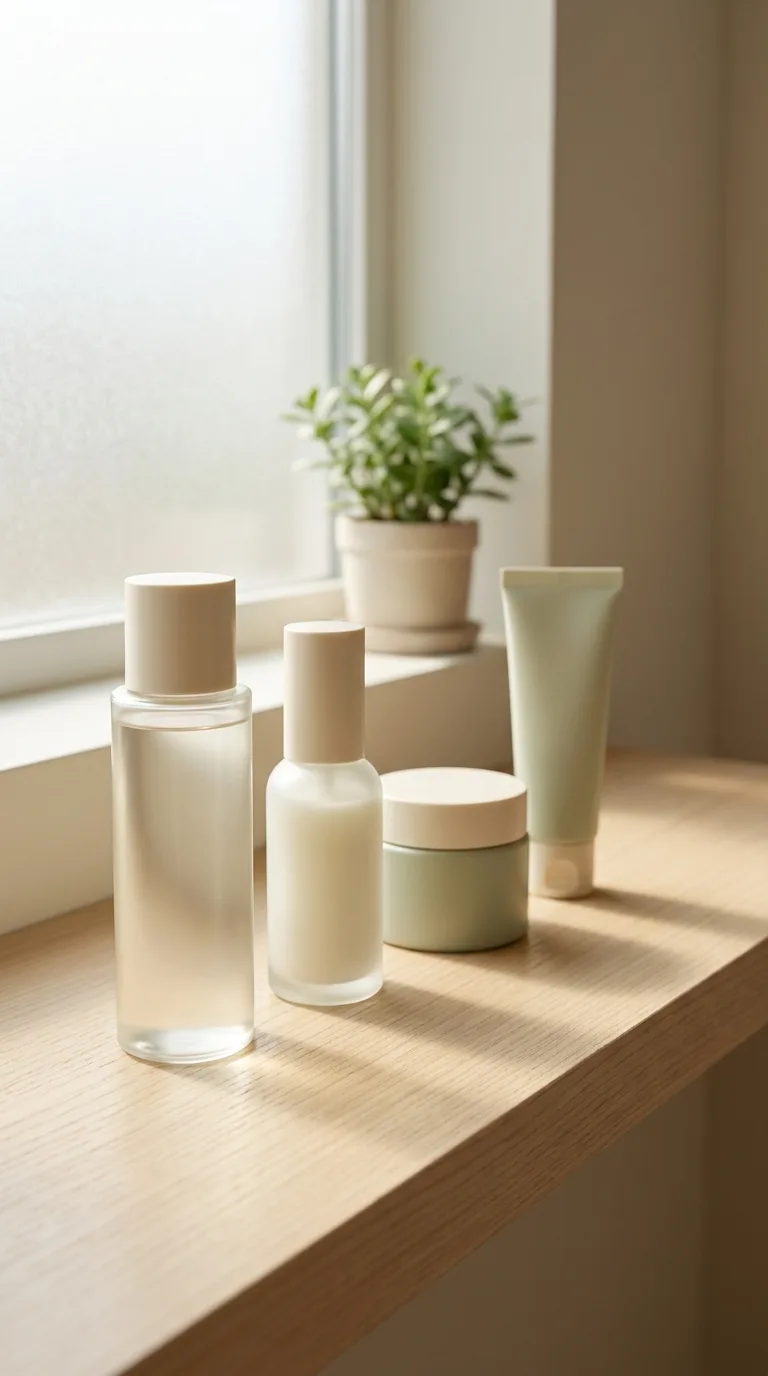
The dupe question doesn't end at the serum. The Slow-aging philosophy — Korean anti-aging at its most honest — is about the system, not the product. Here's how to build a complete routine using the same logic:
Morning: A pH-balanced cleanser (critical — it preserves the skin's acid mantle, the first line of barrier defense), followed by your MFDS-certified anti-aging serum, then a moisturizer that addresses sok-geon-seong (inner dryness) with ceramides or hyaluronic acid, and sunscreen. Every Korean dermatologist will tell you that SPF is the only genuine anti-aging product backed by the broadest evidence base. Without it, everything else is maintenance without protection.
Evening: Cleanse, apply your serum, address specific concerns (Retinol alternated carefully if you use it, barrier repair actives if you don't), seal with a moisturizer focused on night-time repair.
The skip-care principle applies: this does not require ten steps. It requires the right four or five. Quality of active, not quantity of bottles, is the variable that moves the needle.---
The most expensive thing in anti-aging isn't the product. It's the decade you spend buying the wrong one.
⚠️ Medical & Financial Disclaimer: This article discusses skincare ingredients and formulation tiers for educational purposes only. It is not a substitute for professional dermatological advice. Ingredients like Retinol, PDRN, and high-concentration Niacinamide can cause adverse reactions in sensitive, compromised, or post-procedure skin — patch-test any new active and consult a board-certified dermatologist before incorporating them, particularly if you have a history of sensitivity, hyperpigmentation, rosacea, or are managing a hormonal skin transition. Price comparisons and market figures reflect publicly reported data and are subject to change. The article does not constitute endorsement of any specific product or brand.
Comments
Post a Comment