📋 Table of Contents
- What Happens After the Consultation (Nobody Talks About This Part)
- The Science Behind the Label: What Actually Has Clinical Evidence
- The Korean Inner Beauty Routine: How It Actually Works
- Finding the Real Thing: Global Access Without the Guesswork
- Explore Korean Inner Beauty Supplements
- Before You Order: What Korean Dermatologists Say First
The Ingredient Gap: What Korean Skin Science Looks Like From the Inside
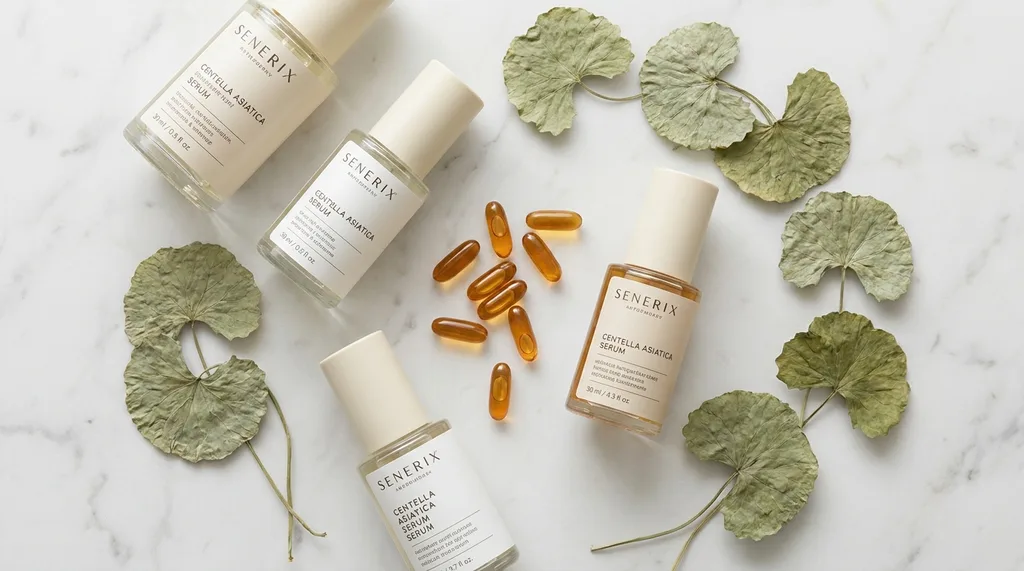
Here's a question that haunts every global K-Beauty enthusiast who's spent real money on this industry: why are the most knowledgeable Korean skincare consumers — the ones who've memorized ingredient INCI lists, who have Hwahae downloaded and bookmarked, who spend their weekends reading the latest cosmetic dermatology abstracts — why are these people increasingly reaching for the $12 bottle instead of the $120 one?
The answer isn't frugality. And it isn't the answer you're expecting.
What the data actually reveals about the Korean skincare market is a quiet revolution — one that rewrites the entire premise of "affordable vs. luxury" and points toward a dimension of skin care that most Western beauty media has barely touched. But to understand it, you first have to follow Korean dermatologists to where they've been quietly directing their patients for years.
What Happens After the Consultation (Nobody Talks About This Part)
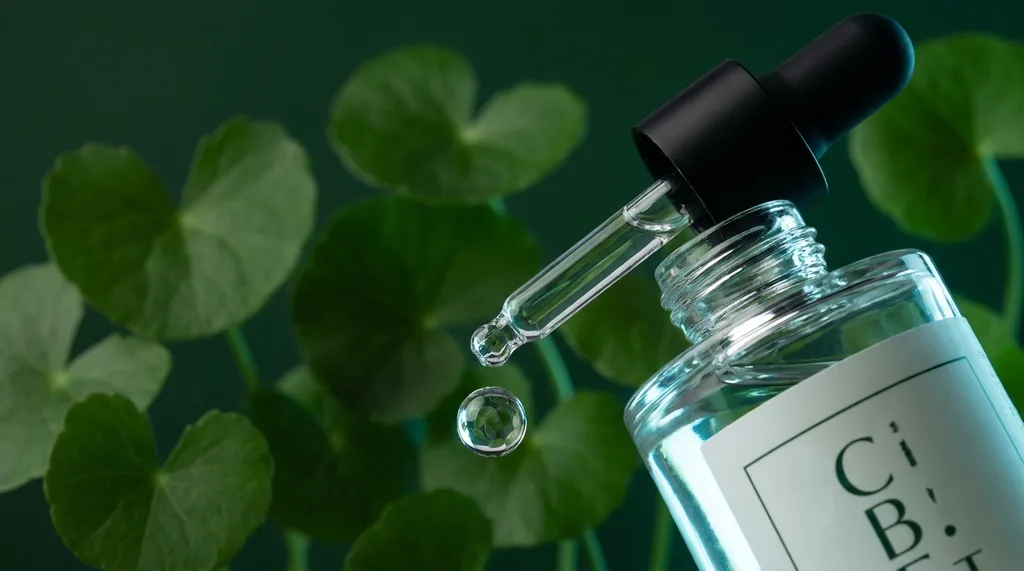
Walk into a cosmetic dermatology clinic in Seoul and you'll notice something most international visitors miss entirely. Alongside the prescription topicals and the procedure aftercare instructions, a significant number of patients leave with a secondary list — not of skincare products, but of supplements. Korean dermatologists have long operated on a principle that sounds almost obvious once stated: skin is an organ, and organs don't respond only to what you put on their surface.
This "inside-out" approach — what Korean beauty culture calls 이너뷰티 (inner beauty) — is not a wellness industry marketing term in Korea. It's clinical protocol. The dermatological community there has spent years building an evidence base for the idea that certain nutritional inputs, taken at specific doses and durations, create measurable changes in skin structure that topical products simply cannot replicate. Not because the topicals are inferior — but because they operate on a fundamentally different layer of the biology.
Here's where the affordable vs. luxury debate gets genuinely interesting. As the global K-Beauty market crossed $11 billion in 2025 on its trajectory toward what analysts project could reach $43 billion by 2035, the structural shift wasn't toward higher-priced luxury products. Consumer brand loyalty dropped by 20% in just two years. The segments gaining ground were mass and masstige — not because consumers were cutting budgets, but because they'd developed the analytical tools to see through the price-to-efficacy gap.
Platforms like Hwahae (화해 in Korean, meaning "reconciliation") became ingredient forensic labs in the hands of everyday shoppers. When a data-literate consumer can compare a $90 serum and a $15 one side-by-side at the ingredient level, the conversation about "luxury" changes completely.
[K-Beauty 101] Hwahae (화해) — Korea's leading mobile beauty platform, known for ingredient-by-ingredient safety analysis and user-generated reviews. A product marked "Only Hwahae" functions almost like a quality certification in Korean consumer culture.
But here's what the apps can't show you — and what Korean dermatologists have been acting on quietly. Some of the most significant skin improvements their patients report aren't coming from any bottle on a shelf.
🎵 K-Mono Lofi — Seoul Study Beats
Read deeper with Seoul lo-fi in the background — curated by K-Mono Lofi
The Science Behind the Label: What Actually Has Clinical Evidence
Before going further, it's worth applying the kind of rigorous fact-checking — the 팩트체크 that ko-deok (코덕, Korea's self-appointed beauty gatekeepers) are famous for — to the actual evidence base for skin supplements.
The ingredient getting the most serious clinical attention right now is Centella Asiatica. You probably know it from your toner. But when Korean researchers studied oral supplementation with Centella Asiatica extract over 12 weeks, participants showed a wrinkle depth reduction of 11.1% to 13.3%. That's a measurable structural change achieved through a supplement — not a serum.
The mechanisms are layered. Centella's active compounds — madecassoside, asiaticoside, and asiatic acid — stimulate collagen biosynthesis from within the fibroblast layer, a depth that most topical formulations can't reliably reach even with advanced delivery systems. The extracellular vesicle research emerging from Korean labs on CICA-derived compounds has shown zero irritation in clinical patch tests, which matters enormously for anyone who has ever found topical Centella too sensitizing at high concentrations.
Niacinamide tells a similarly nuanced story. At 5% concentration in topical form, it functions as what researchers describe as a "plasticizer" for the stratum corneum — improving flexibility and barrier function in a way that's genuinely validated. But the oral pathway for Vitamin B3 operates differently, supporting NAD+ pool replenishment at a cellular level that influences skin cell turnover from the inside out. The dosage question matters here more than almost anywhere else in supplement science.
What the spectrum above reveals is something the supplement industry would prefer you didn't notice: most of the evidence for skin supplements clusters in a surprisingly narrow dosage window. Go below it and you're expensive urine. Go above it and you risk real side effects — including the notorious niacin flush at high B3 doses that sends people to urgent care convinced something is wrong.
Collagen peptides present their own nuanced case. The clinical evidence supports hydrolyzed collagen — specifically marine-derived peptides with low molecular weight — at a daily intake between 2.5g and 10g over a minimum of 8 weeks. The research on collagen stimulation is genuine. The marketing that suggests any collagen supplement in any amount will work is not.
The Korean Inner Beauty Routine: How It Actually Works
Before understanding the supplementing approach, understanding how Korean dermatology approaches skin from the inside changes everything. The ko-deok don't buy supplements the way Western consumers do — impulsively, after seeing an Instagram ad. They build protocols.
The typical approach Korean dermatological practice recommends follows a purpose-driven logic: identify the specific concern, verify the ingredient's evidence base at the correct dose, establish a minimum trial period before evaluating, and only then maintain or adjust.
For skin barrier restoration and anti-aging support, the clinical consensus points toward this general framework:
| Ingredient | Clinical Basis | Target Range | Minimum Duration |
|---|---|---|---|
| Hydrolyzed Marine Collagen | Collagen biosynthesis stimulation | 2.5–10g/day | 8–12 weeks |
| Centella Asiatica Extract | 11.1–13.3% wrinkle depth reduction (oral, 12 wk) | 60–100mg/day | 12 weeks |
| Niacinamide (B3) | NAD+ replenishment, barrier support | 50–500mg/day | 8 weeks |
| Korean Red Ginseng Extract | Antioxidant, microcirculation support | Per standardization | 8–12 weeks |
Timing matters more than most supplement guides acknowledge. Collagen peptides absorb most efficiently on an empty stomach, early morning, before hydration has diluted digestive enzymes. Niacinamide with food prevents the mild gastric discomfort some people experience. CICA extracts are generally well-tolerated at any time, but consistency of timing matters more than the specific window.
The concept of 수부지 (sub-un-ji) — that peculiar combination skin type where the surface runs oily but deeper layers are chronically dehydrated — actually points toward a supplement logic. Internal hydration support, including ceramide precursors and hyaluronic acid precursors in supplement form, can address the inner dehydration layer in ways that surface application of toner and essence cannot reach.
[K-Beauty 101] Skip-care (Skip-care) — The philosophy of consolidating multiple skincare steps into fewer, more functional products. Applied to supplements, this means choosing evidence-backed compounds over stacking ten different bottles with overlapping claims.
This is where the affordable vs. luxury debate lands in its most interesting place. In the supplement world, the ingredient itself — verified at the correct dose with bioavailability data — matters far more than the packaging it arrives in. A well-sourced marine collagen peptide from a transparent supplement brand at $18 will outperform a luxury "beauty supplement" at $85 that doesn't disclose its peptide chain length or molecular weight. The ko-deok knew this years ago.
Finding the Real Thing: Global Access Without the Guesswork
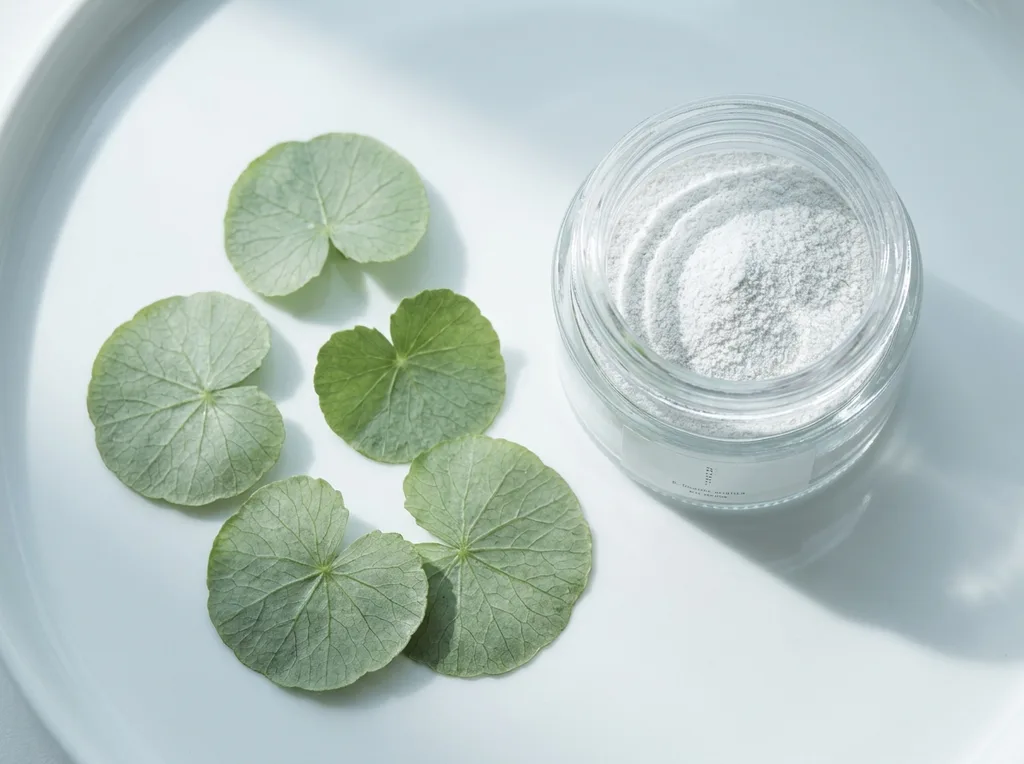
For readers outside Korea, the practical challenge is authentication. Korean inner beauty supplements bought from the Olive Young shelves or from Korean hospital pharmacies come with a specific quality assurance that evaporates when products cross borders through grey market channels.
The clinical data for Centella Asiatica, marine collagen, and Niacinamide was gathered using specific extract standards and dosage forms. Counterfeit or adulterated supplements — a genuine problem in the global online market — undermine those standards entirely.
iHerb operates with direct sourcing and authentication protocols that make it the most reliable international access point for the supplement categories Korean dermatologists actually recommend. The platform carries marine collagen peptides with disclosed molecular weight ranges, standardized Centella Asiatica extracts with stated asiaticoside percentages, and Niacinamide at verified concentrations.
| Category | What to Look For | Red Flags |
|---|---|---|
| Marine Collagen | "Hydrolyzed," molecular weight 3–5 kDa, type I | "Collagen complex" without specification |
| Centella Asiatica | Standardized to asiaticoside %; extract ratio stated | "Cica blend" without active compound percentage |
| Niacinamide | Dose clearly stated in mg; "niacin" is not the same | "B3 complex" without individual mg breakdown |
| Korean Red Ginseng | KRG specific; ginsenoside percentage stated | Generic "ginseng" without species or standardization |
Use code QAK3042 at checkout for an additional discount on first orders through iHerb.
Before You Order: What Korean Dermatologists Say First
No honest supplement guide ends without this section. The Korean dermatological community is not cavalier about self-directed supplementation — and neither should the reader be.
Certain groups should consult a physician before beginning any of the supplements discussed:
Blood thinners and Centella Asiatica interact at higher doses — the herb has mild anticoagulant properties that compound with warfarin and similar medications. Niacinamide at doses above 500mg can affect liver enzyme levels in individuals with pre-existing hepatic sensitivity; this isn't common, but it requires monitoring. Collagen peptides from marine sources pose allergen risks for anyone with shellfish or fish allergies, regardless of the processing involved. Korean Red Ginseng is contraindicated during pregnancy and can interact with stimulant medications.
The 12-week minimum commitment that clinical research demands also matters practically: most people abandon supplement protocols at four to six weeks, before any measurable skin change has had time to manifest. The 11.1–13.3% wrinkle depth reduction from oral Centella was measured at the 12-week mark. Giving up at week five and concluding "it didn't work" is one of the most expensive mistakes in the supplement space — expensive not because of money lost, but because of the opportunity cost of another protocol left incomplete.
One final thing worth carrying: the entire affordable vs. luxury debate in K-Beauty resolves to a single principle that dermatologists in Seoul apply to both topical products and supplements alike. The question is never what costs more. The question is what has the evidence, at what dose, over what duration, for what specific skin concern. Every other variable — the packaging, the brand story, the influencer endorsement — is noise.
The most expensive thing in Korean skincare isn't any product. It's not knowing what you're actually paying for.
Before diving deeper into how Korean dermatology approaches skin from the outside — the ingredient science behind the serums that pair with these protocols — the full breakdown lives here: [K-Beauty Columnist]
Medical & Financial Disclaimer: The information in this article is for educational purposes only and does not constitute medical advice. Supplements discussed have clinical support at specific doses and durations; individual results vary. Before beginning any supplement protocol, consult a licensed healthcare provider — particularly if you are pregnant, breastfeeding, taking prescription medications (including anticoagulants or hepatic-sensitive drugs), or managing a pre-existing medical condition. Patch test all topical products before full use. The supplement market contains adulterated products; purchase only from verified, transparent sources. iHerb links may be affiliate links.
✓ Researched and compiled using verified data as of the publication date.
 Operated by: Quiet Korea | Contact: rsl.2001.1975@gmail.com
Comments
Post a Comment