The Ingredient Scientist
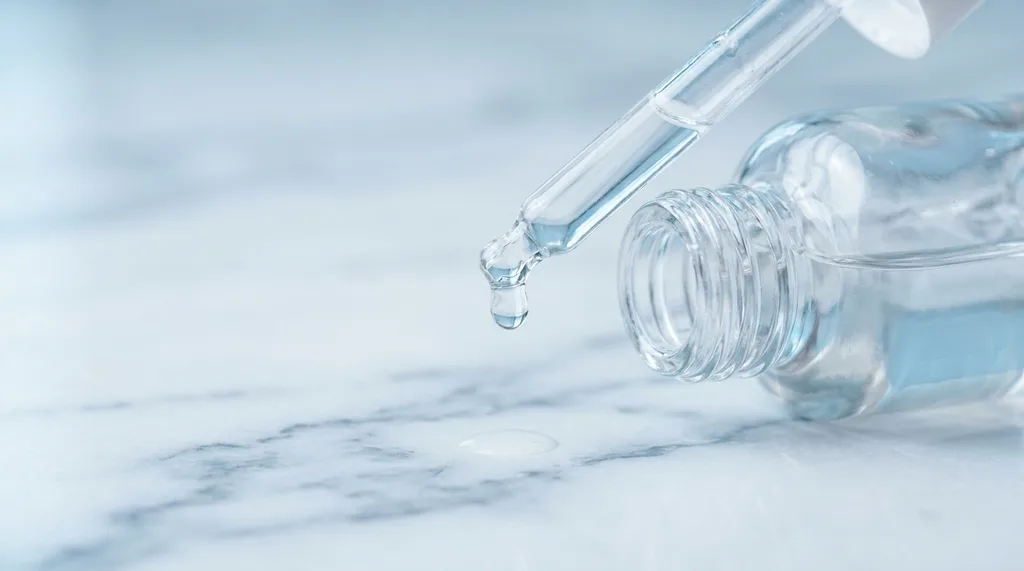
Seventy-one percent of global consumers now report having sensitive skin. A generation ago, that figure was a fraction of this. Human biology didn't change. The skin barrier didn't suddenly become fragile on its own. Something in the modern skincare routine broke it — and the ingredient that fixes it has been sitting in formulas so pedestrian, so ubiquitous, so thoroughly overlooked, that most of us stopped reading past the label years ago.
The answer is panthenol. And if you've already moved on mentally because you know panthenol as "that soothing filler in baby lotion," stay. Because what panthenol is actually doing inside your stratum corneum is nothing like what the marketing copy suggests — and understanding it will change how you read every ingredient list you ever look at again.
The Molecule That Plays a Longer Game
Panthenol's reputation as a gentle humectant is technically accurate and almost completely misleading. Yes, it pulls water. But so does glycerin. Calling panthenol a humectant is like describing a trauma surgeon as someone who applies bandages. Correct at the margins; wrong about the substance.
Here's what's actually happening. D-Panthenol — the biologically active isomer, INCI: Panthenol — doesn't stay as panthenol once it enters the skin. Enzymes in the epidermis convert it almost immediately into pantothenic acid, which is Vitamin B5. And pantothenic acid is a direct precursor to Coenzyme A, a molecule so central to cellular metabolism that without it, your keratinocytes cannot synthesize the lipids that make your barrier a barrier at all.
Think of it this way. The stratum corneum — the outermost 15 to 20 layers of your skin — is essentially a brick wall. Corneocytes (the "bricks") are held together by a mortar of lipids: ceramides, cholesterol, and fatty acids in a very specific ratio. When that lipid mortar deteriorates — through over-exfoliation, harsh cleansers, UV damage, or just time — the wall develops cracks. Water escapes. Irritants enter. The skin becomes reactive and inflamed. Every active ingredient you layer on top largely evaporates through those gaps.
Panthenol goes in and refunds the construction budget. By fueling Coenzyme A synthesis, it accelerates the keratinocytes' own lipid production machinery. The skin doesn't borrow moisture from outside — it begins manufacturing its own structural components again. That distinction matters enormously.
What's even more remarkable is the physical evidence. Confocal Raman Microspectroscopy analysis — a technique that maps molecular composition across skin tissue with micron-level precision — shows panthenol doing something no ordinary humectant does: it increases the fluidity of lipids and proteins within the stratum corneum while simultaneously stabilizing the β-pleated sheet conformation of keratin filaments. That structural stabilization is how it reduces transepidermal water loss (TEWL) mechanically, not just osmotically. The wall doesn't just get patched. The bricks themselves become better bricks.
The Concentration Question Nobody Answers Honestly
Here's where most articles about panthenol quietly fail the reader. They tell you it "strengthens the barrier" without acknowledging that concentration is everything. A product with panthenol listed tenth on the label is not doing what a clinical recovery cream with 5% panthenol does. The mechanisms are the same. The outcome isn't.
| Concentration Range | Primary Effect | What It Actually Does |
|---|---|---|
| 0.5 – 2% | Baseline humectancy + mild soothing | Adds tactile comfort; partial CoA pathway activation; suitable for daily maintenance |
| 2 – 5% | Active barrier reconstruction | Full lipid synthesis acceleration; measurable TEWL reduction; clinical-grade recovery |
| 5 – 20% | Targeted repair (medical/post-procedure) | Used post-laser, post-peel, atopic management; generally balm or ointment vehicle |
The 2–5% zone is where the science becomes genuinely compelling. At these concentrations, panthenol moves from cosmetic to therapeutic — the kind of concentrations Korean dermatology clinics reach for after LDM (Low-Density Microwave) ultrasound therapy or chemical peels to accelerate recovery and suppress the inflammatory cascade that damaged procedures trigger. It's not that lower concentrations are useless. It's that "has panthenol" and "delivers panthenol's actual mechanism" are very different sentences.
[K-Beauty 101] Pibu jangbyeok (Pi-bu-jang-byeok) — the skin barrier. In Korean beauty philosophy, it is treated with something approaching medical reverence: not a feature of healthy skin, but the precondition for it. "If the barrier is collapsed, nothing else you apply matters" is the consensus — and it shapes every formulation decision Korean labs make.
The Korean Insight — and the Word Nobody Else Has
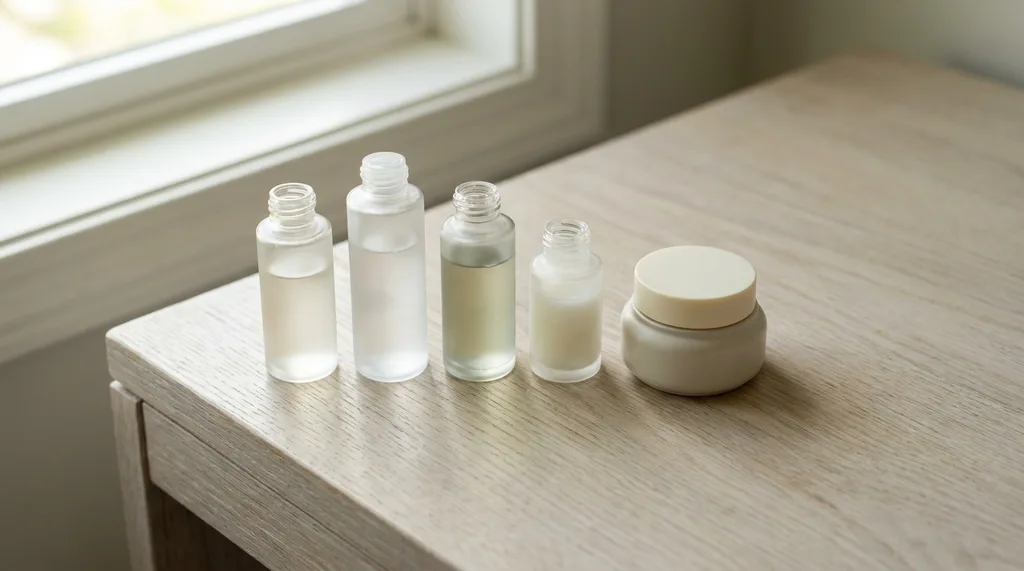
The global skincare conversation talks about "barrier support" as one concern among many. Korean dermatology and cosmetic science treats it as the hierarchy's first floor. Everything else is built on top. This isn't conservatism — it's a fundamentally different causal model of skin health, and panthenol sits at its center.
What makes the Korean approach scientifically distinct isn't the presence of panthenol — it's the delivery architecture built around it.
The dominant innovation in Korean labs right now involves combining panthenol with ceramides in a liposomal complex sometimes called Cerapanthesom technology. The logic is straightforward. Panthenol fuels the synthesis of new barrier lipids. But a critically damaged barrier absorbs poorly, meaning the panthenol can't reach the keratinocytes that need it most. A liposomal carrier — a phospholipid bilayer membrane that structurally mimics the skin's own lipid matrix — bypasses that absorption problem. It's not panthenol with good marketing. It's panthenol with a key.
There is also early-stage research exploring panthenol's role in combination with nanoparticle delivery systems carrying growth factor signals (EGF, bFGF) and, on the experimental frontier, micro-RNA constructs that modulate barrier gene expression at the cellular level. The data on these combinations is promising but still thin — honest disclosure requires that the panthenol-plus-Mini-RNA synergy not be overstated. The technology is real. The clinical confirmation is in its infancy.
What's not early-stage is what Korean skincare enthusiasts recognized intuitively before the research formalized it: the concept of sok-geonjo (inner dryness) — the frustrating condition where skin appears normal or even oily on the surface but feels parched, tight, and reactive underneath. This isn't mythology. It maps directly to a damaged stratum corneum that has lost barrier integrity while the surface sebum layer remains intact. The skin looks fine from outside. The wall is crumbling from within.
[K-Beauty 101] Sok-geonjo (Sok-geon-jo) — inner dryness. Skin that registers as oily or combination on the surface but suffers from deep dehydration and barrier compromise beneath it. The existence of this concept as a named phenomenon in Korean skincare culture reflects something the Western beauty market has been much slower to acknowledge: that surface texture and structural skin health are not the same measurement.
The Korean strategy for addressing this is layering — not piling on products for the sake of steps, but applying thin, well-formulated layers that allow each to fully absorb before the next arrives. When panthenol is used in this framework, it's typically in the mid-to-final steps: a lightweight essence first to prep the surface, then a panthenol-forward cream to lock the structure. The skin doesn't suffocate under occlusion. It receives the construction materials gradually, at a pace the epidermis can metabolize.
What the Label Doesn't Tell You (And What Can Go Wrong)
This is the section that sponsored content never writes.
High-concentration panthenol formulations — the 10–20% balm-weight recovery products — are frequently marketed as universally safe because panthenol has an exceptional safety profile. That's true as far as it goes. But these products are overwhelmingly oil-heavy vehicles, often containing 60% or more oil-phase ingredients. And a critically compromised, dehydrated barrier is also frequently an acne-prone one. Flooding a skin that breaks out under occlusion with a high-oil barrier balm, even one built around a scientifically sound active, can trigger secondary comedonal congestion. The panthenol isn't the problem. The vehicle is.
There's also the question of the active context. If your routine includes retinoids, AHAs, BHAs, or vitamin C in high-oxidized formulations, your barrier is sustaining damage at a rate that a single panthenol cream may not outpace on its own. Korean cosmetic chemists approach this as an explicit formulation challenge — one reason you see synergistic pairings of panthenol with madecassoside (Centella Asiatica's most studied anti-inflammatory compound), Ceramide 3, Ceramide 9, and niacinamide. Each component addresses a different failure mode of the damaged barrier: lipid production, inflammatory signaling, water-channel regulation, sebum normalization.
Used in isolation against a high-active routine, panthenol helps. Used as part of a coordinated barrier-first strategy, it heals.
Building the Protocol
The practical translation of everything above is narrower than it sounds.
If you're running retinol, an AHA, or both, your barrier reconstruction priority should be the nights you're not using those actives. That's when the repair cycle needs the most substrate — and when a 2–5% panthenol cream layered over a lightweight ceramide essence will have the most unobstructed access to the epidermis it's trying to restore.
For post-procedure recovery — whether that's a professional chemical peel, microneedling, or home-use devices — clinical consensus in Korean dermatology points to panthenol as the single most important topical for the first 48 to 72 hours. Not vitamin C. Not retinol. Not a "recovery serum" with fifteen actives. A clean, high-concentration panthenol formula, ideally in a liposomal delivery system if the barrier is critically compromised, applied conservatively until the TEWL response normalizes.
For everyday maintenance, the 0.5–2% range found in most well-formulated Korean essences and toners does provide genuine, cumulative benefit. The mechanism is the same. The rate of repair is simply lower — appropriate for maintenance rather than acute reconstruction.
The "Se-Col-Ji" framework that Korean formulation scientists and skincare enthusiasts use — the shorthand for Ceramide, Cholesterol, and Fatty Acids in physiological ratios — is the gold standard for what panthenol is trying to restore. If a product contains panthenol plus all three of these lipid classes, it is addressing both the production stimulus (panthenol → CoA → lipid synthesis) and the immediate structural gap (direct lipid supplementation). That combination is the closest a topical product can currently get to genuine barrier reconstruction rather than surface management.
The global cosmetic market will likely reach somewhere between 80 and 173 billion dollars by 2035, most of it chasing the concept of "sensitive skin" solutions. The ingredient at the center of that market — the one that is already in formulas ranging from the cheapest drugstore lotion to the most expensive Korean clinic recovery line — was already there before the trend began.
It was just waiting for people to read the label all the way through.
⚠️ Medical Disclaimer: The ingredient science in this article is for educational purposes and reflects published research literature. It does not constitute medical advice. If you have atopic dermatitis, eczema, a compromised skin barrier, or are recovering from a professional dermatological procedure, consult a board-certified dermatologist before altering your skincare protocol. Panthenol is generally well-tolerated, but individual responses to specific formulations — particularly high-oil recovery balms — can vary. Patch-test all new products before full application, especially on sensitized or post-procedure skin.
✓ Researched and compiled using verified data as of the publication date.
 Quiet Korea | Contact: rsl.2001.1975@gmail.com
Comments
Post a Comment