The Invisible Rule Every K-Beauty Beginner Breaks (Without Knowing It)
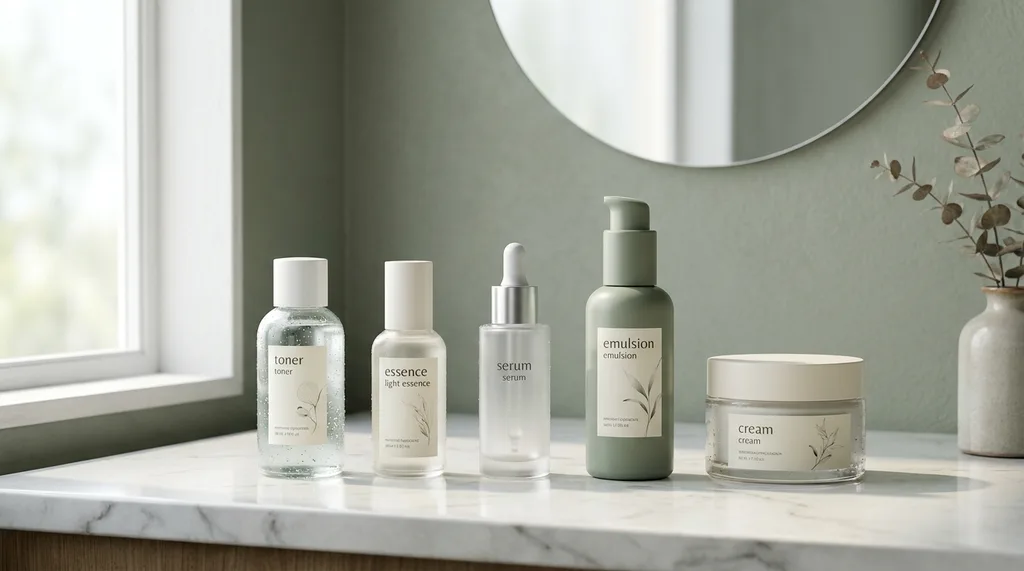
Here's a quiet paradox that nobody in the beauty media tends to discuss: many Korean women who grew up inside the culture — the ones with genuinely luminous, texture-refined skin — use four products, maybe five. Meanwhile, a first-time K-Beauty enthusiast in London or Los Angeles has sixteen products lined up on their bathroom shelf, a spreadsheet of ingredients, and skin that is somehow getting worse.
Why? The answer has nothing to do with which products they own.
And if you've been chasing glass skin for months, spending real money on hauls from Olive Young or the curated shelves of iHerb, and your skin is still fighting you — this is the article you've been missing. Because what separates the Korean approach from what most beginners actually do isn't a secret ingredient. It's a philosophy. And until you understand that philosophy, every product you buy is working against itself.
When the Shopping Cart Became the Skincare Plan
Walk through any Olive Young — Korea's equivalent of a beauty-obsessed Sephora but significantly more chaotic, and beloved for it — and you'll notice something immediately. Products are arranged not by brand but by concern. Skin barrier. Hydration. Exfoliation. The architecture of the store reflects the architecture of Korean skin thinking: problem first, product second.
What most global beginners absorb instead is the shopping experience itself. The affordable price points. The gorgeous packaging. The influencer haul videos showing 20 products from a single Seoul trip. And then they buy everything, go home, and apply it all — in roughly the order it was recommended by someone whose skin type, diet, climate, and history is completely different from their own.
Korean dermatologists and skincare educators have watched this pattern accelerate over the last decade as K-Beauty went global. The common beginner pitfall, according to practitioners in Seoul's skin clinics, isn't ignorance of ingredients — it's over-purchasing combined with under-thinking. Filling a basket with affordable actives, layering them without a system, then wondering why the skin is reacting.
The most honest piece of data from Korean beauty communities? Beginners who try too many new products simultaneously cannot identify what helped or what harmed. Their skin becomes an uncontrolled experiment. And skin, it turns out, is a terrible test subject when you change twelve variables at once.
The Philosophy Hidden in a Bottle of Toner
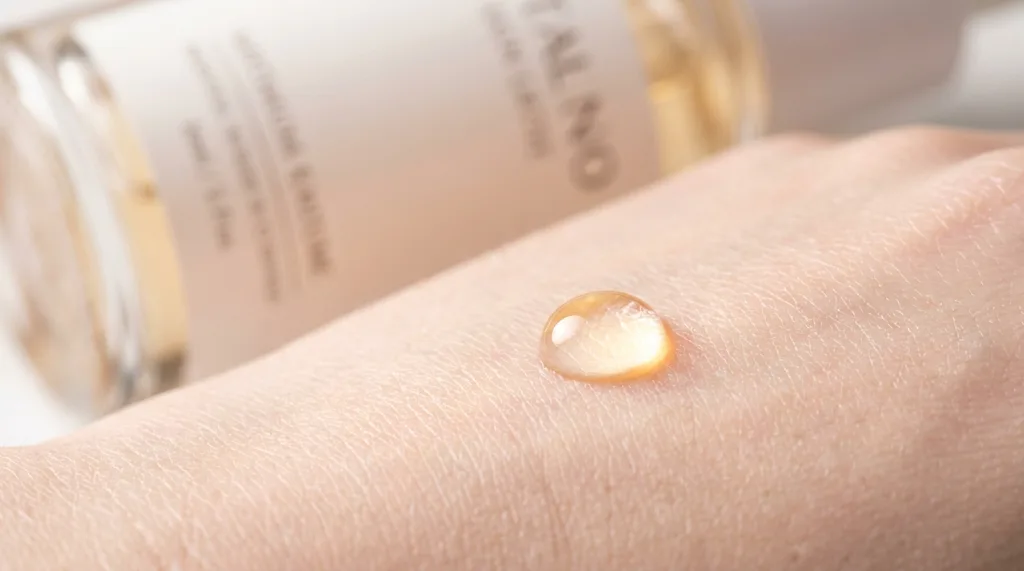
This is where the K-Beauty approach diverges most sharply from the Western problem-solving model — and where most beginners miss the entire point.
Korean skincare isn't built around aggressive intervention. It's built around the understanding that skin is a living ecosystem. Not a surface to be corrected, but a barrier to be nurtured. Korean dermatologists consistently frame the goal not as "fixing" skin but as creating the conditions in which skin can repair itself. That distinction sounds subtle. It isn't.
[K-Beauty 101] Sok-geon-seong (속건성) — Inner-skin dryness. A condition where skin feels tight or dehydrated beneath the surface, even when the exterior appears oily or normal. This is the foundational insight that drives Korean layered hydration — addressing not what you can see, but what the skin actually lacks.
The concept of sok-geon-seong is why the layered toning step exists at all. It's not about adding more products. It's about delivering water-soluble hydration to the deeper layers of skin before sealing it in with progressively richer textures. The famous layering sequence — toner, essence, serum, emulsion, cream — follows a strict viscosity logic: thinnest first, thickest last. This isn't intuitive. It's deliberate science.
When a beginner applies a rich cream before their watery toner has had a moment to absorb, they're not building layers — they're blocking absorption. The entire system collapses. And then they conclude that K-Beauty "doesn't work for them."
What Korean beauty experts describe as the core protocol — and what the most rigorous Korean regulatory framework, enforced by the Ministry of Food and Drug Safety (MFDS), is designed to protect — is a skin barrier-first philosophy where each product earns its place in a sequence. The MFDS classifies cosmetics with pharmaceutical-level rigor, requiring that any functional claim (whitening, wrinkle reduction, barrier restoration) is backed by documented evidence. For the Korean consumer, this isn't background bureaucracy. It's the baseline expectation. Products that make it to shelves have cleared a meaningful threshold.
That regulatory culture has shaped how Korean consumers think about skincare. They approach their routines the way a thoughtful cook approaches a recipe: knowing why each ingredient is there, in what quantity, at what stage. The collective knowledge of the community — the ko-deok, as Korean beauty enthusiasts call themselves — has created a standard of ingredient literacy that no other market quite matches.
[K-Beauty 101] Ko-deok (코덕) — Korea's self-appointed skincare obsessives. These are the consumers who memorize ingredient lists, test products before trends form, and share unsponsored, granular reviews on community platforms. Their collective intelligence is often more accurate than brand marketing — and they are the real arbiters of what actually works.
The Mistakes That Are Quietly Costing You
Understanding the philosophy is one thing. Seeing where it goes wrong in practice is another. Korean skincare practitioners identify a handful of patterns that appear repeatedly among beginners — and none of them are about buying the wrong brand.
| The Myth | The Reality |
|---|---|
| The 10-step routine is the goal | The step count is irrelevant — viscosity sequence and skin barrier respect are the point |
| More actives = faster results | Layering multiple exfoliating actives simultaneously can collapse the barrier in days |
| K-Beauty works for everyone the same way | Korean skincare is inherently personalized — trend-following without customization is the single biggest error |
| Redness after a new product means it's "working" | Persistent redness, itching, or heat means the skin is reacting, not adjusting — and that distinction matters enormously |
| Expensive products are always better formulated | Korea's regulatory framework means even affordable products must meet functional standards — price is not efficacy |
The over-care trap is particularly insidious — because it masquerades as diligence.
[K-Beauty 101] Over-care (오버케어) — Using too many products or active ingredients simultaneously, resulting in barrier damage rather than improvement. Korean skincare experts consider this the most common and preventable mistake — the irony of K-Beauty's appeal working against the very people who love it most.
Research into Korean skincare communities reveals that a significant portion of beginner complaints — persistent sensitivity, unexpected breakouts, tightness even after moisturizing — trace back to over-care rather than product failure. The skin's barrier can only absorb so much intervention before it stops responding and starts reacting.
Another underappreciated pitfall: ignoring what happens after professional treatments. Korean dermatology clinics — and Korea has among the highest per-capita clinic visit rates in the world — are meticulous about post-procedure care. The products recommended during recovery windows are not arbitrary. Active ingredients like AHA, BHA, or retinol that might be part of a regular routine can cause serious issues on sensitized, post-treatment skin. Beginners often don't know to pause their routines after facials, peels, or light-based treatments. This is precisely the kind of gap that causes long-term harm while feeling like routine skincare.
What the Korean Protocol Actually Looks Like
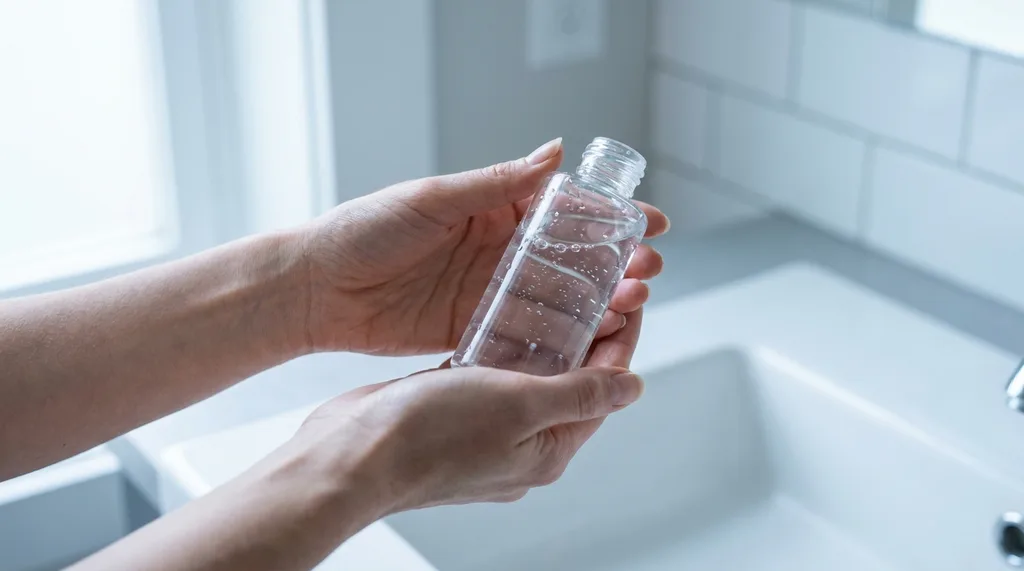
Strip away the product count. Strip away the haul culture and the influencer recommendations. What remains is something remarkably simple, and remarkably consistent across Korean dermatology practice.
Step one: Cleanse without stripping. Korean double-cleansing (an oil cleanser to dissolve makeup and sunscreen, followed by a gentle water-based cleanser) isn't about using more product. It's about removing debris without disrupting the acid mantle — the skin's natural slightly acidic protective film.
Step two: Tone with intention. Not all toners exfoliate. Many Korean toners are hydration-delivery systems, designed to prep the skin for everything that follows. The application technique matters — patting rather than swiping, giving the skin a moment to receive the product before the next layer.
Step three: Layer thin to thick. This is the non-negotiable. Essence before serum. Serum before emulsion. Emulsion before cream. Disrupting this sequence doesn't just waste product — it physically prevents absorption. The skin's structure responds to texture gradient; applying a thick cream first creates a film that blocks water-soluble ingredients from penetrating.
Step four: Sunscreen, every morning, no exceptions. Korean dermatologists are consistent on this point in a way that can feel almost aggressive to beginners. Sun damage is cumulative and irreversible. Every brightening ingredient, every anti-aging active, every hydration protocol is partially undermined if unprotected UV exposure continues.
Step five: Introduce new products one at a time. The patch test is not optional or overly cautious — it is the foundational practice of intelligent skincare. Korean beauty communities (and the ko-deok who populate them) apply this with the rigor of a clinical protocol. One new product per week, minimum. Watch the skin. Adjust. This is how a system gets built instead of guessed at.
The key insight that Korean skincare insiders carry, and that most beginners never receive: you're not building a routine. You're building a relationship with your skin. And like any relationship, it requires attention, adjustment, and the willingness to stop doing something that isn't working — even if someone else swears by it.
Finding the Right Products Without Getting Lost
For global K-Beauty enthusiasts, access has historically been the challenge. But that landscape has shifted significantly. iHerb has become one of the most reliable international access points for Korean skincare — with direct sourcing that addresses one of the more serious concerns in the supplement and skincare import market: authenticity. For products where formula integrity matters (and in skincare, it always does), sourcing from a platform with verified supply chains is not a small thing.
The practical advantage for beginners: you can approach a curated selection rather than navigating the full Olive Young floor at midnight, cart filling with everything that caught your eye. iHerb's K-Beauty selection skews toward the staples — the barrier-focused products, the gentle actives, the hydration-first essentials that align with the philosophy this article has been describing.
A few practical notes for international shoppers: Korean skincare products on iHerb ship to over 180 countries. Pricing is often competitive with Korean retail, especially when factoring in shipping costs from Korea directly. And code QAK3042 provides an additional discount on first orders — worth applying before checkout.
The goal, ultimately, isn't to replicate a Korean bathroom cabinet. It's to understand the logic behind it well enough that you can build your own — with four products or eight, depending on what your skin actually needs.
The most enduring lesson Korean skin culture offers isn't about a product, a step count, or an ingredient. It's about the direction of attention. Western skincare has long asked: what do I put on my skin? Korean skincare asks first: what does my skin actually need, and how do I avoid getting in the way of it?
Once that question becomes the starting point, everything else — the products, the layers, the routine — follows naturally. And the shopping cart stops being the plan.
⚠️ Medical & Skincare Disclaimer: The information in this article is educational and reflects general Korean skincare philosophy and publicly available expert guidance. It is not a substitute for professional dermatological advice. If you experience persistent skin reactions, redness, pain, or discomfort after introducing new products or undergoing skin treatments, consult a board-certified dermatologist before continuing any routine. If you have a known skin condition (eczema, rosacea, psoriasis) or are pregnant or breastfeeding, consult your physician before introducing active ingredients. Patch test all new products before full application.
✓ Researched and compiled using verified data as of the publication date.
 Operated by: Quiet Korea | Contact: rsl.2001.1975@gmail.com
Comments
Post a Comment