The Kitchen Was Always the Lab: 17 Traditional Korean Beauty Recipes and the Science Behind Why They Work
The Kitchen Was Always the Lab: 17 Traditional Korean Beauty Recipes and the Science Behind Why They Work
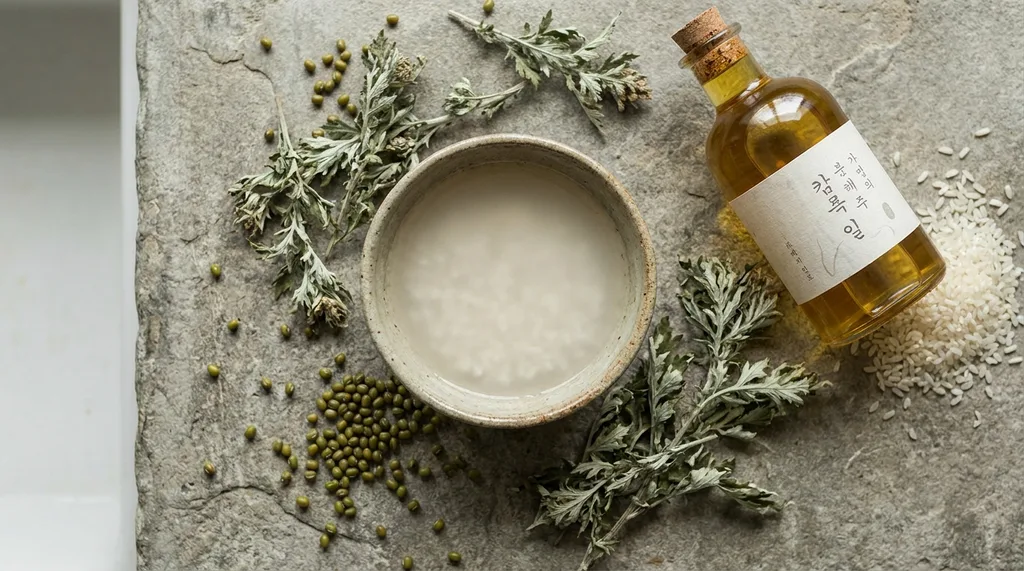
There's a question that cuts through all the noise of K-Beauty content: why do Korean women in their 60s and 70s — women who grew up without access to serums, SPF, or the modern 10-step routine — often have skin that quietly defies their age? The answer isn't a product. It's a practice that predates every bottle on the shelf. And understanding it will change how you read every ingredient label you ever pick up.
What follows isn't a recipe blog. It's a case study in how centuries of systematic empirical observation produced a beauty system that modern cosmetic science has spent decades reverse-engineering. The Korean grandmother who pressed cold rice water into her cheeks every morning wasn't performing tradition for tradition's sake. She was running an experiment — one her mother ran before her, and her mother's mother before that — and the data, accumulated across generations, was unambiguous. The kitchen worked.
When Rice Water Isn't Simple: The Compound They Found Inside
Walk into any Korean household kitchen and the beauty practice begins before the face wash comes out. Ssaldteumul — the milky water produced when raw rice is rinsed or soaked — was not historically considered a beauty product. It was a byproduct of cooking that observant Korean women noticed had interesting effects on their hands, their complexions, their hair. Over centuries, that observation calcified into ritual. Now molecular analysis has caught up.
[K-Beauty 101] Ssaldteumul (rice water) — The milky wash water from rinsing raw rice, rich in inositol, vitamins B and E, and ferulic acid. Used in Korea for centuries as a facial rinse and hair treatment. It's so embedded in daily life that many Korean women don't register it as a beauty practice — it's simply what happens between cooking and eating.
The inositol in rice water is a carbohydrate that helps repair damaged skin barriers and shows measurable effects on hair fiber health. Ferulic acid is a potent antioxidant that also enhances the stability and efficacy of vitamins C and E — the same reason cosmetic chemists add it to high-end vitamin C serums. The vitamins B complex supports cell turnover. None of this requires a lab to produce. It requires a bowl of uncooked rice and five minutes.
Recipe 1: The Classic Ssaldteumul Rinse Rinse one cup of raw short-grain rice with cool water twice (discard). On the third rinse, collect the milky water in a bowl. Let it settle for 20 minutes, then pour off the cleaner liquid on top. Use as a final face rinse after cleansing, patting in gently. Or soak a cotton pad and press onto skin for 30 seconds. The cool temperature matters — it reduces transient inflammation the way cold water always has, while the actives absorb.
Recipe 2: Fermented Rice Water Toner The upgraded version, used across much of rural Korea historically: let ssaldteumul sit at room temperature for 24-48 hours until it begins to ferment slightly. Dilute one part fermented water with three parts plain water before use. Fermentation produces organic acids that function similarly to AHAs — gentle exfoliation, refined texture, increased penetration of subsequent layers. This is not a metaphor. Fermented rice water has measurably lower pH than fresh rice water, which is precisely what enables its mild exfoliating action.
Recipe 3: Rice Bran Scrub The Korean term bran — the outer layer of rice milled away during polishing — contains even higher concentrations of the same actives. Mix one tablespoon of fine rice bran powder with just enough water or plain yogurt to form a loose paste. Apply in circular motions to damp skin, rinse. Unlike plastic microbeads, rice bran particles are irregularly shaped and biodegradable, with a hardness that polishes without stripping. This is the original Korean exfoliant — not the gommage peel that came later.
The Fermentation Principle: What Makgeolli and Nokdu Knew Before We Did
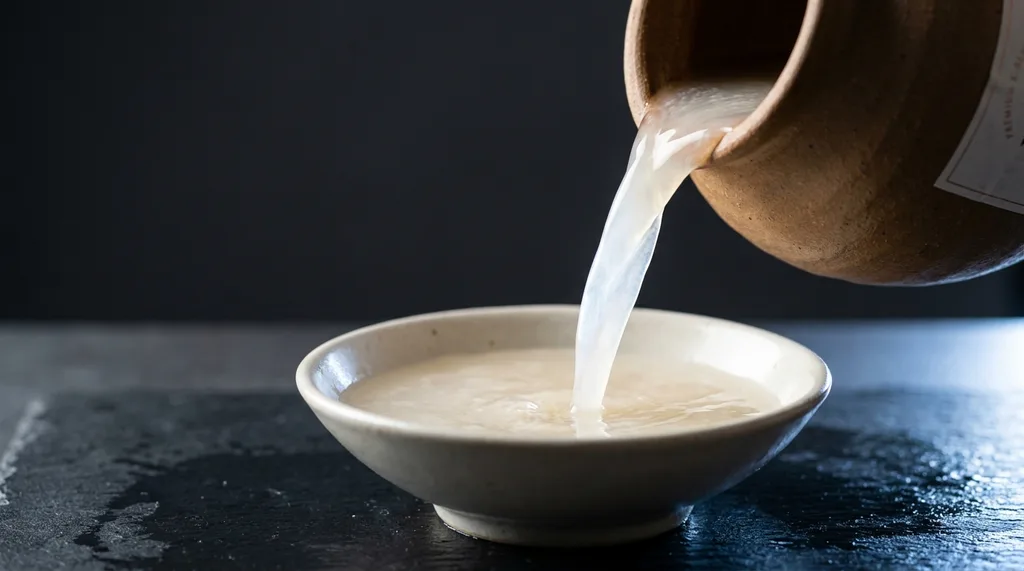
The global K-Beauty fermented skincare category — SK-II's Pitera, the explosion of ferment filtrate serums — sits on a foundation laid by two far humbler ingredients: makgeolli and nokdu.
[K-Beauty 101] Makgeolli (rice wine) — Korean unfiltered rice wine containing kojic acid, AHA-like organic acids, and live probiotics. Korean women were using fermented rice on their skin before the word "probiotic" existed. The fermentation process that modern K-Beauty engineers at industrial scale was already happening in earthenware pots in traditional Korean homes.
Kojic acid is now a cornerstone of brightening skincare globally. It inhibits tyrosinase — the enzyme responsible for melanin production — at the molecular level. Makgeolli contains it naturally as a fermentation byproduct. Korean women who used makgeolli toner for brightening weren't applying cultural mythology to their faces. They were delivering a tyrosinase inhibitor.
Recipe 4: Makgeolli Brightening Toner Pour fresh, unfiltered makgeolli into a spray bottle. Mist onto skin after cleansing or use a cotton pad soaked in a 1:1 dilution with water. The organic acids in the rice wine will feel slightly tingly — that's the AHA-like exfoliation at work. Do not use on broken or actively irritated skin, and start with the diluted version. Undiluted makgeolli can be too acidic for sensitive skin types.
Recipe 5: Makgeolli and Honey Mask Mix two tablespoons makgeolli with one tablespoon raw honey. Apply as a mask for 10 minutes. Honey contributes fructose, glucose, and hydrogen peroxide in trace amounts — the same compound used in diluted form as a clinical brightening agent. The synergy here is real: the AHAs open the pathway, the honey's humectant properties drive hydration deep.
Recipe 6: Makgeolli-Rice Bran Dual Exfoliant A combination that historically appeared in the Joseon dynasty court beauty records: mix makgeolli and rice bran into a paste. The acids soften keratin bonds while the physical particles exfoliate. This is chemical and mechanical exfoliation simultaneously — a principle that $60 dual-action exfoliants now market as innovation.
Now, nokdu.
Mung bean (nokdu) is Korea's original cleanser. Before soap, before commercial foam cleansers, Korean women ground dried mung beans into powder and used it to wash their faces. The saponins — natural surfactants — in mung bean create a lather that removes oil and surface debris without stripping the skin's lipid barrier. The mung bean's proteins support barrier function simultaneously. It cleans and repairs in one step.
Recipe 7: Nokdu Cleansing Powder Grind dried mung beans in a coffee grinder until a fine powder forms. Store in a dry jar. To use: take a small amount in your palm, add a few drops of water to form a paste, and cleanse in gentle circles. Rinse thoroughly. This is the original K-Beauty cleanser — pre-industrial, but molecularly sound.
Recipe 8: Nokdu Brightening Pack Mix two tablespoons nokdu powder with enough plain yogurt to form a thick paste. The lactic acid in yogurt combines with mung bean's natural vitamins C and B for a brightening mask. Leave for 15 minutes. The cooling sensation on application isn't imagination — nokdu has mild astringent properties that temporarily reduce surface temperature of inflamed skin.
Recipe 9: Nokdu and Turmeric Brightening Mask Add a pinch of turmeric to the basic nokdu pack. Turmeric's curcumin has documented anti-inflammatory and tyrosinase-inhibiting properties — but be careful with quantities. Too much turmeric stains fair skin temporarily. A small pinch for a full mask is sufficient.
The Mythic Compound: Why Ssuk Was in Korea's Creation Story Before It Was in Your Serum
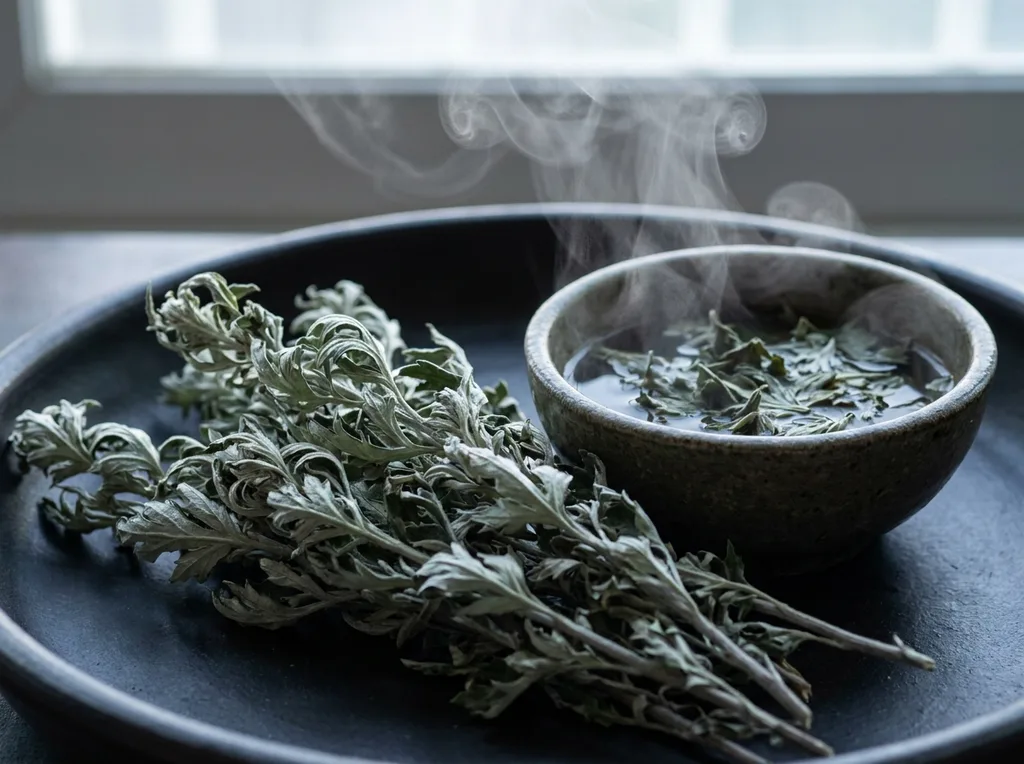
Here's the thing about mugwort that separates it from every other traditional Korean beauty ingredient: it appears in the Dangun myth, the founding legend of Korea itself. A bear ate garlic and mugwort for a hundred days and emerged transformed. That story encodes something the Koreans who told it already understood — mugwort, consumed and applied, changes the body. Modern cosmetic science has since identified why.
[K-Beauty 101] Ssuk (mugwort, Artemisia princeps) — A plant with deep roots in Korean medicine and beauty. Contains azulene (anti-inflammatory), flavonoids (antioxidant), and sesquiterpenoid lactones. Used as a facial steam, bath additive, and topical ingredient. The Hanbang 2.0 movement — the global trend toward validated, nature-derived actives — is, in many ways, just the world catching up to ssuk.
The mugwort global market was valued at approximately $1.2 billion in 2025 and is projected to grow at a CAGR of 7.8% through 2034. This isn't nostalgia economics. It's validation economics.
Azulene — the compound found in the Asteraceae plant family, which includes mugwort relatives — inhibits the COX and 5-LOX enzyme pathways, the same inflammatory cascades that cause persistent redness, heat, and post-irritation flaring in sensitive skin. Commercial guaiazulene skincare products isolate this compound at concentrations between 0.1% and 0.5% and charge premium prices for it. A ssuk facial steam delivers azulene vapor transdermally. The grandmother doing this over a pot of boiling mugwort water was not being unscientific. She was finding a different delivery vector for a compound whose mechanism of action we now understand at the molecular level.
Recipe 10: Ssuk Facial Steam Bring two liters of water to a boil with a large handful of dried mugwort leaves. Remove from heat, drape a towel over your head, and hold your face 30-40 cm above the pot for 5-8 minutes. Follow immediately with cool water and a soothing serum or oil. The steam opens pores while delivering volatile aromatic compounds including azulene precursors. Do not use if your skin is actively broken out or inflamed — steam intensifies existing conditions before it resolves them.
Recipe 11: Ssuk and Sea Salt Bath Soak Fill a muslin bag with dried mugwort and coarse sea salt. Hang it from the bath tap so water runs through it. Soak for 20 minutes. In Korea's jjimjilbang (public bathhouses), mugwort steam rooms are a standard feature — locals experience the compound through heat and absorption routinely, long before its commercialization. This bath replicates a gentler version of that communal practice at home.
Recipe 12: Ssuk-Rice Water Combination Toner Brew a strong mugwort tea (steep dried ssuk in just-boiled water for 15 minutes, strain, cool completely). Combine with an equal volume of fermented rice water. The mugwort's anti-inflammatory azulene compounds and the rice water's barrier-supporting inositol create a toner that addresses redness and texture simultaneously. Apply with a cotton pad morning and evening after cleansing.
The critical caveat no one mentions in the YouTube content: mugwort belongs to the Asteraceae (daisy) plant family. Anyone with allergies to ragweed, chrysanthemum, chamomile, or similar plants may experience contact dermatitis. This isn't a rare edge case — Asteraceae cross-reactivity is one of the most common contact allergy patterns in skincare. If you've ever had a reaction to chamomile, test mugwort with extreme caution.
Jeju's Quiet Oil and the Ones They Forgot to Monetize
Some traditional Korean beauty ingredients became global trends. Others never needed to — they just kept working.
Dongbaek oil (camellia oil from Camellia japonica) has been used by Korean women in Jeju Island since before recorded history. Its oleic acid content sits between 82-88% — a composition that closely mirrors the skin's own sebum. This isn't coincidence-as-validation. The reason oil with high oleic acid content absorbs so readily into skin and hair is that the body's own lipid bilayers are largely composed of oleic acid. You're not applying something foreign. You're replenishing the skin's own vocabulary.
Recipe 13: Dongbaek Oil Facial Serum Apply two to three drops of cold-pressed camellia oil to slightly damp skin as the final step in a PM routine. The damp skin matters — oil applied to wet skin creates an emulsion layer that traps the hydration already present rather than just sitting on surface. Korean women in Jeju have applied it this way for generations without knowing the term "occlusion."
Recipe 14: Dongbaek Oil Hair Treatment Warm two tablespoons of camellia oil between your palms and work through the mid-lengths and ends of dry hair. Wrap in a warm towel for 30 minutes, then shampoo out. The oleic acid penetrates the hair cortex rather than sitting on the cuticle the way many silicone-based products do — which means the repair goes deeper and lasts longer.
The Ones That Work, The Ones That Are Just Beautiful, and the Few That Aren't for You
Not every traditional Korean beauty recipe is a molecular triumph. Some work through mechanisms that are understood. Some work through mechanisms that are real but difficult to quantify. And a few — beautiful and culturally resonant as they are — may genuinely not work for certain skin types, and pretending otherwise would be a disservice.
Recipe 15: Green Tea Ice Cube Toning Brew a strong green tea, pour into ice cube trays, freeze. Run an ice cube wrapped in clean cotton over your face in the morning. The cold constricts blood vessels temporarily, reducing puffiness and apparent redness. The green tea's EGCG (epigallocatechin gallate) is an antioxidant with documented anti-inflammatory properties. This is also genuinely refreshing. The limitations: EGCG absorption via iced skin application is minimal. The vasoconstrictive effect lasts about 20 minutes. This is a ritual benefit as much as a chemical one — and there is real value in a ritual that starts your morning with intention and cold.
Recipe 16: Honey and Ginseng Mask Mix one tablespoon raw honey with half a teaspoon of red ginseng powder. Apply for 20 minutes. Ginseng's ginsenosides have documented antioxidant activity and some evidence for collagen stimulation in laboratory models. The honest qualification: the in-vitro evidence for ginsenoside efficacy is stronger than the human clinical evidence. This mask is likely beneficial, but the degree of benefit is difficult to quantify at home-preparation concentrations. It is not harmful. It's a reasonable experiment.
Recipe 17: Barley Water Brightening Rinse Simmer pearl barley in water for 30 minutes. Strain, cool completely, use as a face rinse. Barley water contains beta-glucan — a compound with strong evidence for reducing inflammation and supporting the skin barrier. Korean traditional medicine has used barley water topically and ingestibly for centuries. The brightening claim is softer than the soothing claim. Use it for calming combination or sensitive skin rather than as a whitening treatment.
| Traditional Recipe | Key Active Compound | Modern Equivalent | Evidence Level |
|---|---|---|---|
| Ssaldteumul rinse | Inositol, ferulic acid, Vitamin B | Fermented filtrate serums, Vitamin C serums | Strong |
| Makgeolli toner | Kojic acid, organic AHAs, probiotics | Kojic acid brightening serums, AHA toners | Strong |
| Nokdu cleanse | Saponins, Vitamin C, proteins | Low-pH cleansers, enzyme powders | Strong |
| Ssuk steam | Azulene precursors, flavonoids | Guaiazulene serums, Cica creams | Strong |
| Dongbaek oil | Oleic acid (82-88%) | Squalane, rosehip oil | Strong |
| Red ginseng mask | Ginsenosides | Ginseng extract serums | Moderate |
| Green tea ice cube | EGCG, cold vasoconstriction | Green tea toners | Moderate (absorption limited) |
The Inside-Out Dimension: When Traditional Knowledge Goes Further Than Topical
Here's the part most DIY content never reaches. The Korean understanding of beauty through hanbang (traditional Korean medicine) never separated what you applied from what you consumed. The mugwort in a facial steam and the mugwort in a traditional tea were the same plant, working on the same skin from different directions. The rice water on your face and the rice in your diet were part of the same system.
Modern supplement science is only now formalizing what Korean traditional medicine assumed: bioavailable compounds consumed orally can support the skin from beneath — through mechanisms that no topical product, however potent, can replicate. Fermented ingredients, in particular, show meaningful differences in their bioavailability when consumed versus applied. The probiotics in makgeolli affect the gut microbiome, which influences systemic inflammation, which appears on your face.
Mugwort extract in supplement form delivers the sesquiterpenoid complex systemically. Fermented rice bran extract taken orally has been studied for its antioxidant effects. Rice bran oil in capsule form delivers the same ferulic acid that makes ssaldteumul rinse effective — but through the bloodstream rather than through the epidermis. These are not replacements for the topical practices. They are the inside half of a system Korean traditional medicine always assumed was whole.
The honest assessment of concentration — how DIY compares to commercial formulations →
The Answer the Open Loop Was Holding
Back to the original question — the one about Korean women in their 70s and the skin that quietly defies arithmetic. The answer isn't azulene. It isn't kojic acid. It isn't the ferulic acid in rice water, though all of these compounds are real and all of them contribute.
The answer is repetition without variation. The Korean grandmother who used rice water every morning for sixty years never missed a morning because she was waiting to feel motivated. It wasn't a wellness ritual she fit into busy weeks. It was as automatic as the cooking it was attached to. She didn't skip her ssuk steam during a stressful month. The discipline encoded in tradition is the part that cosmetic science cannot bottle, the part that no product launch can replicate.
The grandmother who used rice water was not being superstitious. She was running a sixty-year longitudinal study on a single subject, and the subject was herself. She had more data than any double-blind trial. She knew what happened when she stopped, and she never saw a reason to.
That's not nostalgia. That's science conducted at the only scale that actually matters for a single human face.
Before you reach for these ingredients, one practical truth: the recipes here are preparations, not prescriptions. Start with one. Learn how your skin responds. Add another. The Korean beauty philosophy that produced these practices was not a maximalist one — it was systematic, patient, and empirically guided. Be all of those things, and the kitchen will treat you well.
⚠️ Disclaimer: The DIY preparations and ingredient information in this article are for educational purposes only and are not a substitute for professional medical or dermatological advice. Anyone with known allergies to plants in the Asteraceae family (ragweed, chamomile, chrysanthemum) should avoid mugwort-based preparations entirely. Fermented preparations including makgeolli-based recipes may irritate sensitive, rosacea-prone, or barrier-compromised skin — always perform a 24-hour patch test on the inner forearm before applying any new preparation to the face. Individuals who are pregnant, breastfeeding, or taking medications (particularly blood thinners or immunosuppressants) should consult a physician before beginning any herbal supplement regimen, including mugwort, rice bran, or ginseng in supplement form. If you experience redness, itching, swelling, or burning after applying any preparation, discontinue immediately and consult a board-certified dermatologist.
✓ Researched and compiled using verified data as of the publication date.
 Operated by: Quiet Korea | Contact: rsl.2001.1975@gmail.com
Comments
Post a Comment