The Scalp Haul That Actually Changes Your Hair (And What to Skip at Olive Young)
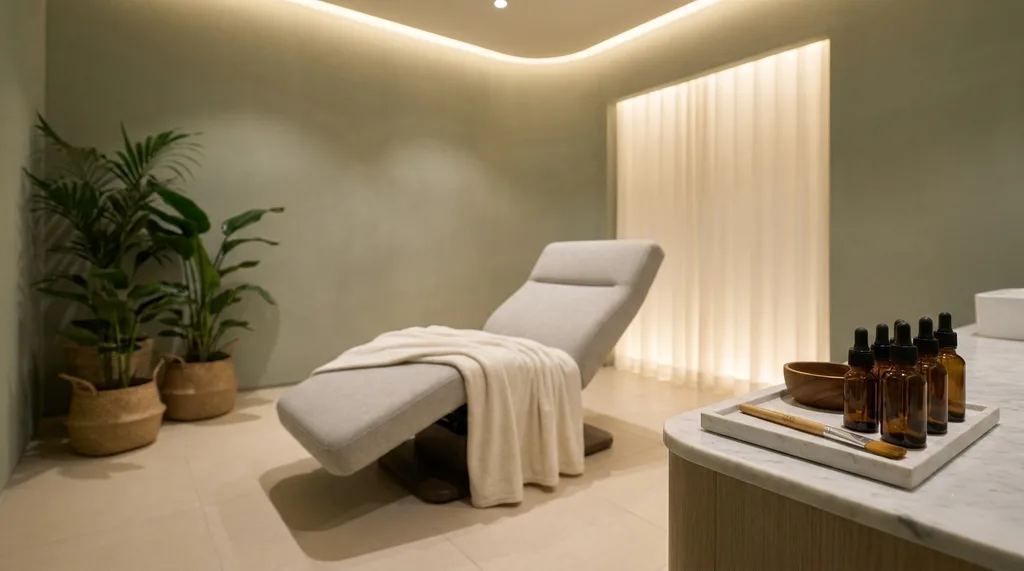
Here's something that took dermatologists decades to convince the Western haircare industry of, and that Korean women have practiced by instinct for generations: your hair strand is dead. Every single centimeter of it, from root to tip — biologically inert, incapable of healing itself, permanently fixed in whatever state it emerged in. When you spend money on a luxury hair mask and smooth it down the length of your hair, you are, at a cellular level, moisturizing a corpse.
The scalp is alive. Exquisitely, demandingly, stubbornly alive — a skin organ with its own microbiome, its own sebaceous glands, its own immune response, its own blood supply that feeds twenty or more follicles per square centimeter. Everything that will ever determine the thickness, density, strength, and shine of your hair is decided underground, before the strand ever sees daylight. This is the foundational insight behind Korean clinical scalp care, and it is the reason Korean head spas don't start with a product. They start with a camera.
Walk into a serious head spa in Seoul and the first thing you're handed is not a consultation card. It's a microscopic scalp camera, pressed gently against your scalp in four or five zones, projecting your follicles onto a screen in brutal HD detail. Clogged pores filled with hardened sebum. Miniaturized follicles — the early silent signature of hair thinning. Inflammation reddening the skin around the root. Flaking you'd never see in a mirror. The diagnosis happens before a single drop of product touches your head, because no product works on a problem you haven't correctly identified first.
That's the system. Now let's talk about how to buy into it from wherever you are.
What the Head Spa Actually Does — And Why the Order Matters
[K-Beauty 101] Du-pi (두피) — Scalp. In Korean clinical haircare philosophy, the scalp is understood the way a farmer understands soil: the health of everything that grows from it is entirely determined by what's happening beneath the surface. No amount of strand treatment changes what a neglected scalp produces.
The Korean head spa — what locals call a head spa (헤드스파) — is not a haircut with extra steps. It's a sequenced clinical protocol, and the sequence is the point.
It begins with scalp exfoliation, or dupi seukaeling (두피 스케일링) — a targeted treatment that breaks down the layer of oxidized sebum, dead skin cells, and shampoo residue that has compacted into your follicle openings over weeks of daily washing. Think of it as the dental scaling analogy made literal: you wouldn't skip the hygienist and go straight to whitening strips, yet that's exactly what most people do to their scalp every day, layering serums and treatments over blocked pores.
After the scalp is cleared, circulation work begins — a slow, rhythmic dupi massage (두피 마사지) that's less spa-relaxation and more targeted therapy. The scalp's blood vessels feed the dermal papilla, the tiny cluster of cells at the very base of each follicle responsible for producing the hair strand itself. When scalp tension chronically restricts blood flow — and modern stress, long working hours, and tight ponytails will do exactly that — the dermal papilla receives less oxygen and fewer nutrients. The massage isn't a luxury add-on. It's the delivery mechanism.
Only then does active product go in. A targeted scalp tonic or ampoule, pressed into a scalp that can now actually absorb it, sitting on skin that isn't occluded by last week's dry shampoo residue.
This is what you're trying to replicate at home. And yes — you can get meaningfully close.
The Olive Young Scalp Aisle: An Honest Reckoning
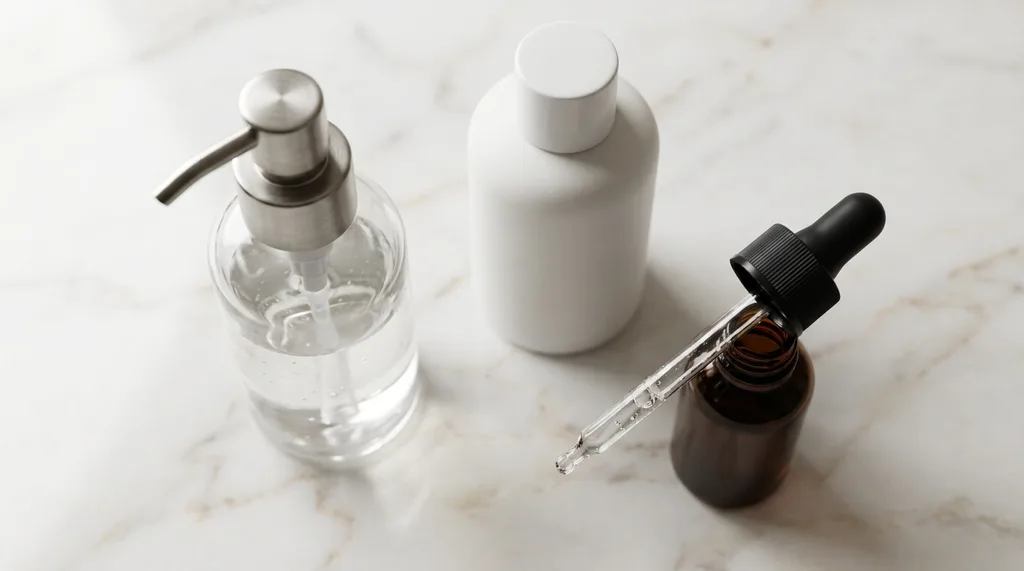
Olive Young's hair and scalp section has expanded dramatically as tal-mo (탈모) — hair loss and thinning — became one of Korea's most talked-about health concerns among adults under forty. The anxiety is real, the market responded, and the shelves are now full of products ranging from genuine clinical value to very expensive marketing.
Here is how to tell them apart.
Scalp scaling treatments are where Olive Young genuinely earns its reputation. The Korean approach to scalp exfoliants is more developed than almost anything available in Western drugstores — water-based, low-pH formulas that dissolve sebum plugs chemically rather than scrubbing them mechanically. Mechanical scalp scrubs (the ones with physical particles) can micro-abrade follicle openings and trigger reactive sebum overproduction. Look for liquid exfoliants with salicylic acid or willow bark extract. Use them once a week, not daily — the scalp needs time to rebuild its protective acid mantle.
Clinical-grade shampoos (클리닉 샴푸) are the category most people overlook because they look boring. No luxury packaging, no aspirational fragrance. But zinc pyrithione shampoos for scalp balance, or salicylic acid shampoos for chronic buildup, deliver results that no amount of argan oil will match. The honest truth: if you have persistent dandruff, an itchy scalp, or visible flaking, you are dealing with seborrheic dermatitis — a fungal-inflammatory skin condition — and you need an antifungal active, not a nourishing mask. Korean dermatologists classify this as a skin condition to be treated, not a cosmetic inconvenience to be concealed.
Scalp tonics and ampoules are the category with the most price variation and the least regulation. A K-Beauty tonic with adenosine (a peptide with published hair growth literature) and niacinamide at a visible concentration in the formula is worth serious consideration. A tonic with seventeen botanical extracts and no evidence-based active is a pleasant-smelling risk. Read the ingredient list, not the claims on the front.
Hair essences (에센스) — the finishing step — are where you can absolutely spend less without sacrificing results. The strand is dead. A leave-in essence with cyclomethicone or dimethicone will coat the cuticle and add shine. An expensive one does this. A budget one does this. The difference is fragrance and texture, not efficacy. Don't let a beautiful bottle convince you otherwise.
| Product Category | Worth It? | What Actually Matters |
|---|---|---|
| Scalp scaling treatment | Yes — if properly formulated | Salicylic acid or AHA in first 5 ingredients |
| Clinical shampoo | Yes, for scalp conditions | Zinc pyrithione or ketoconazole for fungal issues |
| Scalp tonic/ampoule | Depends on formula | Adenosine, niacinamide, peptides at functional % |
| Hair mask (strand) | Cosmetic only | Temporary smoothing — not growth or repair |
| Hair essence (leave-in) | Budget is fine | Any silicone base does the same job |
The one ingredient flag that should make you put the bottle down →
Bringing the Du-pi System Home: The Global Access Reality
The head spa philosophy doesn't require a Seoul address. It requires a shift in where you direct your attention — and your budget.
The practical home protocol, derived from what Korean head spas actually do in sequence:
Start once a week with a scalp exfoliant, applied to a dry or damp scalp before shampooing. Let it sit for five minutes. The chemistry needs contact time. Rinse, then shampoo — only the scalp, not the lengths. The lengths get cleaned by the shampoo running off. Shampooing the mid-lengths and ends of your hair daily strips the very lipid layer that gives hair its natural shine and flexibility.
After washing, while the scalp is still damp and the follicles are open from the warmth of the water, is when your active tonic goes in. Section the hair, apply to the scalp directly, and then spend five minutes in scalp massage — not rough circular scrubbing, but firm, slow lifting movements using your fingertips rather than your nails, working from the nape upward toward the crown. This specific direction follows the lymphatic drainage pattern of the scalp and helps move the fluid that can contribute to inflammatory scalp congestion.
Finish with your hair essence on the lengths only. Two drops. Three if your hair is very long. The follicle did everything real; the essence is the presentation layer.
For those outside Korea, YesStyle carries a strong range of Korean scalp care products with global shipping — including clinical shampoo categories and scalp ampoules that don't reach most international beauty retailers. The key is to search by ingredient rather than by brand claim: look for the actives listed above, and trust the formula over the marketing language.
When the Product Aisle Isn't Enough
This is the part no haul article wants to tell you, but it's the most important part.
If you are seeing a noticeable increase in hair in the shower drain, thinning at the temples or crown, or a scalp that remains persistently itchy or inflamed despite consistent product use — products are not the right first step. They are the maintenance layer for a healthy scalp, not the treatment for a compromised one.
Korea's clinical haircare system draws a clear line between cosmetic scalp care (what Olive Young sells) and medical scalp care (what a dermatologist or trichologist diagnoses and treats). Androgenetic hair loss, telogen effluvium from stress or hormonal shifts, and seborrheic dermatitis that has progressed to significant inflammation all require clinical intervention. No adenosine tonic — however well-formulated — replaces a proper diagnosis. In Korea, the head spa is understood to be wellness maintenance for a healthy scalp, not a substitute for medicine when the scalp is unwell.
If hair loss concerns you seriously, see a dermatologist before building a product routine. The scalp camera they use in Seoul head spas exists for this exact reason: to determine whether you're looking at a cosmetic concern or a clinical one. That question has to be answered first.
For readers who want the deeper science on how the scalp follicle actually produces hair — and why Korean clinical haircare specifically targets the dermal papilla rather than the strand — the connected piece on K-Head Spa walks through the full biology, from the hair growth cycle to why stress affects shedding at a hormonal level.
→ K-Head Spa: The Scalp Science Behind Korea's Head Spa Culture
The products make sense once the mechanism does. Start there.
[K-Beauty 101] Tal-mo (탈모) — Hair loss or alopecia. In Korea, this is no longer considered solely an older adult concern — the market for clinical and cosmetic hair loss prevention among adults in their twenties and thirties has expanded significantly, driving innovation in both pharmaceutical and beauty-grade scalp treatments.
The strand has always been the distraction. Beautiful, visible, something you can touch and photograph and obsess over — but ultimately, decoration on a process that happens entirely out of sight. The head spa knows this. The Olive Young scalp aisle, at its best, knows this too.
Buy for the scalp. Let the strand take care of itself.
Medical & Financial Disclaimer:
⚠️ Disclaimer: This article is for educational and informational purposes only and does not constitute medical advice. Hair loss, scalp conditions, and related concerns vary significantly in cause and severity. If you are experiencing significant hair shedding, persistent scalp inflammation, or thinning that concerns you, consult a board-certified dermatologist or trichologist before beginning any treatment protocol. Ingredient responses vary by individual — perform a patch test before applying new scalp products, particularly those containing salicylic acid or other active exfoliants. Product availability, formulations, and pricing are subject to change; verify current details before purchasing. Affiliate links in this article may earn a commission at no additional cost to you.
Comments
Post a Comment