What Korean Dermatologists Actually Prescribe: The Inner Beauty Supplement Protocol Behind Skin That Topicals Alone Can't Explain
What Korean Dermatologists Actually Prescribe: The Inner Beauty Supplement Protocol Behind Skin That Topicals Alone Can't Explain
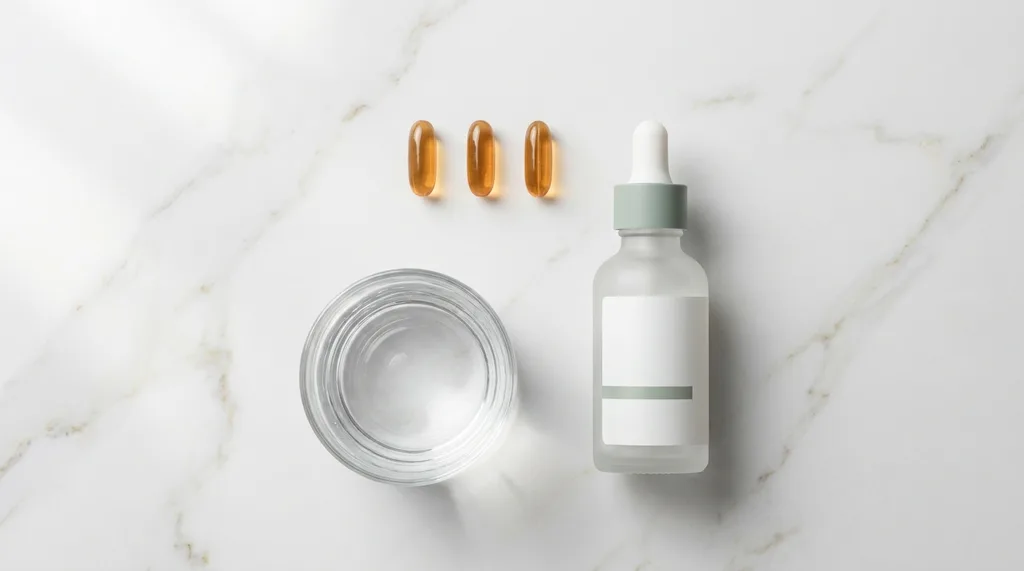
There is a question that haunts every serious K-Beauty enthusiast eventually. You've done the research. You've built the routine. You've stacked the essences and the actives and the ceramide creams — and yet somewhere out there, a Korean woman in her mid-forties is walking out of a Gangnam clinic looking like a well-rested version of herself from a decade ago, and the products on her vanity shelf are embarrassingly minimal. So what is she doing differently?
The answer, Korean dermatologists have known for years, starts long before anything touches her face.
Walk into any serious Korean skincare clinic — not the Instagram-bait kind with neon signs, but the quiet, referral-only type on the third floor of a building off Apgujeong — and you'll notice something the global K-Beauty industry rarely talks about. Next to the prescription topicals and the post-procedure care sheets, there's almost always a column of recommended supplements. Oral collagen. Ceramide capsules. Vitamin C at clinical doses. The Korean approach to skin health has always been dual-track: fix the surface and nourish the system that builds it. The global conversation got obsessed with the first half and quietly missed the second entirely.
That gap is exactly where the most interesting results are hiding.
The Protocol Korean Clinics Don't Post on Instagram
To understand why inner beauty supplements became a clinical standard in Korea rather than a wellness-aisle trend, it helps to understand what's happening at the data level. Olive Young — which processes over 180 million purchase transactions annually — has documented a consumer shift that is, frankly, surprising in its direction. Korean shoppers are buying fewer products. Not because they care less about their skin. Because the data showed them that more steps wasn't the answer.
The 10-step routine, that beautiful export the global beauty press spent a decade celebrating, is increasingly considered a relic in the market that invented it. What's replacing it isn't a simpler topical routine — it's a more intelligent one. A 3-to-5 product protocol anchored in genuine barrier science, layered with a growing inside-out approach. Korean consumers tracked on the Hwahae app (the country's largest ingredient review platform) are now cross-referencing formulas with clinical literature before they add anything to their cart.
[K-Beauty 101] Jeong-chak-tem (정착템) — a product a consumer has "settled" on after exhaustive trials. Not the newest thing. Not the viral thing. The thing that genuinely works for their specific skin, confirmed over months of use. Finding your jeong-chak-tem is considered the mature end-goal of the Korean beauty journey — and increasingly, a supplement is as likely to earn that status as a serum.
What Korean dermatologists observed over years of clinical practice is that topical ingredients face a fundamental ceiling. Ceramides applied to the stratum corneum can restore the lipid barrier's surface — but the body's ability to synthesize new ceramides, to produce collagen scaffolding, to maintain the structural integrity that makes skin look like healthy skin rather than just surface-smoothed skin, that requires inputs from inside the system. Topicals repair. Nutrition rebuilds.
This isn't a fringe theory. It's become sufficiently mainstream in Seoul that the "피부과 추천" — the dermatologist recommendation — now routinely includes an inner beauty component alongside whatever procedure you just completed.
The Science, Separated from the Marketing
Here is where it gets complicated, and where honesty earns more than enthusiasm.
Not everything marketed as a "beauty supplement" has the clinical evidence to justify the price or the promise. The Korean consumer community — the ko-deok, those intensely ingredient-literate beauty obsessives who read study abstracts like other people read menus — have become remarkably good at calling out the gap between a brand's claims and what the research actually shows.
So let's run through the core ingredients the way a Korean clinical researcher would: what the evidence supports, at what dose, over what timeframe.
Collagen peptides are the most rigorously studied inner beauty ingredient, full stop. Hydrolyzed collagen at doses of approximately 2.5 to 10 grams daily has been evaluated in multiple randomized controlled trials, with consistent findings showing measurable improvements in skin elasticity and hydration at the 8-to-12-week mark. The mechanism is not, as the marketing would have you believe, that you "eat collagen and it goes to your skin." It's more interesting than that. The hydrolyzed peptides — particularly the dipeptide Pro-Hyp — appear to act as signaling molecules, triggering fibroblasts to upregulate their own collagen synthesis. Your body reads the peptides as breakdown products and responds by repairing.
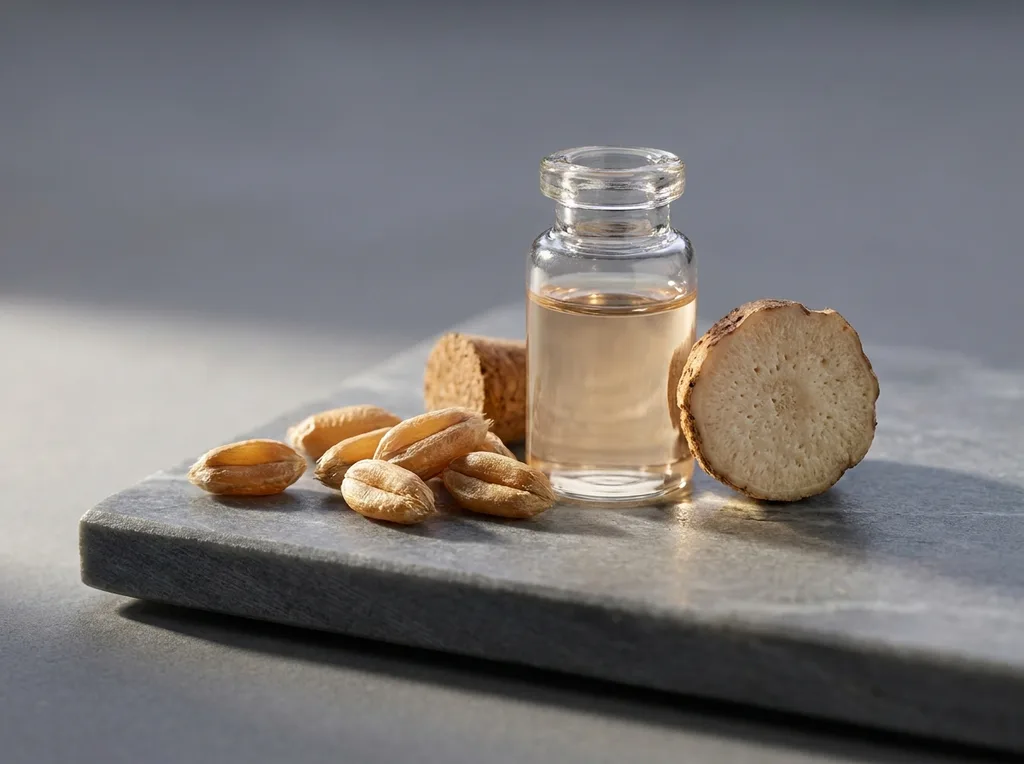
Oral ceramides represent a quieter success story. Plant-derived ceramides (often extracted from wheat or konjac) have shown in several peer-reviewed studies that oral supplementation at doses in the 30-to-130mg range can meaningfully improve transepidermal water loss — the measure of how well your skin retains moisture rather than losing it to the environment. For anyone who experiences what Korean skincare culture calls 속건성 (sok-geonseong) — that paradoxical condition of inner-skin dryness where the surface looks fine but feels perpetually parched underneath — this is the mechanism worth understanding. The skin barrier is a lipid bilayer, and ceramides are its dominant structural lipid. Restoring them topically is good. Supporting their internal synthesis is better.
Vitamin C at meaningful doses (not the trace amounts in most food or the 100mg capsules many people buy) functions as the essential cofactor for collagen synthesis — without adequate ascorbic acid, the hydroxylation reactions that stabilize collagen's triple helix structure simply cannot proceed efficiently. Korean dermatologists typically recommend doses in the 500mg-to-2g range, not as a standalone intervention but as the scaffolding that makes collagen supplementation more effective.
| Ingredient | Clinical Evidence Grade | Effective Daily Dose | Results Timeline | Marketing Reality Check |
|---|---|---|---|---|
| Hydrolyzed Collagen Peptides | Strong (multiple RCTs) | 2.5–10g | 8–12 weeks | Solid. Claims match data. |
| Oral Ceramides | Moderate (promising RCTs) | 30–130mg | 4–8 weeks | Good evidence, often underdosed in products |
| Vitamin C (as cofactor) | Strong (biochemistry + RCTs) | 500mg–2g | Ongoing | Marketing claims exceed typical doses |
| "Beauty" Multivitamins | Weak | Variable | Unclear | Marketing leads clinical evidence significantly |
The regulatory context matters here too. South Korea's Ministry of Food and Drug Safety has significantly strengthened its clinical validation requirements, with success rates for clinical claims rising from 78% in 2018 to 85% by 2023. Products that survive the Korean regulatory process are, on average, better validated than their Western equivalents. That credibility transfers to the supplement category, but consumers are right to read labels carefully and check whether a product's clinical data was conducted at the dose actually present in the capsule.
How Koreans Actually Build the Inner Beauty Routine
[K-Beauty 101] Overkill (오버케어) — skincare overload, the cautionary tale of the 10-step era. Korean dermatologists cite over-layering as one of the most common causes of barrier damage they see in clinic. The supplement equivalent is stacking five different collagen products because more must be better. It isn't. Targeted and consistent beats ambitious and scattered, every time.
The Korean approach to inner beauty supplementation mirrors the disciplined protocol thinking that defines their topical routines. Purpose comes first. Timing matters. And the protocol has clear phases.
For someone primarily focused on skin barrier repair and hydration — the most common concern among Olive Young's data set — the Korean clinical approach typically centers on oral ceramides as the foundation, with collagen peptides added once baseline hydration is stabilized. The logic: ceramides first because a compromised barrier won't absorb or retain anything efficiently, including the topical products you're already spending money on.
For anti-aging and elasticity concerns, the sequence usually reverses: collagen peptides at a meaningful dose (not the 500mg micro-dose in most "beauty" products — closer to the 5g+ range that the RCTs actually used), alongside vitamin C as a cofactor. Korean dermatologists note that the timing matters: taking collagen on an empty stomach or with a small amount of vitamin C in the morning appears to optimize absorption, though the evidence on this specific timing is preliminary rather than definitive.
For post-procedure recovery — after laser treatments, micro-needling, or the PDRN (polydeoxyribonucleotide, the salmon DNA extract that has become the gold standard for regenerative care in Seoul clinics) injections that have taken over Korean aesthetic medicine — the protocol typically involves higher-dose collagen, zinc, and vitamin C for the acute repair phase, transitioning to a maintenance protocol around week four.
The one thing consistent across all three applications: consistency over intensity. Korean skincare culture understands that you cannot rush biology. The ko-deok who track their supplement protocols on skincare community forums are meticulous about duration — they're evaluating at three months, not three weeks. That patience is itself a kind of expertise.
If you've spent time navigating the real depths of Korean beauty culture — the community forums, the clinical blogs, the ingredient-obsessed communities that make Hwahae one of Korea's most-used apps — you know that the most valuable information rarely surfaces in a single article. The full picture of what Korean dermatologists recommend, which supplement protocols are backed by actual local clinical data, and which trending ingredients are mostly marketing with impressive packaging: that's exactly what the K-Beauty Black Book was built to deliver.
Accessing Clinic-Grade Results Without Clinic Prices
The K-Beauty export boom that pushed Korean cosmetics exports to $11.43 billion in 2025 — surpassing even the US market's dominance and making America the single largest recipient at over $2 billion — has had an interesting side effect on the supplement market. Products that once required a Seoul pharmacy trip or a Korean friend with a Coupang account are now globally accessible, often at prices 40 to 70 percent lower than what international beauty retailers charge for similar formulations.
The critical consideration when buying supplements internationally — and this matters more than with topical skincare — is authentication. Supplement counterfeiting is a genuine problem in global e-commerce in a way that copycat moisturizers generally aren't, because the consequences of an adulterated supplement are not just wasted money but potentially real harm. Korean consumers using Hwahae to verify ingredients have built a culture of authentication that global shoppers would do well to adopt.
iHerb operates on a direct-sourcing model for the brands it carries, which addresses the counterfeit concern that makes supplement buying on general marketplace platforms risky. For globally accessible collagen peptides, oral ceramides, and clinical vitamin C, it remains one of the most reliable pathways for getting products that match what Korean dermatologists actually recommend rather than what the wellness aisle is currently promoting.
What Could Go Wrong — and Who Should Be Careful
The most important section in any supplement guide is the one most beauty content quietly buries. Here it is, in plain language.
Collagen peptides are generally well-tolerated, but they are derived from animal sources (marine, bovine, or porcine). Anyone with fish or shellfish allergies needs to confirm the source carefully before taking marine collagen — reactions range from mild to severe. Plant-derived collagen "boosters" do not contain actual collagen; they contain cofactors. That's a meaningful distinction the marketing rarely makes clearly.
Oral ceramides from wheat-derived sources pose a concern for anyone with celiac disease or non-celiac gluten sensitivity, even though the ceramide fraction itself is typically gluten-free. The extraction process matters. Konjac-derived ceramides are a safer alternative for this group.
High-dose vitamin C supplementation (above 2g daily) can cause gastrointestinal distress in sensitive individuals and may interact with certain medications including some chemotherapy agents and blood thinners. The "more is better" logic does not apply here.
Anyone who is pregnant, breastfeeding, managing a chronic condition, or taking prescription medication should consult a physician before starting any supplement protocol — including beauty-focused ones. Korean dermatologists who recommend supplements are doing so within a clinical context that includes a full patient history. Replicating their recommendation without that context is how good advice becomes the wrong advice for a specific person.
The best supplement routine isn't the most aggressive one. It's the one that fits your actual biology, taken consistently over the months it takes to see genuine structural change. That's the Korean approach in practice — not a shortcut, but a protocol that actually respects how skin works.
Before diving into supplements, understanding how Korean dermatology approaches skin from the inside changes everything. Read: [K-Beauty Columnist — The Full Editorial Archive]
Medical & Financial Disclaimer: The information in this article is for educational purposes only and does not constitute medical advice. Before starting any supplement regimen — including collagen peptides, oral ceramides, or high-dose vitamin C — consult a qualified healthcare provider or licensed dermatologist, particularly if you are pregnant, breastfeeding, have a chronic medical condition, or take prescription medications. Individual skin responses vary; clinical study results represent population averages, not guaranteed personal outcomes. Supplement dosages mentioned reflect published research parameters, not a personalized prescription. Patch-test any new topical products alongside new supplement protocols to isolate variables if reactions occur.
Comments
Post a Comment