What Korean Dermatologists Tell Their Patients to Swallow Before They Sell Them a Serum
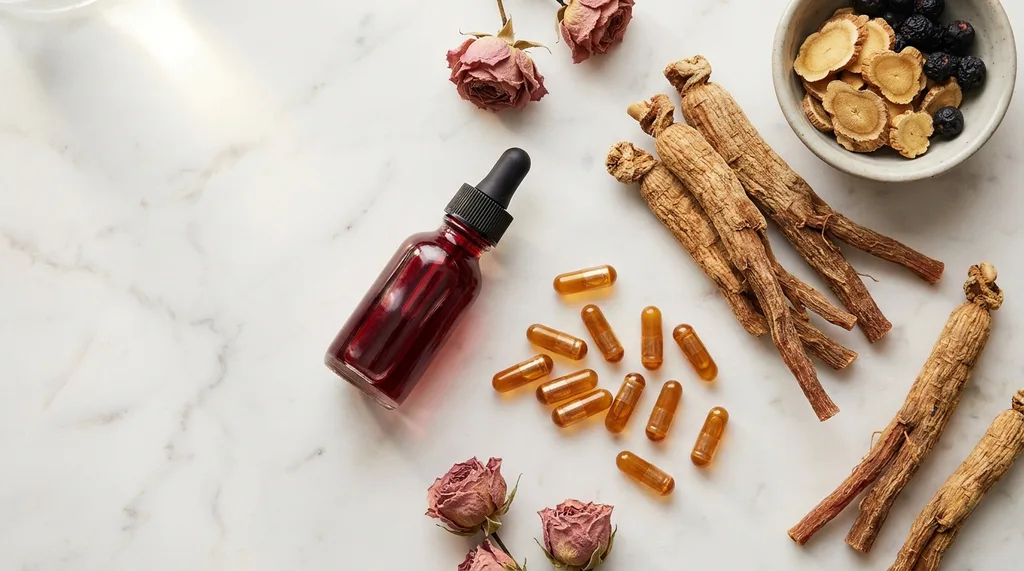
Korean women in their 50s don't look like they've fought time. They look like they never declared war on it. And for years, Western beauty media explained this with the 10-step routine, the glass skin aesthetic, the perfectly layered essences — as if the answer lived in the bottles. It doesn't. Or at least, not only there. Walk into a Seoul dermatology clinic in your 40s and the first recommendation you'll often receive isn't a prescription retinol or a laser treatment. It's a conversation about what you're putting in your body — and how that conversation should have started fifteen years ago.
But here's what nobody mentions in those K-Beauty round-ups: Korea built a government-enforced clinical framework that separates products claiming anti-aging benefits from products that have actually earned the right to say it. And within that framework, ingestible supplements occupy a specific, science-backed lane that Korean women have been driving in for decades. The global anti-aging market is projected to nearly double from $68.43 billion in 2025 to $132.87 billion by 2035 — and Korea's own market is on a near-identical trajectory, growing toward $2.05 billion by 2034. That growth isn't driven by better moisturizers. It's driven by a population that decided to address skin aging from the inside out.
If you're 40-something and you're only now encountering this system, the question isn't whether it's too late. The question is where you enter.
The Clinic Standard Nobody Translates for You
Korean dermatology operates on a regulatory foundation with no real Western equivalent. The MFDS — Korea's Ministry of Food and Drug Safety — enforces a category called Gineunseong Hwajangpum (functional cosmetics), which legally mandates that products claiming wrinkle reduction, brightening, or barrier improvement must clear clinical verification. This isn't a marketing umbrella. It's a standards gate.
[K-Beauty 101] Gineunseong Hwajangpum (Gineunseong Hwajangpum) — Korea's regulatory category for "functional cosmetics" that must demonstrate clinical efficacy for specific claims. The MFDS enforces this across five major categories: brightening, wrinkle improvement, UV protection, scalp care, and skin barrier strengthening. If a product sits in this category, it passed a bar. If it doesn't, the claim on the label is just marketing.
The clinical culture this creates extends beyond topicals. Korean dermatologists — particularly those serving patients in their 40s and 50s — regularly recommend ingestible supplement protocols alongside in-clinic treatments. The philosophy is structurally different from the Western model, which treats supplements as vaguely supportive and skincare as the real intervention. In Seoul clinics, ingestibles are the infrastructure. Topicals are the maintenance.
The target this infrastructure is building toward isn't fewer lines. It's tallyeok.
[K-Beauty 101] Tallyeok (tallyeok) — Skin elasticity, and the single quality Korean women in their 40s and 50s cite most consistently as their primary anti-aging concern. Korean dermatology orients its treatment protocols — both topical and ingestible — around elasticity restoration, not line reduction. This is a fundamentally different therapeutic endpoint than what Western anti-aging products are engineered for, which explains why Korean and Western anti-aging results can look so distinct even when the same ingredient is used.
When the target is elasticity rather than line-filling, the supplement strategy follows a completely different logic. You're not masking. You're rebuilding.
The Science, Without the Marketing Gloss
Korean consumers have a name for themselves: Skintellectuals — beauty-savvy buyers who prioritize MFDS-validated ingredient data over brand narrative. They use platforms like Hwahae to audit ingredient lists before they spend a single won. This culture of ingredient scrutiny extends to ingestibles, where the gap between clinical evidence and marketing claims can be enormous. The table below reflects the current dermatological consensus in Korea — not what brand packaging says, but what the evidence actually supports.
| Ingredient | Primary Mechanism | Effective Dose Range | Evidence Level | Onset Window |
|---|---|---|---|---|
| Marine Collagen Peptides | Stimulates fibroblast collagen synthesis; supports tallyeok | 2.5–10g / day | Strong — multiple RCTs | 8–12 weeks |
| Red Ginseng Extract (Hongsam) | Ginsenoside-driven antioxidant + collagen-stimulating activity | 1–3g / day | Strong — MFDS-recognized | 8–16 weeks |
| Vitamin C (Ascorbic Acid) | Collagen cofactor; neutralizes oxidative damage | 500–1000mg / day | Strong — foundational collagen science | 4–8 weeks |
| Niacinamide (B3) | Barrier support; NAD+ precursor for cellular repair | 14–50mg / day (oral) | Moderate — topical evidence stronger | 6–10 weeks |
| Fermented Botanical Extracts | Enhanced bioavailability of polyphenols; gut-skin axis support | Varies by formulation | Moderate — evidence growing, not conclusive | 10–16 weeks |
| PDRN / Exosome Supplements | Cellular regeneration signal; collagen synthesis stimulation | Formulation-dependent | Early-stage — marketing claims ahead of data | Unknown |
A note on that last row: PDRN and exosome-based topicals and injectables are genuinely interesting to Korean dermatology — and the research on their topical and clinical applications is advancing. But as oral supplements? The clinical evidence is not there yet. The marketing is. Korean Skintellectuals know the difference. Now you do too.
The real workhorses here are the first three. Marine collagen peptides have the strongest body of evidence for the tallyeok target — multiple randomized controlled trials show measurable improvements in skin elasticity with consistent dosing. Vitamin C isn't glamorous, but collagen synthesis literally cannot happen without it as a cofactor. Skipping it while taking collagen peptides is like buying a car and forgetting the engine.
And then there's hongsam.
[K-Beauty 101] Hongsam (hongsam) — Red ginseng, produced by steaming and drying the root in a process that converts ginsenosides into more bioavailable forms. The cultural lineage here is extraordinary: this is the ingredient Korean grandmothers steeped into daily tea for generations, and it's now one of the few hanbang (traditional Korean medicine) ingredients with clinical validation recognized by the MFDS for antioxidant and cellular repair properties. The continuity between ancestral knowledge and clinical science is not a marketing story. It's a real one.
What Korean dermatologists have understood for decades — and what Western anti-aging brands largely missed — is that hongsam's adaptogenic properties make it especially relevant for the hormonal-shift phase of aging. The antioxidant load increases exactly when cellular repair mechanisms start slowing down. Hongsam addresses both simultaneously. That's why it's not just in premium skincare; it's on the supplement shelf at every Olive Young in the country.
The bioavailability gap: why fermentation changes everything about how these supplements actually work →
The Korean Protocol: How to Actually Use This
Korean women approaching this system don't take supplements randomly. The approach follows what Seoul practitioners describe as the "slow-aging" philosophy — a concept that translates roughly as building longevity infrastructure, not chasing corrections. The goal is sustained skin quality over decades, not a three-week glow.
The recommended entry protocol for women starting in their 40s typically runs in two phases:
Phase 1 — Foundation Loading (Weeks 1–12) This is the repair phase. The priority is collagen peptides and Vitamin C, taken together, ideally in the morning with food. The combination matters: Vitamin C is the enzymatic cofactor that determines whether the collagen peptides you consume actually convert into structural tissue or get metabolized as generic amino acids. Most people take them separately and wonder why results are slow. Take them together. 5g of marine collagen peptides + 500mg Vitamin C at breakfast is the Seoul standard.
Red ginseng extract enters during this phase too — 1–2g daily, with meals to minimize any gastric sensitivity. Korean practitioners recommend a consistent 8-week run before evaluating.
Phase 2 — Maintenance and Barrier Support (Week 12 onwards) Once elasticity markers start improving, the protocol shifts toward maintenance. Hongsam can be reduced to a lower maintenance dose. Fermented botanical complexes become more relevant here — supporting what Korean skincare calls the gut-skin axis, the idea that the microbiome's health directly influences inflammatory patterns in the skin. This is where the evidence is less conclusive but the Korean clinical intuition has been running ahead of the Western research for years.
Timing specifics that Korean women actually follow: collagen and Vitamin C in the morning (collagen synthesis is a daytime process), any adaptogenic extracts like hongsam with lunch or an early meal, never on an empty stomach.
One thing that gets buried in every supplement article and shouldn't: these timelines are real. Eight weeks is the minimum window before you're evaluating anything meaningful. The Korean slow-aging philosophy is not a marketing soft-sell — it's an accurate description of how cellular repair actually operates. Expect nothing at four weeks. Evaluate honestly at twelve.
Where to Find These Outside Korea
The honest reality for readers outside Korea: Olive Young ships internationally now, but the Korean-market supplement formulations aren't always available globally. iHerb fills this gap reliably — it's the platform Korean expats and K-Beauty enthusiasts trust specifically because of its direct sourcing model, which matters for supplements in a way it doesn't for a moisturizer. Counterfeit supplements are a real concern in grey-market channels. iHerb's sourcing architecture addresses that.
What to look for when you're browsing:
| Category | What to Look For | What to Avoid |
|---|---|---|
| Marine Collagen | "Hydrolyzed" peptides, 5–10g dose, Type I/III | Blends diluted below 2g per serving |
| Red Ginseng | Ginsenoside content specified (not just "extract") | Generic "ginseng" without species or type clarification |
| Vitamin C | Paired with bioflavonoids for absorption | Megadose isolates over 2,000mg (diminishing returns + GI risk) |
| Fermented Complex | Fermentation method specified by brand | Proprietary blends with no breakdown of actives |
Use code QAK3042 at checkout for an additional discount on your first iHerb order — it's the code the K-Beauty community circulates precisely for this category.---
Before You Start: The Risks Nobody Lists First
Marine collagen peptides are derived from fish. If you have a fish allergy, the reaction risk is real, not theoretical. Bovine collagen is an alternative, but the ginsenoside-rich red ginseng extract does not carry a shellfish or fish allergy risk.
Red ginseng (hongsam) is a mild stimulant. Korean practitioners routinely flag it for people sensitive to caffeine-adjacent compounds — it can disrupt sleep if taken in the evening. It also has mild blood-thinning properties. If you're on anticoagulants or anti-platelet medications, the interaction risk requires a conversation with your physician before you start, not a conversation you have after six weeks of use.
High-dose Vitamin C (above 1,000mg daily) has a well-documented GI side effect profile: loose stools, nausea, cramping. The Korean protocol doesn't push high doses for this reason. 500mg with food is sufficient for collagen synthesis support. Hitting 2,000mg because you saw it on an influencer's shelf is not a Korean thing. It's a Western overcorrection.
The category that gets the most enthusiastic marketing claims right now — PDRN and exosome-based oral supplements — is also the category with the least clinical backing for oral delivery. The Korean dermatology community is genuinely excited about these molecules in clinical and topical applications. As supplements you swallow? The excitement is ahead of the evidence. Hold that category for the next review cycle, when the data catches up.
Korean anti-aging supplements aren't magic. They're infrastructure. The philosophy encoded in every recommendation above is the same one that runs through all of Korean skincare: you don't fight time, you invest in quality so consistently that when time moves, your skin has the structural reserves to move with it gracefully. The best time to start was twenty years ago. The second best time is to stop buying anti-aging promises and start building skin.
Medical & Financial Disclaimer:
⚠️ Disclaimer: This article is for educational purposes only and does not constitute medical advice. Anti-aging supplements — including collagen peptides, red ginseng extract, and Vitamin C — can interact with medications and may be contraindicated for certain health conditions including pregnancy, breastfeeding, autoimmune disorders, kidney disease, and anticoagulant therapy. Always consult a qualified physician or registered dietitian before beginning any supplement protocol. Individual results vary significantly and are influenced by dosage, formulation quality, consistency of use, and baseline skin and health status. Ingredient efficacy claims referenced in this article reflect current clinical literature and do not guarantee specific outcomes. Pricing and product availability are subject to change.
Comments
Post a Comment