Beyond Shade 21: The Honest Map of K-Beauty for Darker Skin Tones
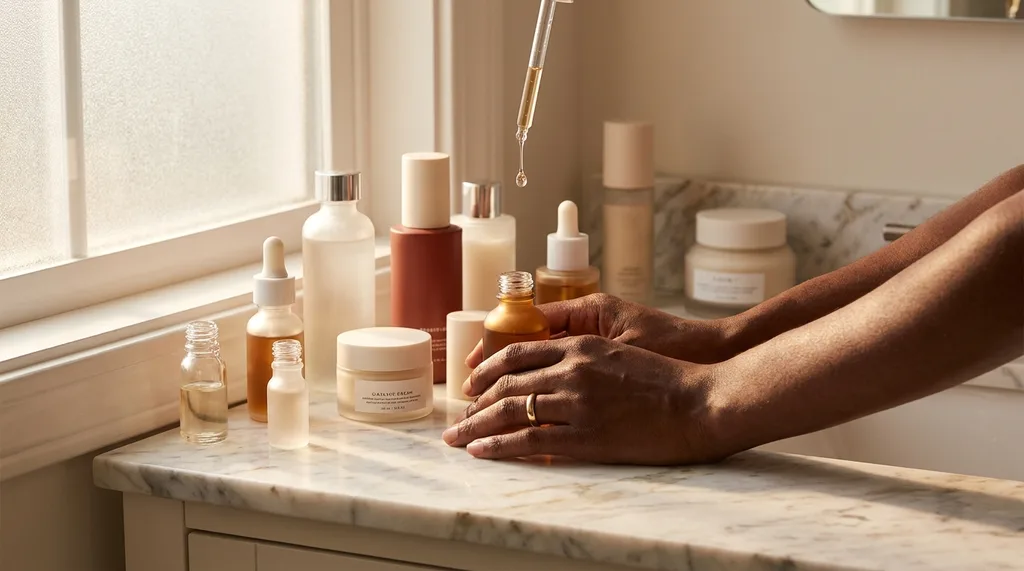
Walk into the beauty floor of any Korean department store a decade ago and you'd find a world organized around a single number: 21. Not metaphorically — literally. Foundation counters from Myeongdong to Gangnam stocked essentially two shades, labeled 21 (fair, cool-toned) and 23 (slightly warmer, a hair deeper), and if neither matched your skin, the beauty advisor would tilt her head and suggest you try the lighter one. "It'll blend," she'd say, with complete sincerity. This was the aesthetic logic of an entire industry. And when K-Beauty went global, it brought that same logic with it.
TirTir's now-iconic cushion foundation launched with three shades. Three — for a worldwide market that had already fallen hard for what Korean skincare science could deliver. The question isn't how a brand could have been so blind to the global majority standing in front of them. The question is what happened next, and whether what's being called "progress" is structural change or just better PR.
Because here's what nobody in the "K-Beauty for everyone" conversation says clearly enough: the skincare half of K-Beauty and the makeup half are not the same industry wearing the same name. They operate on different science, different motivations, and a very different track record with melanin-rich skin. Getting this wrong in either direction — dismissing K-Beauty entirely, or uncritically celebrating every brand that adds a few darker shades — is costing people real money, real frustration, and in some cases, real damage to their skin.
So let's be specific.
The Two K-Beauties Nobody Told You About
The K-Beauty category gets discussed as though it's one coherent thing. It isn't. Underneath the unified aesthetic of dewy skin and pastel packaging, there are two genuinely different industries operating on different logic.
The first is K-Beauty skincare: a science-forward, dermatology-adjacent system built around barrier integrity, low-pH cleansing, and layered hydration. This is the world of ceramides, fermented actives, and niacinamide. Its philosophical DNA comes from the Korean medical aesthetic tradition — obsessive about preventing damage, not just concealing it.
The second is K-Beauty cosmetics: foundations, cushions, BB creams, and color cosmetics. This world was built for, tested on, and photographically validated against a very specific complexion range — and until recently, that range was strikingly narrow.
These two industries have almost nothing in common except geography and distribution channels. And treating them as interchangeable is the original sin of every "Does K-Beauty work for darker skin?" article ever written.
The honest answer: the skincare side largely does. The cosmetics side largely didn't — and what's changing is genuinely interesting, if not yet complete.
🎵 K-Mono Lofi — Seoul Study Beats
Read deeper with Seoul lo-fi in the background — curated by K-Mono Lofi
Where Korean Skincare Science Was Always on Your Side
Here's the thing about Korean dermatology's core obsessions — barrier repair, hyperpigmentation reduction, sebum regulation, even-tone correction — these are not niche concerns for fair East Asian skin. They are disproportionately the concerns of melanin-rich skin.
Post-inflammatory hyperpigmentation (PIH) is a condition that affects deeper skin tones at higher rates and with greater severity than lighter ones. Barrier disruption — the kind caused by harsh Western cleansers or over-exfoliation — triggers PIH in Fitzpatrick IV–VI skin in ways that are significantly harder to reverse than in lighter tones. The Korean clinical concept of 피부 장벽 (pibu jangbyeok — skin barrier) and its imperative to protect it at all costs is, if anything, more critical for melanin-rich skin than for the skin tones it was originally designed around.
[K-Beauty 101] Pibu jangbyeok (skin barrier) — the structural integrity of the skin's outermost layer, responsible for retaining moisture and keeping irritants out. When disrupted in melanin-rich skin, the inflammatory response doesn't just create redness — it triggers melanin overproduction, leaving dark marks that can persist for months. Korean barrier-first philosophy addresses this cascade before it starts.
This is the quiet irony at the heart of inclusive K-Beauty discourse: the skincare science wasn't designed with melanin-rich skin in mind, and yet it accidentally became one of the most relevant systems for it.
Low-pH cleansers — the Korean norm — preserve the skin's acid mantle rather than stripping it. For skin types prone to dehydration and PIH, this is not a preference. It's a clinical necessity. Western cleansers that run alkaline (pH 9–11) cause precisely the barrier disruption that sets off hyperpigmentation spirals.
Niacinamide, which saturates the K-Beauty market at concentrations of 2–5%, inhibits the transfer of melanin from melanocytes to skin cells — the exact mechanism that prevents and fades the dark marks melanin-rich skin is most vulnerable to. Centella asiatica (cica), another K-Beauty staple, accelerates wound healing and reduces inflammation, directly interrupting the PIH cycle.
Then there's the Korean diagnostic framework that many readers with melanin-rich skin will find startlingly accurate: 수부지 (suboji), describing skin that appears oily on the surface but is actually dehydrated underneath. Western dermatologists routinely classify this skin type as simply "oily" and prescribe stripping routines that worsen hyperpigmentation. Korean skincare built an entire product category around suboji, treating the dehydration rather than punishing the sebum.
✅ K-Beauty Skincare: Built for You (Even When It Didn't Know It)
- Low-pH cleansers preserve barrier integrity, preventing PIH triggers
- Niacinamide (2–5%) directly inhibits melanin transfer
- Cica formulas reduce inflammation that causes dark marks
- Suboji (수부지) framework accurately diagnoses dehydrated-oily skin
- Barrier-first philosophy more critical for Fitzpatrick IV–VI than for lighter tones
- Skip-Care ethos reduces over-layering that causes irritant dermatitis
⚠️ K-Beauty Cosmetics: Where the Industry Built a Wall
- Shade ranges historically anchored to shades 21 and 23
- Undertone research designed around cool/neutral East Asian complexions
- Product photography tested under conditions that flatter fair skin
- Hoe-gi (grayish/ashy) finish common on deeper skin tones
- Cushion formula density often insufficient for deeper coverage needs
- Global launch strategies treated shade expansion as afterthought
One warning, though — and this matters: not all K-Beauty actives are equally safe for darker skin tones. High-concentration AHA peels, certain brightening acids, and any active that causes significant exfoliation or inflammation can accelerate PIH rather than reduce it. The Korean "Skip-Care" movement — which pulls back from aggressive over-layering — is the correct instinct. But a product marketed as "brightening" in Seoul's clinical tradition can still be misused to cause real harm on melanin-rich skin if concentration, frequency, and barrier status aren't accounted for.
The Makeup Counter That Forgot You Were There
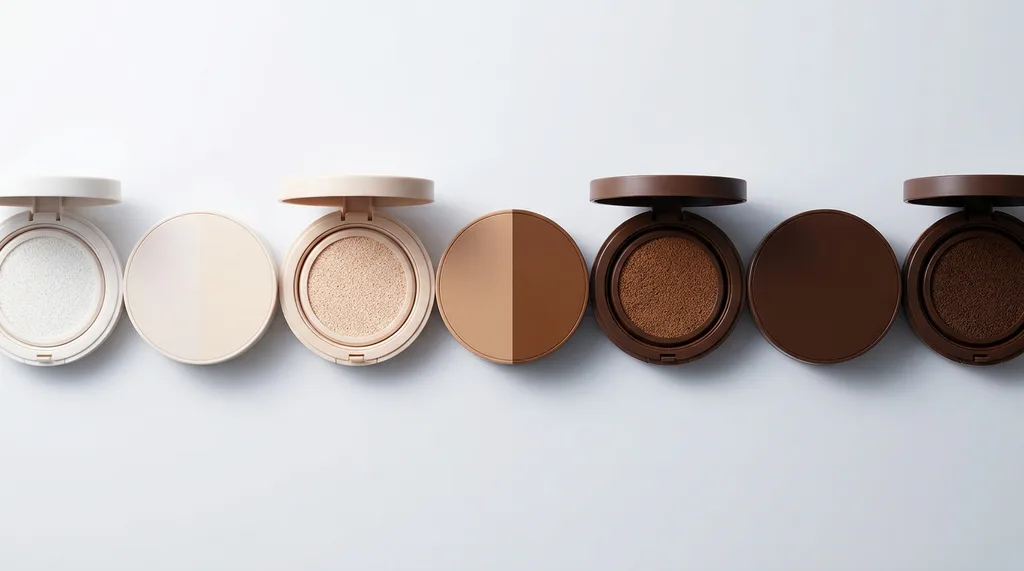
[K-Beauty 101] Hoe-gi (회기) — a Korean beauty term for the grayish, ashy, or "dead" cast a foundation leaves when its undertone doesn't match the wearer's complexion. What English speakers describe as a product making their skin look "chalky" or "like a mask," Korean beauty consumers have named with surgical precision. The goal its opposite: chaltteok (찰떡) — a perfect, seamless bond between product and skin, named for the satisfying stick of glutinous rice cake.
The K-Beauty cosmetics industry didn't fail darker skin tones through malice. It failed through a kind of earnest tunnel vision — an industry that grew up serving one complexion range, optimized every variable for that range, and then was surprised when the product didn't translate globally.
The failure is more systematic than a simple shade count. Consider how Korean foundations were — and in many labs still are — photographically validated: under studio lighting calibrated for East Asian complexions, photographed by cameras with white-balance settings optimized for fair skin. A formula that photographs as "natural" in that context can read as chalky, gray, or oxygen-deprived on a deeper skin tone under the same lighting. The hoe-gi problem isn't just about pigment depth. It's about undertone architecture and the entire testing pipeline that validated products before they ever reached a counter.
This created what Korean beauty communities started calling 파데 유목민 (Pade Yumokmin) — the Foundation Nomad. A consumer who wanders endlessly between brands, buying foundation after foundation, unable to find a shade that doesn't cast ashy or pull too pink or oxidize into something unrecognizable by noon. In Korea, this term originally described fair-skinned women cycling through 21 and 23. For darker-skinned consumers globally, the problem was identical but with fewer options and higher stakes — because the wrong foundation doesn't just look odd. On melanin-rich skin prone to uneven tone, a poorly matched base product actively highlights the very concerns you're trying to address.
The Machines Are Finally Learning to See You

Something structural happened between TirTir's three-shade debut and the current moment. And it's worth understanding exactly what — because the difference between a brand adding a few token darker shades and genuinely solving the inclusion problem is the difference between a press release and an engineering overhaul.
TirTir's expansion to over 45 shades wasn't simply a decision to print more shade names on more cushion compacts. It required rearchitecting the undertone research, moving away from cool/neutral assumptions, and building genuine warm-deep options that don't oxidize on higher Fitzpatrick skin types. The same cushion that launched with three shades now spans a range that has generated genuine acclaim from communities whose verdict cannot be bought: darker-skinned creators with large followings who have no commercial relationship with the brand and every reason to be skeptical.
Innisfree's cushion line expanded to 14 shades — modest by global standards, but a meaningful departure from where it started. The context matters: these aren't just larger numbers. They represent colorimetric research that had to rebuild from scratch once the brief changed.
The most technically interesting development, though, is Amorepacific's AI-driven manufacturing system — a platform built on over 78 years of accumulated skin data that performs real-time skin analysis and manufactures foundation on-site to individual specification. The system currently offers over 200 foundation variants and 366 lip color variants. The logic is the inverse of traditional shade range expansion: instead of pre-manufacturing a set number of shades and hoping your customer finds themselves within the range, the system compresses toward a match for each individual's actual skin reading.

There's a secondary development worth noting here that rarely makes it into inclusion conversations: the growing use of CI 77492 (Yellow Iron Oxide) as a functional pigment in Korean formulas. Beyond its role in achieving warm undertones, it provides measurable protection against blue light (HEV radiation) — a concern that affects Fitzpatrick III–VI skin disproportionately, since HEV-induced hyperpigmentation is more pronounced and persistent in higher melanin concentrations. A shade expansion effort that also improves photoprotection for the skin types it's serving isn't just doing the math on inclusion — it's doing dermatology.
One note of intellectual honesty: the industry-wide transformation is still more promise than fulfilled catalog. The documented progress is real — TirTir's expansion is verified and reviewed, Amorepacific's AI system has received recognition for its precision — but comprehensive, brand-by-brand inclusion across the Korean cosmetics industry hasn't arrived yet. The strategic recognition is widespread. The execution is uneven. The brands doing it seriously are doing it very seriously. The rest are adding three shades to their darkest range and calling it done.
The reader who needs more than a press release should be skeptical of any K-Beauty brand that can't show you actual user reviews from melanin-rich skin creators — not paid partnerships, not curated media, but the unsponsored reviews from people with skin that actually challenges the formula.
What You Can Actually Do Right Now
The map is clear enough now that the actions become specific.
On the skincare side — use it fully. Low-pH cleansers, barrier-repair ceramide moisturizers, niacinamide serums at 2–5% concentration, cica formulas: these work on your skin, often better than Western clinical alternatives, and the Korean market offers them at price points that genuinely compete with drugstore options. The pibu jangbyeok philosophy — protect the barrier first, treat everything else second — is arguably more important for melanin-rich skin than for the complexion types it was built around.
Start with one active. Not a full routine. If you're new to niacinamide, introduce it three nights a week and watch for any initial irritation — some formulations include potential irritants like fragrance or alcohol alongside the niacinamide, and your barrier deserves a careful introduction, not a flood.
If you've been diagnosed as "oily" by Western skincare logic and the treatments have been leaving your skin tight, reactive, and still producing oil, consider whether suboji (수부지) — the dehydrated-oily pattern — is a better description of what's actually happening. The products built for that skin type will respond very differently than those built for genuinely oily skin.
On the cosmetics side — shop with your eyes open. The shade ranges to trust are the ones verified by creators who don't have a brand deal: search specifically for unsponsored reviews by people whose skin tone resembles yours on the specific product, under natural lighting. The hoe-gi effect is real and common, and no amount of "buildable coverage" framing corrects an undertone mismatch.
When testing K-Beauty foundations or cushions, test them on your jawline and watch the formula for at least twenty minutes. Many Korean cushion formulas oxidize — meaning they shift darker or warmer after initial application. What looks right at the counter may not look right an hour later. This matters more for deeper skin tones, where the oxidation shift is more visible against your natural tone.
Treat shade range size as a proxy for how seriously a brand has taken inclusion — but not the only one. Forty-five shades that don't include the right undertones for deeper complexions is still a failure. Eight shades with genuine warm-deep options built around real colorimetric research is more useful. Read the reviews. Watch the swatches. Trust the community over the press coverage.
And remember that in Korean regulatory language, 미백 (Mibaek — brightening) means specifically the reduction of melanin in hyperpigmented areas through tyrosinase inhibition. It does not mean blanket skin lightening, bleaching, or overall complexion alteration. When you see "brightening" on a K-Beauty label, you're reading a clinical claim about dark spot reduction — not a promise to change your baseline tone, and not an invitation to use the product at double the recommended frequency to accelerate results. The concentrations were tested at the doses on the label. Working with them, not around them, is what gets you the outcome without the PIH setback.
K-Beauty didn't fail darker skin tones uniformly. It failed them selectively — in one half of an industry, through a specific combination of tunnel vision and insufficient market pressure. The same Korean engineering precision that created the failure is now being pointed in the other direction. It's not complete. But it's structural. And the reader who knows where to look, and what questions to ask, is already three steps ahead of the one waiting for K-Beauty to simply become what it was always being marketed as.
The chaltteok moment — that perfect, seamless match — is no longer just a fantasy for fair skin. Whether the industry fully closes the distance depends on which brands you reward with your attention and your spending. That's not a small thing.
Medical & Financial Disclaimer:
⚠️ Disclaimer: The skincare recommendations in this article are for educational purposes only and do not constitute medical advice. K-Beauty actives including niacinamide, centella asiatica, AHA/BHA exfoliants, and brightening ingredients can interact differently with varying skin types and Fitzpatrick skin tones. Always perform a 48–72 hour patch test before introducing any new active ingredient. If you experience post-inflammatory hyperpigmentation, persistent irritation, or unexpected skin changes, discontinue use and consult a board-certified dermatologist — ideally one with experience treating melanin-rich skin. Korean regulatory standards (MFDS) differ from FDA classifications; ingredient concentrations and claims may not be directly comparable to Western clinical products. No product recommendation in this article constitutes an endorsement or guarantee of results.
✓ Researched and compiled using verified data as of the publication date.
 Operated by: Quiet Korea | Contact: rsl.2001.1975@gmail.com
Comments
Post a Comment