Clinical Truth: The Unvarnished Reality of Skin Botox

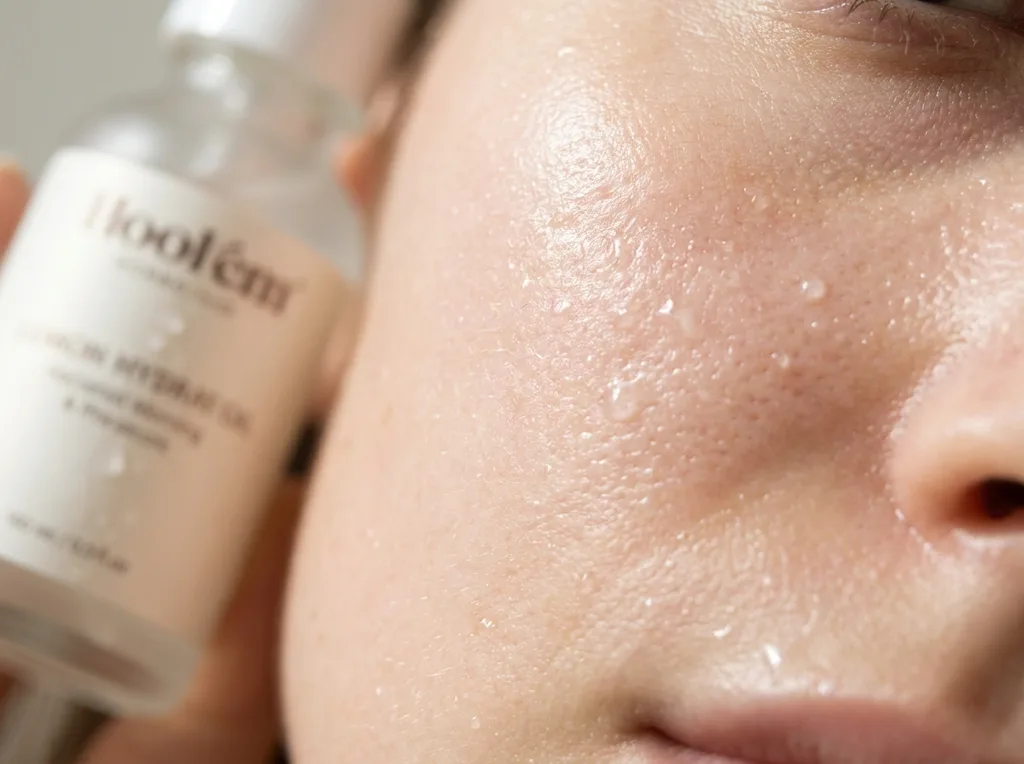
You have likely seen the images—the dewy, poreless, "glass-like" skin plastered across every social media feed, attributed to a quick, painless procedure called Skin Botox. It is marketed as the ultimate shortcut, a lunchtime fix that transforms your complexion from tired to transcendent in fifteen minutes. But if you walk into the wrong clinic in Gangnam, you aren't just buying a treatment; you are entering a high-volume, transactional machine where your face is the raw material on a conveyor belt.
The clinical truth is that Skin Botox—formally known as intradermal botulinum toxin injection—is not a cosmetic serum you dab on. It is a potent neurotoxin being placed in your dermis with the intention of suppressing sebaceous glands and softening pore texture. When done with masterful precision, the results are undeniably effective. When done in a Gongjang-hyeong (factory-style) clinic where the practitioner is incentivized to treat thirty patients an hour, the consequences can be permanent.
The Anatomy of a Mistake
Unlike traditional Botox, which targets the deep neuromuscular junctions to freeze a muscle, Skin Botox is injected superficially. The goal is to inhibit acetylcholine release at the level of the arrector pili muscles and sebaceous glands.
The problem? The margin for error is razor-thin.
If the toxin is placed too deep, or if the concentration is inconsistent, it diffuses into the surrounding facial muscles. This is where the infamous complications arise. You aren't just dealing with a bit of redness; you are looking at potential brow ptosis, where your eyelid begins to droop, or the dreaded samurai nun-sseop—that unnatural, aggressive arching of the eyebrow that leaves you looking permanently surprised or angry.
[K-Beauty 101] 사무라이 눈썹 (Samurai nun-sseop) — An aesthetic complication where the outer tail of the brow lifts while the inner portion drops, creating an unintended, aggressive expression. It is the hallmark of poorly mapped injection sites.
🎵 K-Mono Lofi — Seoul Study Beats
Read deeper with Seoul lo-fi in the background — curated by K-Mono Lofi
The Factory Clinic Trap
If you find a clinic offering these procedures at a price point that seems too good to be true, you are likely standing in a Gongjang-hyeong factory clinic. In these environments, the Sangdam-siljang (consultation manager) is the most powerful person in the room. They are not medical professionals; they are sales strategists whose bonuses are tied to how many paekiji (procedure bundles) they can move.
They will show you glossy photos of "perfect" skin, ignore your medical history, and push you into a package of ten sessions that you may not need—or worse, may not be physically safe for you to receive. The most dangerous aspect of this model is the push for Prejuvenation—the act of getting cosmetic injections in your early twenties to "prevent" aging.
When you inject neurotoxins repeatedly, especially at intervals shorter than six months, you aren't just refining your pores. You are exposing your immune system to a foreign protein. The clinical risk of antibody formation—a state where your body develops a permanent resistance to the toxin—is real. Once you develop these neutralizing antibodies, you lose the ability to benefit from the treatment for years, perhaps for life.
Navigating the Risk
How do you distinguish a clinic that respects your physiology from one that exploits it? First, look at the consultation. If the person talking to you is wearing a suit rather than scrubs, and if they lead with "this package is 50% off today," run. A legitimate practitioner prioritizes a conservative approach, starting with a lower dosage to see how your facial muscles react.
Before you commit, check the standard clinical markers for safety. Are they clearly explaining the embossing—those temporary, blister-like bumps on your skin after the injection? Are they honest about the downtime? Any clinic that claims a procedure has "zero side effects" is lying to your face.
| Feature | The Expert-Led Approach | The Factory-Style Trap |
|---|---|---|
| Consultation | Medical history & anatomical assessment | High-pressure sales of bundles |
| Injection Style | Mapped for individual expression | Standardized, one-size-fits-all pattern |
| Goal | Subtle refinement & skin health | Maximum volume at minimum cost |
| Risk Profile | Managed, low diffusion risk | High risk of asymmetry/ptosis |
The beauty of Korean dermatology lies in its innovation, but that brilliance is only as good as the hand holding the needle. Do not treat your face like a commodity to be optimized. Seek out the practitioner who is willing to say "no" to a procedure if your skin doesn't need it. That is the only real secret to the look everyone is chasing.
⚠️ Disclaimer: The information provided here is for educational purposes only and does not constitute medical advice. Intradermal botulinum toxin injections are medical procedures that carry risks, including infection, asymmetry, and potential nerve damage. Always consult with a board-certified dermatologist or plastic surgeon to discuss your specific needs and medical history. Never undergo a procedure in a facility where you cannot verify the credentials of the practitioner. If you are considering aesthetic treatments, prioritize finding an experienced professional over seeking the lowest price.
✓ Researched and compiled using verified data as of the publication date.
 Operated by: Quiet Korea | Contact: rsl.2001.1975@gmail.com
Comments
Post a Comment