[Dupe Finder] Glass Skin Masterclass
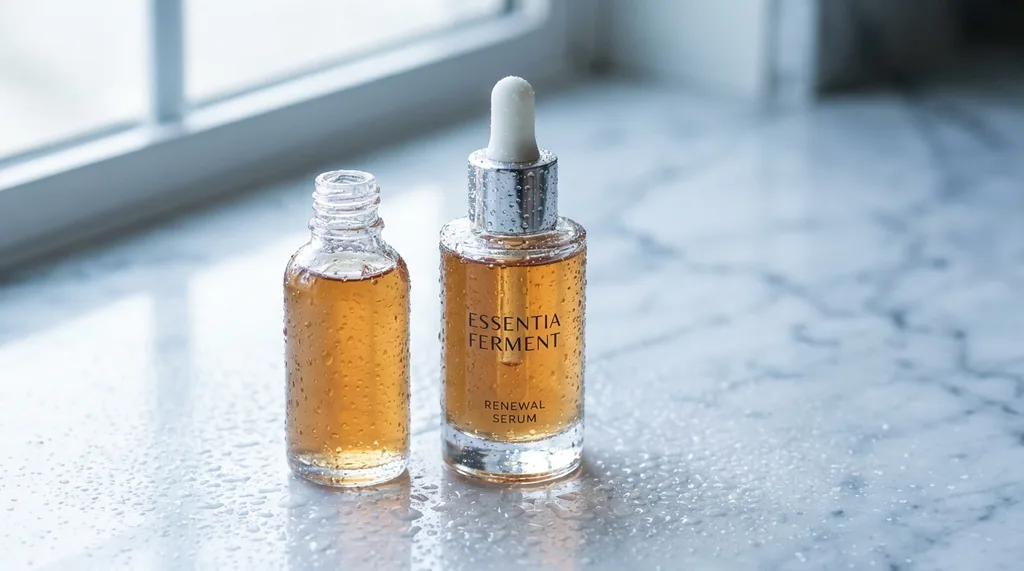
Here's the thing the glass skin industry would quietly prefer you never realize: the active molecules responsible for that translucent, light-bending, poreless-looking complexion cost almost nothing to synthesize. The price you pay for the expensive bottle is real — but it's paying for something other than biology. We'll come back to exactly what it's paying for. First, there's a diagnosis problem that's costing you more than money.
- The Sand-Paper Lie: Why Your Skin Isn't Broken the Way You Think
- Stage 1 — The Ingredient Autopsy: What Actually Creates the Effect
- Stage 2 — How to Read Any Glass Skin Product Like a Seoul Formulator
- Stage 3 — The Three Tiers: An Honest Verdict
- Stage 4 — The AM/PM Architecture That Actually Delivers
- The One Thing to Carry Forward
- 💊 Find This on iHerb (Use Code QAK3042 for a discount!)
Most people chasing glass skin are treating the wrong condition entirely.
The Sand-Paper Lie: Why Your Skin Isn't Broken the Way You Think
There's a specific texture that sends people toward the exfoliation aisle. Koreans call it yocheol — a microscopic, sand-like surface irregularity that persists no matter how well you cleanse. It feels like there should be more scrubbing involved. More chemical exfoliation. A stronger AHA. Something abrasive enough to sand it down.
This is the most expensive mistake in glass skin pursuit.
What reads as excess dead skin is, in the majority of cases, a symptom of sok-geon-jo — chronic internal skin dehydration. The surface isn't thickened. It's parched. Skin that has lost moisture in its deeper layers contracts, bunches at the cellular level, and creates the exact texture that mimics a build-up problem. When people then apply exfoliating acids on top of this, they strip away the lipid mortar that was already failing. The barrier compounds. The yocheol texture returns in days, sometimes worse.
The scrubbing instinct, in short, turns a hydration problem into a structural one.
This matters enormously for the dupe finder framework, because it means the products you need to replicate aren't the brightening acids or the exfoliating pads. The glass skin actives worth hunting dupes for are the barrier builders: fermented filtrates that flood the skin with bioavailable ceramide precursors, and layered humectants that pull moisture from the air into the dermal layers where sok-geon-jo lives.
The luxury product industry knows this. They put these ingredients in beautiful bottles and charge accordingly. But the molecule, as stated, has no memory of its price tag.
Stage 1 — The Ingredient Autopsy: What Actually Creates the Effect
Strip out the fragrance, the emulsifiers, the preservatives, and the seventeen kinds of botanical extract added for marketing poetry, and glass skin products are typically doing three things biologically:
1. Fermented Filtrate Delivery The most studied and genuinely high-performing ingredient category in K-Beauty glass skin products is fermented filtrate — most commonly Saccharomyces/Rice Ferment Filtrate or its barley-based equivalents. Fermentation converts large, poorly-absorbed plant molecules into bioactive aglycones with significantly reduced molecular weight. These smaller molecules cross the stratum corneum with far greater efficiency than their unfermented precursors.
What they do once inside: clinical data shows fermented filtrates stimulate endogenous production of hyaluronic acid and ceramides, reducing transepidermal water loss (TEWL). More significantly, they activate the NRF2 pathway — the cell's primary antioxidant defense system — which addresses inflammaging, the chronic low-grade inflammation that progressively degrades barrier function. An 28-day clinical study found skin barrier function improvement of 30.9% and sebum reduction of 46.2% from this class of ingredients. That second number surprises people: oily skin often normalizes when the barrier is repaired, because excess sebum is frequently a compensatory response to dehydration.
2. Layered Humectancy Hyaluronic acid at multiple molecular weights. Sodium PCA. Glycerin. Beta-glucan. The theory behind glass skin layering — the Korean practice of applying multiple thin toner layers known as the chil-skin-beop, or seven-skin method — is that different molecular sizes penetrate to different skin depths. Low-molecular-weight hyaluronic acid reaches the dermis. High-molecular-weight versions sit at the surface and hold moisture at the skin-air interface, creating the visual luminosity. A single heavy moisturizer can't accomplish both.
3. Ceramide-Class Barrier Sealants The final, critical step: sealing the hydration in. Ceramides, cholesterol, and fatty acids in roughly physiological ratios are what the skin barrier is actually made of. Products that deliver these — whether called a "barrier cream," a "recovery cream," or a "sleep mask" — are what prevent the TEWL that unravels everything you did in steps one and two.
These three categories. That's the mechanism. Everything else in the bottle is delivery, texture, scent, stability, and experience.
[K-Beauty 101] Sok-geon-jo (속건조) — Internal skin dryness. The sensation of tightness deep beneath the surface even when the skin appears oily on top. Solving sok-geon-jo is the prerequisite for glass skin — not an optional step, not something you can address with surface-level products alone.
Stage 2 — How to Read Any Glass Skin Product Like a Seoul Formulator
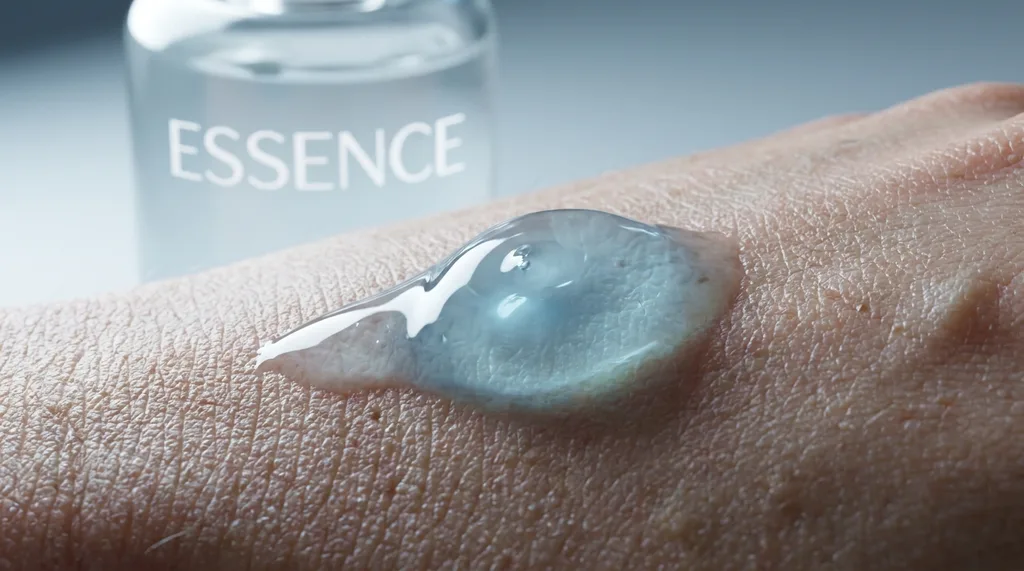
The dupe finder skill isn't knowing which cheap product to buy. It's knowing how to evaluate any product in thirty seconds using its ingredient list. Here's the framework Korean beauty editors use:
The INCI Position Rule Ingredients are listed in descending order of concentration above 1%. Everything below 1% can be listed in any order. When a fermented filtrate — look for terms like "Ferment Filtrate," "Ferment Extract," or "Bifida Ferment Lysate" — appears in the first five to eight ingredients, it's present at a meaningful concentration. When it appears near the bottom of a long list, it's there for marketing, not biology.
Same rule applies to ceramides. "Ceramide NP" or "Ceramide AP" in the top ten positions: genuine barrier support. In position 35, after seven kinds of extract and two fragrance components: label decoration.
The Texture Integrity Test Price-tier differences in glass skin products cluster around formulation elegance rather than active ingredient concentration. A $12 essence and an $80 essence may contain the same fermented rice filtrate at comparable concentrations — but the expensive version may have a pH more precisely calibrated for absorption, a polymer structure that layers more smoothly, or a sensory profile that makes the layering technique sustainable over time. These are real differences. They're just not the biological differences that create glass skin.
The Fragrance Calculation Fragrance is not neutral in barrier science. Eugenol, linalool, limonene — common fragrance components — are documented irritants that can trigger subclinical inflammation. Barrier-focused glass skin products from Korean clinics increasingly go fragrance-free, especially for the first three to four layers of the routine where barrier actives are working hardest. In the price comparison below, factor fragrance presence as a real variable, not a cosmetic preference.
The scatter above maps where money actually goes in the glass skin market. The green zone — mid-price, high-efficacy — is where the biological outcome lives. The red zone exists. It's real. High fragrance burden in a barrier product is a genuine efficacy trade-off, and premium pricing doesn't neutralize it.
Stage 3 — The Three Tiers: An Honest Verdict
💸 Budget Tier
Single-Active Essences
Look for: Ferment Filtrate or Bifida Ferment Lysate in top 5 ingredients. Fragrance-free. Minimal emulsifiers.
Best for: Layering steps 2–4. Core barrier actives at low cost.
⭐ Best Value Tier
Multi-Functional Essence
Look for: Ferment Filtrate + multi-weight HA + beta-glucan. No fragrance. Ceramide NP ideally present.
Best for: Single-product layering. Covers three biological mechanisms in one bottle.
✨ Premium Tier
Formulation-Engineered Serums
Look for: pH-optimized delivery systems, encapsulated ceramides, proprietary ferment strains. Still fragrance-free.
Worth it if: You want optimized absorption kinetics, precise layering feel, and long-term formulation R&D backing.
Here's the honest part that most dupe guides skip: the premium tier occasionally deserves its price. Not always. Not reflexively. But Korean cosmetic formulation science is genuinely advanced, and a pH-optimized fermented essence with encapsulated ceramide delivery is not biologically equivalent to a basic ferment toner regardless of INCI overlap. If your barrier is severely compromised or you've been battling reactive skin for years, the formulation engineering in a premium product may meaningfully accelerate your recovery timeline.
The dupe logic works perfectly for maintenance. For repair, it sometimes doesn't.
Conversely, the product that absolutely doesn't justify a premium price point: anything with "Ferment Filtrate" at position 22, listed after eight botanical extracts and two fragrance ingredients, retailing at $65. That bottle is paying for packaging, brand, and marketing. The biology is doing almost nothing.
[K-Beauty 101] Hwa-jal-muk (화잘먹) — Literally, "makeup eats well." The state where skin is so evenly hydrated and barrier-intact that foundation adheres seamlessly without patching, caking, or accentuating texture. Korean women use this as the benchmark for a successful routine — not how the skin looks bare, but how it behaves as a surface. It's a more demanding standard than it sounds.
Stage 4 — The AM/PM Architecture That Actually Delivers
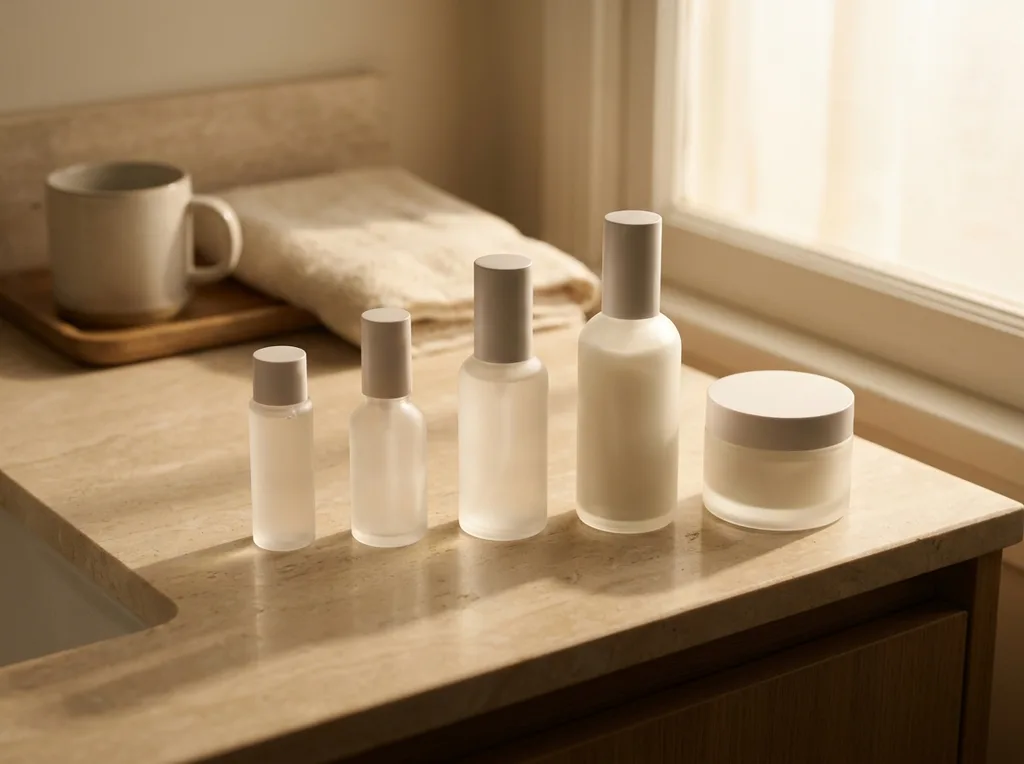
Understanding the ingredients is half the equation. The application protocol is where most people lose the result they've correctly identified.
Morning Routine — Defense and Reflection
Step 1: The Double Cleanse (only if you wore SPF or makeup the night before) Use a cleansing balm or cleansing milk first. Massage it into dry skin for sixty full seconds — not the thirty seconds most people actually do. The lipophilic phase needs contact time to dissolve sebum esters and sunscreen polymers. Rinse with lukewarm water, never hot. Then follow with a mildly acidic foaming cleanser — look for yak-san-seong (pH 5.5) on the label, or simply confirm the product doesn't leave your skin feeling tight. If it squeaks, it's stripping your acid mantle.
Step 2: The Wiping Toner (Dak-to layer) Saturate a cotton pad until it's genuinely wet, not merely damp. Wipe gently in the direction of your skin's grain — horizontal strokes across the cheeks, not downward dragging. This step removes the mineral residue from tap water and lightly addresses surface irregularities. The cotton pad should glide, never tug. Wait 30 seconds.
Step 3: The Patting Layers (Chap-to layering) Pour a small amount of your fermented essence into your palms. Cup your hands together and hold them against your face — not patting yet, simply allowing the warmth of your palms to slightly open the outer skin and allow the product to begin working. Then press, release, press, release. Seventy to eighty percent absorption before the next layer. Three layers minimum. This is the chil-skin-beop methodology, and the 60 seconds between layers is not optional — it's the interval during which low-molecular-weight hyaluronic acid actually migrates below the stratum corneum.
Step 4: Serum or Ampoule One targeted treatment only. Vitamin C for the morning — look for L-ascorbic acid with vitamin E and ferulic acid as co-antioxidants, which dramatically extend L-ascorbic stability. Apply to still-slightly-damp skin and press, never rub. Wait 90 seconds.
Step 5: Ceramide Moisturizer The seal. Press a ceramide-containing cream into the skin using the same palm-warming technique. This is the step that makes the layered hydration underneath stay. Without it, TEWL removes most of what you built in steps two and three within hours.
Step 6: SPF Non-negotiable. UV-induced inflammation is the primary driver of long-term barrier degradation. Korean sunscreens formulated for the glass skin aesthetic often double as a final luminosity step — look for "hwa finish" or "dewy finish" on the label.
🎵 K-Mono Lofi — Seoul Study Beats
Read deeper with Seoul lo-fi in the background — curated by K-Mono Lofi
Evening Routine — Repair and Rebuild
The PM routine performs the same Steps 1 through 5 as above, with two modifications:
Replace vitamin C with a barrier serum. Evening is when skin enters its natural repair cycle. A fermented filtrate-heavy serum or a ceramide ampoule works with this cycle rather than against it. Skip actives like niacinamide above 5% concentration or any form of exfoliating acid on the nights you're actively working on barrier recovery — those are maintenance tools for healthy skin, not repair tools for compromised skin.
Add a sleeping pack. A final layer of occlusive moisturizer applied after your moisturizer creates a physical barrier that reduces overnight TEWL by up to 40%. Korean sleeping packs are specifically formulated to be non-comedogenic and breathable — significantly lighter than traditional petroleum-based occlusives — while still providing meaningful transepidermal water loss protection.
The One Thing to Carry Forward
The reader who chases glass skin by buying better products will keep buying, because the product was never the variable. The reader who understands that yocheol texture is a hydration signal, that layering is a delivery mechanism, and that the active molecules doing the biological work appear at every price tier — that reader makes one smart purchase and stops.
The real luxury of a premium glass skin product is the formulation elegance: the silky slip that makes you actually commit to the five-layer protocol instead of skipping to step three. If that experience makes consistency more likely, it's worth every dollar. If the product sits in a drawer because the texture felt heavy, it's worth nothing regardless of the ingredient list.
Yuri-al pibu — glass-bead skin — is not a product category. It's a state of barrier homeostasis that the right ingredients, in the right order, at the right intervals, gradually produce. The expensive bottle knows this. Now you do too.
Medical & Financial Disclaimer: The ingredient analysis and skincare protocols in this article are for educational purposes only and do not constitute medical advice. Skin barrier compromise, persistent texture issues, or inflammatory conditions should be evaluated by a board-certified dermatologist before introducing new active ingredients. Patch test all new products — including fermented filtrates and ceramide formulations — on the inner forearm for 48 hours before full facial application. Individual results will vary. Price comparisons referenced are general tier estimates and not specific product endorsements; always verify current pricing and formulation before purchase. If you are pregnant, nursing, or managing a diagnosed skin condition, consult your physician before modifying your skincare routine.
✓ Researched and compiled using verified data as of the publication date.
 Operated by: Quiet Korea | Contact: rsl.2001.1975@gmail.com
Comments
Post a Comment