The Great Divide: Rethinking Inclusive Beauty in the Age of K-Beauty
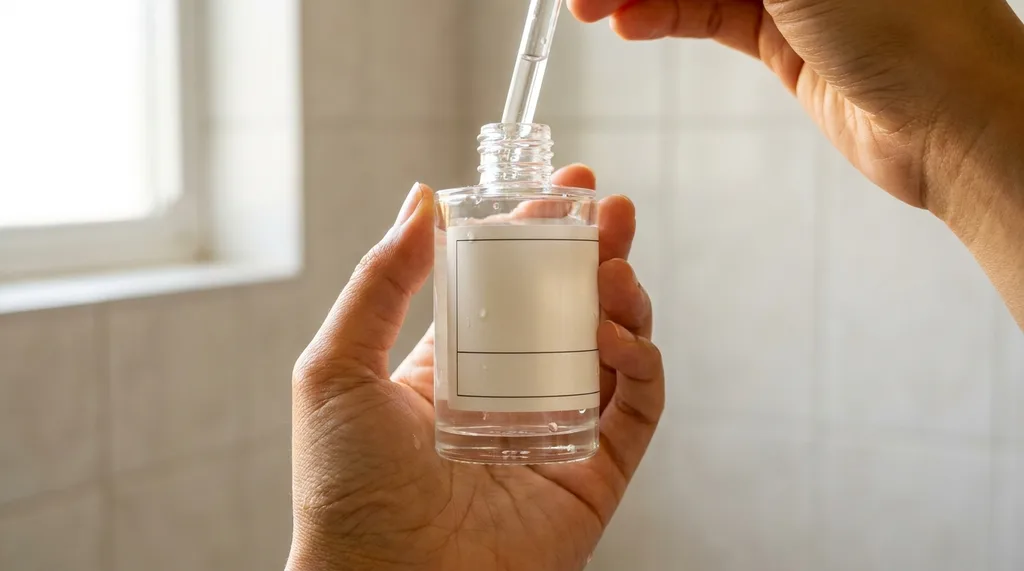
Walk into any Olive Young in Seoul at midnight, and you are surrounded by the frantic, beautiful energy of a culture obsessed with 피부 장벽 (pibu jangbyeok) — the skin barrier. You’ll see a nineteen-year-old layering toner with the surgical precision of someone defusing a bomb, driven by a singular goal: a clear, luminous complexion. For years, the global narrative around this "glass skin" phenomenon was that it was exclusive, a closed loop designed for one specific demographic. But if you look past the marketing, you’ll find that the science of K-Beauty is fundamentally agnostic. Its obsession with hydration, low-pH cleansing, and barrier repair isn’t just a trend; it is a biological necessity for anyone, regardless of skin tone, who wants to maintain a healthy complexion.
The tension, however, is real. While the skincare philosophy is remarkably inclusive in its mechanism, the cosmetics industry has historically failed to match the diversity of its global audience. We have been sold a vision of beauty that assumed East Asian skin as the baseline, leaving melanin-rich skin in a state of confusion: which parts of this routine actually work, and which parts are built on a foundation that doesn't account for our reality?
The Science of the Barrier
The most common misconception about K-Beauty is that it is purely about aesthetic "brightening." In truth, the Korean approach is rooted in preventing inflammation. For melanin-rich skin, this is a game-changer. Deeper skin tones are biologically more prone to post-inflammatory hyperpigmentation (PIH). When the skin barrier is compromised, the resulting inflammation triggers melanocytes to produce excess pigment as a defense mechanism.
This is where the K-Beauty philosophy of 피부 본연의 힘 (pibu jangbyeok) — the skin’s innate strength — becomes the most powerful tool in your kit. By focusing on non-negotiable barrier integrity, you are not just "using a serum"; you are reducing the reactive state of your skin.
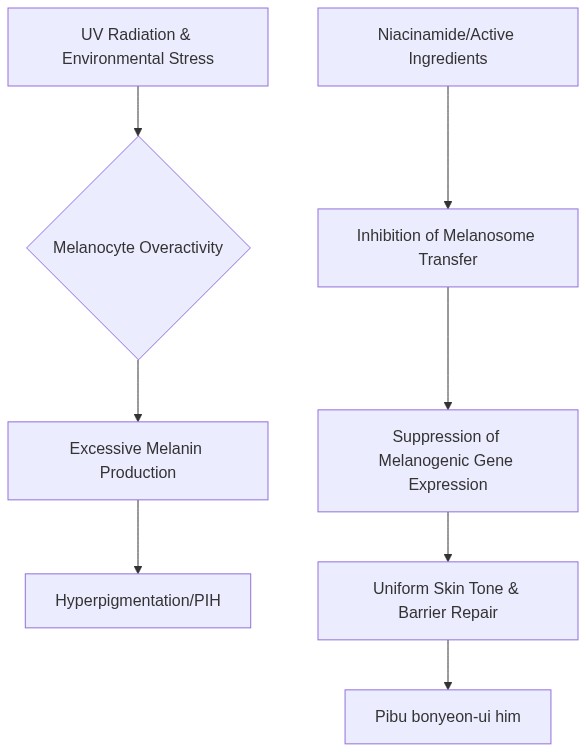
Ingredients like Niacinamide are the quiet heroes here. While Western marketing often pits "active" ingredients against "sensitive" skin, Korean formulations focus on the synergy between the two. Niacinamide, at the right concentration, doesn't bleach the skin; it inhibits the transfer of melanosomes to keratinocytes. It is a subtle, sustainable modulation of your skin’s biology rather than a chemical assault.
Where the Industry Fails
We must be honest about the fracture in this system. If K-Beauty skincare is a masterclass in barrier protection, its cosmetic arm is a glaring oversight in global accessibility. The "tone-up" creams and cushion foundations that built the industry’s reputation were formulated with a specific set of photographic and cultural standards that systematically excluded darker skin tones.
[K-Beauty 101] 화이트닝 (Whitening) — Brightening and evening out skin tone. In Korean beauty, this does not imply bleaching. It refers to the suppression of hyperpigmentation to achieve a clear, luminous complexion, reflecting a cultural standard of skin health.
When a brand markets a product as "whitening," they are speaking to a cultural desire for "clarity," not a racial desire for "whiteness." However, for a consumer with deep, rich skin, the word itself is alienating, and the product performance — often leaving a ghostly, ashy cast — is a functional failure. You are not misinformed for feeling excluded; you are reacting to a genuine gap in industry development.
The Path Toward Integration
The future of inclusive beauty isn't about discarding K-Beauty; it’s about editing it. You don't need the entire ten-step ritual. You need the pieces that support your skin’s specific biology.
🎵 Enjoy this article with relaxing Seoul lo-fi music — curated by K-Mono Lofi
If you have melanin-rich skin, start by auditing your routine for "suboji" — the state of being oily on the surface but parched underneath. Western dermatological advice often treats this by stripping the oil, which causes further dehydration and, inevitably, more pigment production. The Korean method? Use a gentle, low-pH cleanser that preserves your acid mantle, followed by a light, watery essence to flood the skin with hydration.
You aren't trying to change your skin tone. You are trying to achieve the clarity that comes from a perfectly hydrated, non-inflamed barrier. When the barrier is healthy, the skin is naturally reflective, which is the secret behind the "glass" look.
The goal is to move away from the "whitening" marketing traps and toward a regimen of "even-toning." This means choosing products that focus on anti-inflammation and redox balance. It means demanding transparency in ingredient lists, perhaps using tools like Hwahae to analyze the actual concentration of actives, rather than trusting the front of a bottle.
You are the final arbiter of what works for you. By understanding the biology beneath the marketing, you take the power back from the brands and give it to your own skin.
⚠️ Disclaimer: The information provided here is for educational purposes and does not constitute medical advice. Skincare formulations, particularly those involving active ingredients like Niacinamide or botanical extracts, can affect individuals differently. Always perform a patch test on a discreet area of skin before full application. If you have concerns regarding hyperpigmentation, persistent acne, or underlying skin conditions, consult a board-certified dermatologist who understands your specific skin type and needs.
✓ Researched and compiled using verified data as of the publication date.
 Operated by: Quiet Korea | Contact: rsl.2001.1975@gmail.com
Comments
Post a Comment