The Inner K-Beauty: What Korean Dermatologists Prescribe Before They Ever Touch Your Face
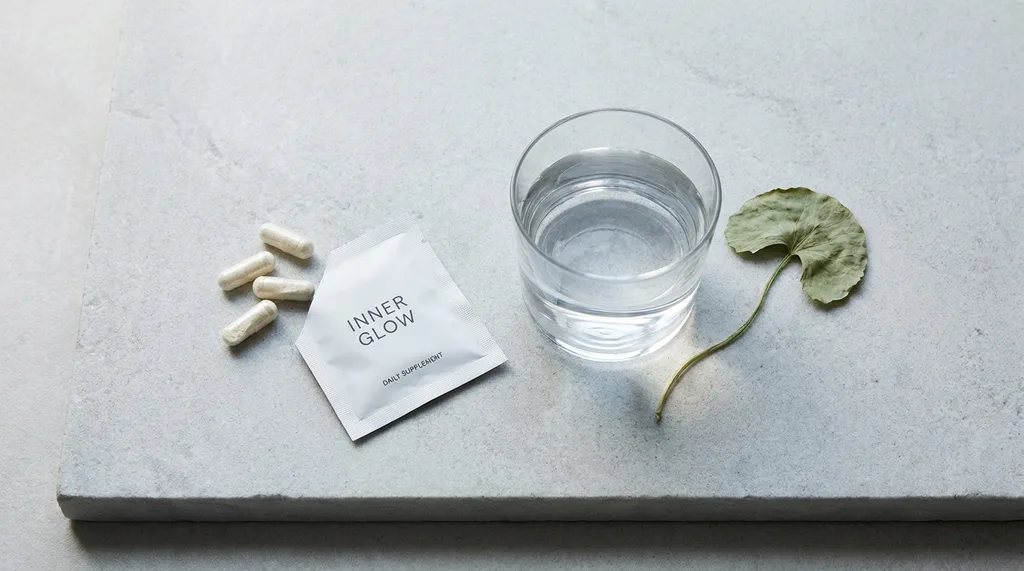
Walk into a mid-tier dermatology clinic in Gangnam on a Tuesday afternoon and the waiting room is a study in contrasts. A woman in her late thirties fills out a pre-consultation form, not for a laser treatment or an injection, but for a review of her supplement regimen. The doctor will spend as much time on what she takes internally as on what she applies to her skin. This is considered routine. Standard protocol. Not a wellness trend.
- The Regulatory Standard That Separates Korea From Every Other Beauty Market
- The Clinic Protocol Global Readers Never See
- The Honest Breakdown: Evidence Versus the Marketing Machine
- The Kkul-johap Approach — Building Your Stack the Korean Way
- Getting These Products Globally — And Why Source Matters More Than Anyone Admits
- Explore Korean Inner Beauty Supplements
- What K-Beauty Actually Taught the World About Supplements
This is the side of K-Beauty that global Instagram feeds have almost entirely missed — and it explains something that has quietly baffled international observers for years. Why do Korean skincare outcomes so frequently outpace what the products alone can account for? The answer isn't hidden in some proprietary extract or a ten-step routine. It's in a philosophy that Korean dermatology has held for decades: skin health is systemic, and the supplement stack is part of the clinical conversation.
The open question isn't whether inner beauty supplements "work." The more interesting question is why Korean clinicians approach them with the same evidence-based rigor they apply to topical actives — and what global consumers can learn from that discipline before spending a single dollar.
The Regulatory Standard That Separates Korea From Every Other Beauty Market
Most people who love K-Beauty are aware of the products. Very few understand the architecture underneath them.
South Korea's Ministry of Food and Drug Safety — known domestically as Sik-yak-cheo (식약처) — operates a regulatory tier that has no direct equivalent in the Western beauty market. It's called Gineung-seong Hwajang-pum (기능성 화장품), or Functional Cosmetics. This isn't a marketing category. It's a legal designation. Products that claim specific active benefits — brightening, anti-aging, UV protection — must contain MFDS-notified ingredients within strictly defined concentration ranges. If a product doesn't meet the threshold, it cannot legally make the claim. Full stop.
[K-Beauty 101] Gineung-seong Hwajang-pum (기능성 화장품) — Functional Cosmetics. A distinct legal tier in Korean cosmetic regulation requiring products to meet MFDS-specified ingredient and concentration standards before making active benefit claims. When a Korean product carries this designation, the claim isn't marketing copy — it's government-verified efficacy.
This matters for inner beauty supplements because it establishes the epistemology through which Korean consumers and clinicians approach all beauty products. In a market where the regulatory bar is visibly and meaningfully higher, consumers develop an instinct for separating verified efficacy from aspirational marketing. That same critical lens gets applied to supplement aisles.
Korean dermatologists, according to industry observers, frequently emphasize that the logic is identical whether you're evaluating a topical serum or a collagen supplement: what does the clinical evidence actually say about the dose, the bioavailability, and the time horizon? The country that grew its cosmetic exports to US$10.2 billion in 2024 — achieving a 20.6% year-on-year increase and capturing 22.2% of the U.S. import market — did not do so on packaging aesthetics alone. The underlying consumer culture is one of the most rigorously educated in the world.
🎵 K-Mono Lofi — Seoul Study Beats
Read deeper with Seoul lo-fi in the background — curated by K-Mono Lofi
The Clinic Protocol Global Readers Never See
Korean aesthetic clinics distinguish sharply between the maintenance phase and the repair phase of skin health. The topical routine handles maintenance. When the skin is in active repair — post-laser, post-peel, post-microneedling — clinicians frequently recommend a parallel supplement protocol designed to support the skin from the inside out.
The ingredients that appear most consistently in these clinical conversations aren't the exotic ones. According to reports from Korean beauty communities and dermatology clinic observers, the core inner beauty stack recommended in clinic settings typically centers on three functional categories: structural support (collagen peptides), antioxidant amplification (Vitamin C), and cellular signaling support (increasingly, high-tech biological materials like PDRN — a purified DNA fragment derived from salmon used in cosmetic injections that is attracting significant research attention for its tissue repair potential).
What makes the Korean clinical approach notable is the specificity. Clinicians aren't saying "take some collagen." The conversation is about peptide size and bioavailability windows — smaller-chain peptides absorb more readily, which is why hydrolyzed collagen with molecular weights under 5,000 Daltons appears in clinically recommended formats. Vitamin C recommendations tend to specify the form (ascorbic acid vs. more bioavailable esterified versions) and the dosing window relative to meals. This level of granularity is unusual outside of dedicated nutritional medicine consultations in Western markets.
The community-level evidence mirrors this. On Korean platforms like Hwahae — which functions as a data-driven consumer verification layer for skincare and inner beauty products — users document not just "did this work?" but "at what dose, for how long, and in combination with what?" This is the Kkul-johap (꿀조합) philosophy applied to internal supplementation: not what works individually, but what combination, in what sequence, produces a superior outcome.
The Honest Breakdown: Evidence Versus the Marketing Machine
Here is where the Founder's Heart demands something most K-Beauty columns refuse to do: say clearly which supplement categories are genuinely supported by evidence, and which are running ahead of it.
The fact is that inner beauty marketing often operates with the same inflationary language as topical skincare. "Cellular renewal." "Collagen synthesis support." "Glow from within." These phrases can be legitimate or meaningless depending entirely on what's inside and at what dose. Korean consumer culture — particularly the nae-don-nae-san (내돈내산) review tradition, where users explicitly signal they purchased with their own money and have no sponsored relationship — has created a remarkably honest cross-check system. When thousands of unsponsoored reviews on a platform agree, or disagree, the signal tends to cut through noise.
What that aggregated honest data suggests, corroborated by the available clinical literature:
Collagen peptides have among the most robust evidence in the inner beauty category. Multiple randomized controlled trials suggest hydrolyzed collagen supplementation at doses of 2.5 to 10 grams daily supports skin elasticity and hydration markers over 8–12 weeks. Korean clinic recommendations consistently land within this range, and the community data from platforms like Hwahae tends to agree.
Vitamin C (internal supplementation) is well-supported for its role in collagen synthesis and photoprotection synergy. The clinical sweet spot sits between 500mg and 1,000mg daily for skin-related benefits — doses that are meaningfully higher than typical dietary intake but well within established safety thresholds.
Niacinamide taken internally is sometimes recommended at therapeutic doses (~500mg daily as nicotinamide) in Korean dermatological contexts for specific conditions, though this is distinct from the niacinamide in your topical serum. The mechanisms differ, and the honest caveat is that high-dose oral niacinamide is a medical recommendation, not a wellness one — it should be discussed with a physician.
Then there's the category that Korean skincare insiders are most skeptical about: the elaborately marketed "exotic blend" supplements that combine fifteen ingredients at sub-therapeutic doses and promise comprehensive skin transformation. Korean ko-deok (코덕) consumers — the self-appointed quality gatekeepers of K-Beauty — tend to dissect these ingredient lists with the same forensic focus they bring to topical formulations. What they find, repeatedly, is a marketing budget masquerading as a formula. As one recurring observation in Korean beauty community discussions puts it: if a supplement needs that many ingredients to justify itself, it's probably not confident in any single one.
The most honest framework, which Korean clinical culture models well, is single-variable testing: introduce one supplement, hold everything else constant, evaluate over 8–12 weeks. This is patience as a practice — and it's fundamentally at odds with the "transformation in 7 days" language that dominates supplement marketing globally.
There's a reason Korean beauty consumers have developed such finely tuned skepticism. The fact sheet underlying K-Beauty's global dominance is, in part, a story of people who got burned by overclaiming — and built verification systems in response. The inner beauty space is where that skepticism matters most, because the feedback loops are slower and the stakes (systemic health, not just a breakout) are higher.
This is where the honest K-Beauty analyst earns its keep. Not by recommending a product stack. By teaching the reader how to read one.
The Kkul-johap Approach — Building Your Stack the Korean Way
[K-Beauty 101] Kkul-johap (꿀조합) — "Honey combination." The K-Beauty community term for ingredient pairings that produce results greater than either ingredient achieves alone. Applied to inner beauty, it's the discipline of understanding why two supplements work together — not just that an influencer said to take them.
In Korean clinic culture, the supplement conversation tends to follow a structure that global wellness advice almost never uses: purpose, protocol, period.
Purpose means identifying the specific skin concern driving the recommendation. Post-procedure recovery calls for a different stack than long-term collagen maintenance or antioxidant support against UV exposure. Korean dermatologists, according to community reports, don't recommend generic "skin supplements" — they recommend targeted combinations aligned to a defined goal and timeline.
Protocol addresses timing and form. Collagen peptides are typically recommended with Vitamin C — the ascorbic acid role in collagen synthesis is well-established, and taking them together creates a functional kkul-johap that reflects actual physiology rather than just brand bundling. Timing matters too: most clinicians recommend collagen peptides with food to optimize absorption, while certain antioxidants are absorbed more efficiently with fat-containing meals.
Period is the discipline that Western supplement culture consistently abandons. Korean clinic protocols are typically defined: eight weeks of an intensive stack post-procedure, followed by reassessment. The indefinite, perpetual supplement regime that characterizes Western wellness culture is viewed with more skepticism in clinical Korean contexts — not because long-term supplementation is inherently wrong, but because the absence of a defined endpoint makes it impossible to evaluate efficacy.
The community verification layer that sits under all of this — Hwahae's ingredient-tracking functions, the nae-don-nae-san review culture, the shared spreadsheets of supplement combinations circulated in Korean skincare communities — is what K-Beauty culture does better than almost anywhere else. It is, essentially, distributed clinical trial design by engaged consumers. And it has produced some genuinely useful signal in the inner beauty space.
Getting These Products Globally — And Why Source Matters More Than Anyone Admits
The counterfeiting problem in the supplement industry is not discussed often enough. Korean inner beauty supplements sold through unofficial channels — third-party marketplaces, social media resellers — carry a non-trivial risk of being counterfeit or improperly stored, which affects potency for temperature-sensitive compounds like certain collagen peptides. This isn't a niche concern. It's a meaningful risk in a category where dose matters.
✅ Direct-Sourced Platforms
Authenticated supply chain, controlled storage, verified expiry dates. iHerb operates on a direct-from-manufacturer sourcing model with international shipping to 180+ countries — which matters specifically for bioactive supplements where cold chain and authenticity are not negotiable.
⚠️ Unofficial Resellers
Unknown storage conditions, no authentication chain, no recourse. For skincare products the risk is a wasted purchase. For supplements entering your body, the calculus is meaningfully different. Korean consumer communities are explicit about this distinction.
For global readers navigating the inner beauty supplement space with the Korean clinical lens in mind, the practical guidance from Korean community and clinic observers converges on the same points: prioritize platforms with direct sourcing, verify third-party testing certifications where available, and treat supplement sourcing with the same scrutiny you'd apply to where your food comes from.
The Korean market has Olive Young's curated inner beauty section as a quality floor for domestic shoppers. For international consumers, the equivalent discipline is choosing platforms with transparent supply chains.
What K-Beauty Actually Taught the World About Supplements
The Hallyu (한류) wave opened the world's eyes to Korean skincare routines. But the deeper lesson — the one that the supplement conversation surfaces — is epistemological. K-Beauty's global trust didn't come from better packaging or more exotic ingredient lists. It came from a culture that learned, through the MFDS regulatory system and through the collective intelligence of millions of rigorously skeptical consumers, to demand that claims be backed by evidence.
Applied to inner beauty, that lesson is both simple and radical: the most powerful supplement stack is not the most comprehensive one. It's the most honest one. Know why you're taking each ingredient. Know the dose that the evidence supports. Know when to evaluate and when to stop. And be deeply suspicious of anything that promises transformation without specifying a mechanism.
Korean women who quietly outpace what their visible routines can explain aren't running some undisclosed supplement experiment. They're applying a philosophy — the same one that earned K-Beauty its global credibility — to every layer of their health. Inside and out.
That philosophy is available to everyone. It costs nothing to apply. And it begins with the simple habit of asking, before you buy anything: does the evidence actually match the claim?
⚠️ Medical & Financial Disclaimer: The information in this article is for educational purposes only and does not constitute medical advice. Inner beauty supplements — including collagen peptides, vitamin C, and niacinamide — can interact with medications and may not be appropriate for pregnant or breastfeeding individuals, those with kidney or liver conditions, or those on blood thinners or immunosuppressants. High-dose niacinamide (B3) supplementation should only be undertaken under physician supervision. Always consult a qualified healthcare provider before starting any new supplement regimen, particularly in the context of post-procedure recovery. Prices, product formulations, and availability are subject to change; verify current details directly with retailers before purchasing.
✓ Researched and compiled using verified data as of the publication date.
 Operated by: Quiet Korea | Contact: rsl.2001.1975@gmail.com
Comments
Post a Comment