What Olive Young's Bestseller List Actually Tells You (Hint: It's Not What You Think)
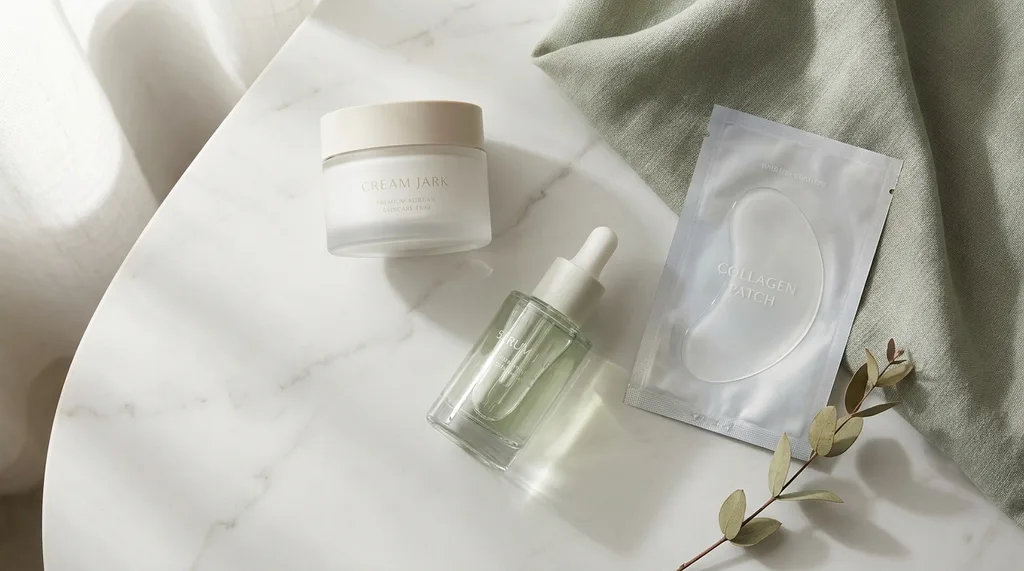
The 10-step Korean skincare routine is everywhere right now. TikTok tutorials walk through each layer with the reverence of a religious ceremony. Western beauty editors are publishing "complete K-Beauty starter guides." Amazon's algorithm is pushing "authentic Korean skincare bundles" hard. The global consumer has finally arrived at the 10-step routine — just in time to miss the memo that Korea itself quietly moved on.
Walk into an Olive Young in Seoul today and you won't find display tables organized around the 10-step philosophy. What you'll find, if you know how to read the shelves, is evidence of a complete paradigm shift. The bestseller lists don't just show what's selling — they show where Korean skincare culture has already gone, while the rest of the world is still catching up.
So here's the question worth sitting with: if the people who invented the routine everyone is copying have already abandoned it, what are they doing instead — and why?
The answer is in the data. Specifically, in 180 million of them.
The Store That Knows More About Your Skin Than You Do
Calling Olive Young a beauty store is a bit like calling Bloomberg a newspaper. It processes over 180 million annual purchase records across more than 1,350 locations in South Korea, making it one of the most sophisticated consumer intelligence operations in the global beauty industry. When Olive Young's data team identifies a trend, it's not because an influencer went viral — it's because millions of real purchase decisions, filtered through app-connected loyalty data, have converged on a pattern that the algorithm can't ignore.
And what does that data show for 2025? Korean consumers are consolidating. Dramatically.
The "3-5 product protocol" has displaced the 10-step routine not as a minimalist aesthetic choice, but as a results-driven correction. Korean skincare insiders — the ko-deok (ko-deok), the self-appointed quality gatekeepers who memorize ingredient lists and post brutally honest reviews on community forums — ran the experiment on themselves. They layered. They bought everything. And then, collectively, they noticed something uncomfortable: more steps didn't mean better skin. In many cases, it meant worse.
Korean dermatologists have a term for it. Overkare (over-care) — the phenomenon of applying so many products, particularly actives, that the skin barrier breaks down rather than strengthens. The skin becomes reactive, sensitized, and paradoxically drier than before treatment began. Seoul dermatology clinics have reportedly seen a rise in patients presenting with compromised barriers and the first question now often isn't "what are you using?" but "how many things are you using?"
This is the pivot point Olive Young's data captured first. The new bestseller is not the most innovative product — it's the most foundational one.
[K-Beauty 101] Jeong-chak-tem (Jung-chak-tem) — A holy grail product. Literally "a settled item," meaning something a consumer has tested exhaustively and decided to commit to permanently. Finding your jeong-chak-tem is the endgame of Korean skincare culture — not collecting, but settling.
The shift toward the jeong-chak-tem philosophy explains why the 2025 Olive Young rankings look the way they do. Consumers aren't buying exciting new launches every cycle. They're buying the same ceramide cream, the same collagen patch, the same scalp serum — and rebuying it. Repeat purchase rates on the top-ranked items tell a more meaningful story than first-sale velocity ever could.
The Three Ingredients Rewriting the Ranking
Understanding why specific products are rising means understanding the ingredient science driving Korean consumer choice right now. The fact sheet doesn't look like it used to — the language of K-Beauty ingredients has become notably more clinical, and deliberately so.
PDRN (Polydeoxyribonucleotide), better known in Korean marketing as "salmon DNA," is the ingredient with the most momentum in the 2025 professional-grade home care segment. PDRN isn't a surface treatment — it functions as a biological signaling molecule, activating the skin's own repair pathways rather than simply depositing moisture or nutrients on top. Clinicians who work with it in post-procedural contexts (it's widely used after laser and microneedling treatments in Korean aesthetic clinics) report that it accelerates recovery and reduces redness by working with the skin's regenerative mechanisms, not around them. The fact that it's now appearing in accessible Olive Young formulations is significant — it suggests that the ingredient has crossed from clinic-grade to retail-viable without losing its scientific credibility. That crossing point is rare, and it's exactly what Korean consumers have learned to watch for.
Retinaldehyde is quietly displacing standard retinol in the conversation among educated Korean consumers. The distinction matters: retinaldehyde sits one enzymatic conversion step closer to retinoic acid (the active form the skin actually uses) than retinol does. This means it works faster at lower concentrations, with a reported reduction in the purging and irritation period that makes standard retinol so challenging for first-time users. Hwahae — South Korea's dominant ingredient-verification app, equivalent to the US's INCI Decoder but with a much deeper user review database — shows a measurable uptick in favorable sentiment around retinaldehyde formulations in 2024-2025, particularly among users who had previously abandoned retinol due to sensitivity.
Ceramide complexes at physiological ratios represent the third pillar of the current bestseller science. Not all ceramide products are equal, and Korean formulators know it — the skin's natural lipid bilayer contains ceramides, cholesterol, and fatty acids in a specific 3:1:1 ratio. Products that approximate this ratio rather than simply adding ceramides in isolation have shown stronger barrier restoration outcomes in clinical settings. The South Korea Ministry of Food and Drug Safety (MFDS) has been tightening clinical claim requirements since 2018, and the improvement in clinical trial success rates from 78% to 85% between 2018 and 2023 reflects exactly this: formulas are getting more precise, not just more expensive.
Why the ceramide ratio matters more than the ceramide name — the full science →
Inside the Rankings: What the Ko-Deok Actually Swear By
With the ingredient science as a backdrop, the actual bestseller data becomes readable in a different way — less as a shopping list, more as a map of what's working.
Mediheal remains the dominant force in the toner pad and collagen patch categories for a reason that goes beyond marketing: the adhesion. Korean consumers evaluate patches not just on active ingredient concentration but on milchakryeok — the physical ability of the patch to conform precisely to facial contours, particularly the delicate under-eye area and the nasolabial fold. A patch that gaps loses contact time with the skin, which directly reduces delivery of actives. Mediheal's manufacturing precision in this regard is a genuine competitive advantage, and the ko-deok community has verified it repeatedly through side-by-side testing.
Aestura's Atobarrier 365 Cream is arguably the most consistently recommended product across Olive Young's dry and sensitive skin segment, and its positioning at every major sale event (the quarterly cycles in March, June, September, and December, plus the monthly Olive Day events from the 25th through the 27th) suggests the brand understands exactly who its buyer is: someone who ran out, someone who is stocking up, and someone who was finally convinced by a friend. The formulation centers on a ceramide complex with cholesterol and fatty acids — confirming the 3:1:1 science discussed above — and dermatologist endorsements of this product in Korean clinical settings are notably consistent, which is meaningful in a market where "dermatologist recommended" has been both the most-abused claim and the most-scrutinized.
Sol-Lab in the scalp and hair loss category earned its 2025 Korea Consumer Satisfaction Index ranking through a specific mechanism: it delivers the clinical sensation of a scalp treatment (the cooling, the immediate reduction in oil sensation) without triggering the irritation that competing high-potency scalp serums sometimes cause. For a consumer base that is increasingly ingredient-literate and increasingly cautious about sensitization — particularly on the scalp, where barrier damage has its own uncomfortable set of consequences — this matters.
Aromatica leads the W-Care (feminine hygiene) category for the third consecutive year. This longevity in a category that is still comparatively new to mainstream Korean beauty retail is itself a data point: it speaks to a consumer base that found a product that worked, trusted it, and didn't leave.
| Product | Category | What Actually Makes It Worth It | Honest Caveat |
|---|---|---|---|
| Mediheal Collagen Patch | Patches | Adhesion precision; consistent active delivery | Slower results than in-clinic treatments |
| Aestura Atobarrier 365 Cream | Moisturizer | Physiological ceramide ratio; broad skin type range | Can feel heavy in humid climates |
| Sol-Lab Scalp Solution | Scalp / Hair Loss | Effective without sensitization | Results require consistent use over weeks |
| Aromatica W-Care | Feminine Hygiene | Category leader 3 consecutive years | Highly personal category — patch test zone matters |
The honest caveat column is worth pausing on. Korean dermatologists are emphatic about one thing: the phrase "clinical study shows X% improvement" in product marketing refers to study populations under controlled conditions. Individual skin responses — driven by genetics, environment, existing barrier health, and what else is in your routine — will vary. The MFDS regulatory environment has made product claims more rigorous than most global markets, but no clinical study translates directly to a guaranteed outcome for any individual user. That's not a reason not to buy; it's a reason to pay attention to your own skin's response over four to eight weeks of consistent use rather than expecting overnight transformation.
This is precisely where the Hwahae app becomes invaluable. Korean consumers don't just read ingredient lists — they verify them. Hwahae's database allows users to cross-reference every ingredient against safety databases, check for potential irritants or hormone-disrupting compounds, and read unsponsored community reviews that explicitly distinguish between paid collaboration and honest feedback.
[K-Beauty 101] Soljeok-hugi (Sol-jeok Hu-gi) — An honest, unsponsored review. In Korean beauty communities, the distinction between a sponsored post and a soljeok-hugi is not just ethical preference — it's how the market actually functions. Products that survive on soljeok-hugi alone are the ones the ko-deok community crowns as genuinely worth buying.
The intelligence gap between a Korean consumer walking into Olive Young with Hwahae open and a global consumer trying to navigate the same shelf without it is significant. But it's closeable — and understanding the shift from 10-step collecting to 3-5 step protocol-building is the first step.
The Tactical Layer: Timing, Trust, and the Art of Not Getting Played
Here's where the Olive Young intelligence system becomes genuinely useful for the global consumer who can't shop in person.
The sales architecture is not random. Olive Young runs quarterly major promotions (March, June, September, December) and monthly Olive Day events on the 25th through 27th of each month, where select items see discounts of 40-70% below already-competitive Korean market prices. These aren't clearance events — the bestsellers, including the Atobarrier cream and Mediheal lines, are specifically featured. Savvy shoppers stack their replenishment cycles to coincide with these windows. This is not bargain hunting. It is strategic procurement.
For the ingredient-conscious shopper, the Hwahae app's verified data is a critical pre-purchase filter. The app's ingredient scoring accounts for MFDS regulatory standards, which have been progressively strengthened — the clinical claim success rate improvement from 78% to 85% between 2018 and 2023 is a direct result of stricter evidentiary requirements for labeling. Knowing this, a product that has maintained its clinical claims through multiple regulatory cycles at Olive Young has a different evidentiary weight than a newer entrant riding a viral moment.
The US market is also now the #1 destination for Korean beauty exports at $2.19 billion — having overtaken China — which means the global availability infrastructure for these products is expanding rapidly. But the price and selection advantage still lies in sourcing from Korean e-commerce channels directly, particularly Olive Young's own global platform, which ships internationally and maintains the same sale structures as the domestic market.
The K-Beauty export machine generated $11.43 billion in 2025, up 12.3% from the previous year. These are not numbers generated by trend-chasing. They reflect a consumer base — both in Korea and globally — that has found something that works and keeps buying it. That is jeong-chak-tem culture operating at an industry scale.
The 10-step routine gave the world permission to care about skincare as a daily ritual. That was its gift. But the Korean market has moved to its logical next chapter: fewer things, more precisely chosen, used with the discipline of someone who reads the clinical data. What Olive Young's 2025 bestsellers actually represent is not a shopping list — it's evidence of a philosophy shift. The products that survive Korea's most rigorous consumer culture aren't the most innovative or the most viral. They're the ones that keep working when the novelty wears off.
Find three of those. Use them until they're empty. That's the whole system.
⚠️ Medical & Financial Disclaimer: The ingredient analysis and product commentary in this article are intended for educational purposes only and do not constitute medical advice. Skincare responses are highly individual — skin type, existing conditions, climate, and routine interactions all affect outcomes. Before introducing high-potency actives such as retinaldehyde or PDRN-based formulas into your routine, consult a licensed dermatologist, particularly if you have sensitive, reactive, or compromised skin. Perform a patch test before full-face application of any new product. Clinical study data referenced reflects study population averages and may not predict individual results. Pricing and availability are subject to change; verify current information directly with retailers.
Comments
Post a Comment