You Bought All the Right Products. So Why Is Your Skin Getting Worse?
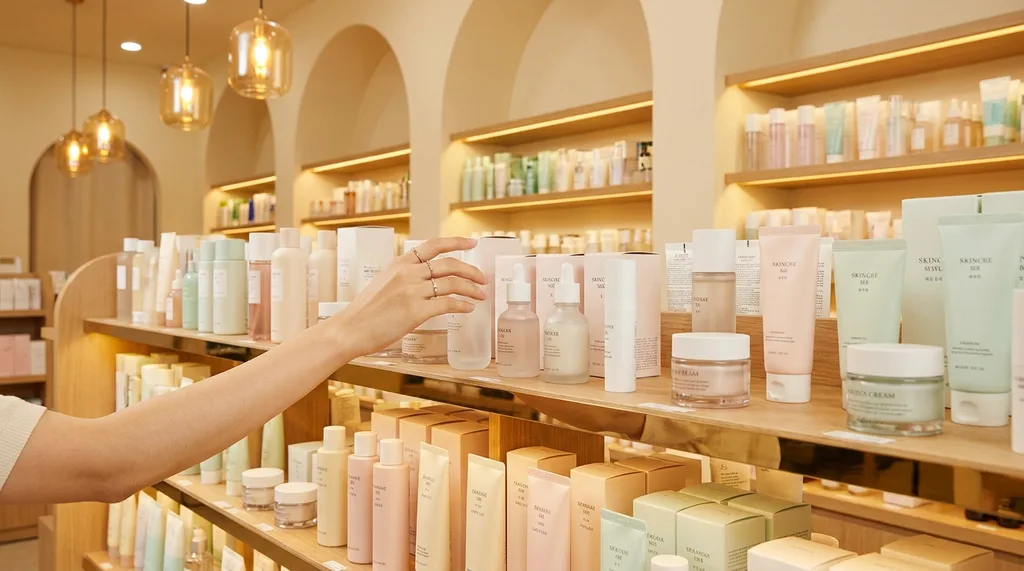
Walk into any Olive Young on a Saturday afternoon and you'll see a particular kind of shopper. They have a list. They've done the research — watched the hauls, read the Reddit threads, screenshotted every ingredient panel recommended by every Korean beauty influencer worth following. They leave with a bag heavy enough to require both hands and a conviction that they are, finally, doing this correctly.
Three weeks later, their skin is angry. Congested, or stripped, or mysteriously breaking out in places it never did before. They return to the forums and type a version of the same question that appears there roughly a hundred times a week: I did everything right. What went wrong?
The answer is almost never about a single bad product. It's about a deeper misunderstanding — one that the global marketing of K-Beauty has, ironically, helped create.
The Basket Problem: When Enthusiasm Becomes the Enemy
There's something genuinely seductive about Korean skincare retail. The price points are generous, the packaging is beautiful, the product density per square meter of shelf space is frankly astonishing. Korean beauty enthusiasts — the passionate, self-educating consumers known as ko-deok — have access to decades of formulation culture condensed into accessible formats. For a newcomer, it feels like arriving at a feast.
And that is precisely the problem.
Korean dermatologists and skincare professionals report that the single most common error among beginners is not choosing the wrong product — it's choosing too many, too fast. What the influencer haul doesn't show is the weeks of careful individual product introduction that should precede any full routine. Beginners, seduced by the promise of glass skin and the affordability of adding just one more thing, tend to layer five new products onto their face simultaneously. When the skin reacts, there's no way to identify the culprit. The entire routine gets condemned. The basket gets emptied and refilled with a new set of trending items, and the cycle repeats.
Skincare community data from major Korean review platforms consistently shows a recognizable pattern: the users with the most comprehensive routines are not, as a group, the users with the best skin outcomes. The correlation runs in the uncomfortable direction.
But product overload is only part of the story — and arguably the easier part to fix. The harder problem is what happens when beginners do everything they've been told, follow the steps correctly, and still watch their skin deteriorate. That failure reveals something most K-Beauty content never explains: what the famous multi-step routine was actually invented to solve.
The Real Reason the Layering System Exists
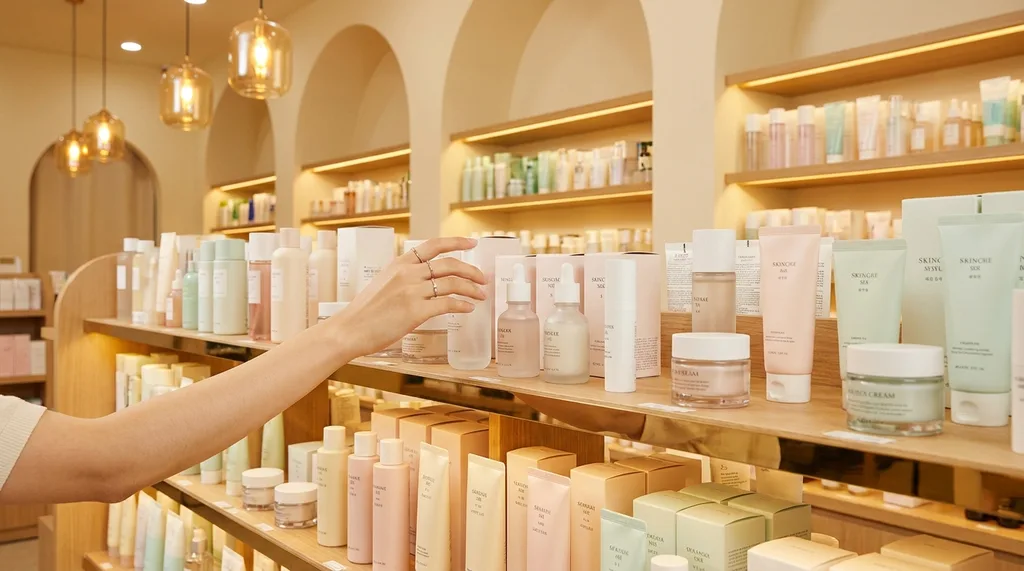
The 10-step routine has been described, at various points in Western media, as a cultural curiosity, a marketing invention, and an aspirational lifestyle. What it rarely gets described as — with any real precision — is what it actually is: a physiological protocol designed to address a specific skin condition most non-Korean consumers have never heard of.
[K-Beauty 101] Sok-geon-seong (속건성) — Inner-skin dryness. A condition where the skin's surface behaves normally — or reads as oily — while deeper cellular layers are chronically parched. It is the foundational concept driving the Korean preference for deep, multi-layered hydration.
Once you understand sok-geon-seong, the logic of layering stops looking arbitrary. The sequence — cleanser, toner, essence, serum, emulsion, cream — is structured around viscosity. Each product is thinner than the one that follows it. This is not aesthetic ceremony. It is delivery engineering. Lighter, water-based layers penetrate first, carrying active ingredients into the deeper epidermis. Heavier layers seal and support from above. Applied in reverse order, or carelessly combined, the system collapses: thick occlusive textures block the absorption of what comes after, and the entire protocol fails at the cellular level it was designed to reach.
Korean skincare professionals frequently cite this sequencing logic — what the industry informally calls "thin to thick" — as the most neglected piece of knowledge among international beginners. The products may be correct. The order may look correct. But if the wait times between layers are skipped, if formulas are mixed that shouldn't be, if a rich cream goes on before a water-based serum has had the seconds it needs to absorb — the routine becomes decorative rather than functional.
The SVG below maps the viscosity logic visually, because this is the kind of thing that clicks faster when you can see its shape:
[K-Beauty 101] Pibu-jangbyeok (피부장벽) — The skin barrier. The protective outermost layer of the skin, treated in Korean skincare culture as a fragile living ecosystem to be consistently nurtured. In most Korean clinical contexts, a compromised skin barrier — not a "lack of actives" — is considered the root cause of common skin concerns.
This is where the Korean philosophy diverges sharply from the Western instinct. Western skincare, particularly in the U.S. and Europe, has historically been built around problem-solving: you identify a flaw, you select an ingredient powerful enough to attack it. Korean skincare, shaped by decades of regulatory scrutiny from the Ministry of Food and Drug Safety — one of the world's most rigorous cosmetics regulators — is built around something quieter and more patient: ecosystem preservation. The question isn't "what can I throw at this problem?" It's "what does my skin barrier need to heal itself?"
Beginners who arrive at K-Beauty from a Western framework often bring the problem-solving instinct with them. They layer actives aggressively. They exfoliate frequently. They treat their skin like a construction site. And the results, by now, should be predictable.
The Actives Trap: When Science Becomes Sabotage
Here is something that Korean skincare communities have quietly known for years, and that the global influencer economy has very little incentive to amplify: the second most common beginner mistake, after over-purchasing, is over-activing.
AHA and BHA exfoliants are genuine skincare workhorses — chemical exfoliants with legitimate clinical backing. But the data on how beginners use them suggests a pattern that dermatologists in Seoul find consistently frustrating. Users introduce both types simultaneously, or use them daily, or layer them with retinol-adjacent ingredients, and then attribute the subsequent sensitivity cascade not to the overload they've created but to their "sensitive skin type."
The concept the Korean beauty community calls 오버케어 — over-care — is perhaps the most Korean idea that the international market has failed to import alongside the sheet masks and the snail mucin. Over-care describes the specific damage that comes not from neglect but from excess: too many actives, too many steps, too much intervention. The skin barrier, overwhelmed, begins to fail. Moisture escapes. Sensitivity spikes. Breakouts appear. The user, logically but incorrectly, concludes they need more products to fix what more products broke.
The regulatory framework that governs what Korean brands can and cannot claim on packaging exists precisely because Korean consumer culture takes skin reactions seriously. Products claiming functional benefits — wrinkle improvement, barrier restoration, brightening — must meet evidentiary standards enforced by the MFDS. The irony is that some of the most aggressive active ingredients circulating in the global K-Beauty market arrive via international brands that operate outside that framework entirely.
What that means practically: not every product sold as K-Beauty is formulated within the K-Beauty philosophy. And beginners rarely know the difference.
If you want the actual insider map — the ingredient literacy, the routine-building logic, the list of questions Korean dermatologists say you should be asking before you buy anything — it exists, and it's free.
What Korean Skin Experts Actually Recommend
The prescription that comes out of Korean dermatology clinics, when beginners describe their routine disasters, is almost always the same: subtract before you add.
Start with three products. A gentle cleanser. A hydrating toner. A moisturizer with SPF or a separate sunscreen. Use them consistently for a month. Let the skin barrier stabilize. Then — only then — introduce one new element, in isolation, and observe the response.
This approach is deeply counterintuitive to anyone who has been told that K-Beauty is about more. But the ko-deok community — the enthusiasts who memorize ingredient panels and share unsponsored, unsentimental reviews across Korean beauty forums — have largely arrived at this conclusion themselves. The most respected voices in that community are not the ones with the most products. They are the ones who can explain, precisely, why each thing in their routine is there.
| Common Beginner Belief | What the Evidence Actually Shows |
|---|---|
| More steps = more effective routine | Skin barrier overload is a documented outcome of aggressive multi-product introduction |
| Expensive products work better | Korean formulators consistently prioritize concentration and delivery over price tier |
| Trending ingredients are universally safe | Active ingredients carry genuine contraindications; individual skin response varies significantly |
| Exfoliation more often = clearer skin | Over-exfoliation is among the top causes of barrier damage in beginner routines |
| Layering everything together is fine | Viscosity sequencing and ingredient interaction matter; some combinations actively counteract each other |
The shift the Korean market itself has undergone — from the novelty product era of BB creams and overnight masks to what industry analysts call "K-Beauty 2.0," centered on clinical-grade, barrier-focused formulation — mirrors exactly this maturation in consumer thinking. The market grew up. The most sophisticated Korean skincare consumers now buy fewer products than they did five years ago. They buy better ones, they understand why each is there, and they resist the seduction of the full basket.
The global skincare market is projected to approach $200 billion USD by 2030, and K-Beauty's $10 billion-plus in annual exports reflects genuine formulation leadership. But the export that matters most isn't the products. It's the philosophy underneath them: skin is a system, not a surface. Respect the barrier first. Everything else follows from that.
The Thing Nobody Told You When You Started
The best K-Beauty routine you will ever build is the one you understand deeply enough to defend. Not the one with the most steps, not the one that mirrors what a Seoul influencer posted last Tuesday, not the one assembled from every ingredient that went viral this quarter.
Korean skincare at its core is not a product category. It is a stance toward the skin: patient, systematic, and philosophically committed to working with biology rather than overriding it. The 10-step routine was never meant to be a shopping list. It was a model for thinking about the skin as a living system that absorbs what it needs in the sequence it needs it.
The beginners who thrive with K-Beauty are not the ones who buy the most. They are the ones who slow down long enough to ask the one question that ko-deok have always asked first: Why is this here, and what does my skin actually need it to do?
That question is not on the label. But once you know to ask it, every shelf in Olive Young looks completely different.
⚠️ Medical & Skincare Disclaimer: The information in this article is educational and does not constitute personalized dermatological advice. If you experience persistent redness, irritation, unexpected breakouts, or any adverse reaction when introducing new skincare products, discontinue use and consult a licensed dermatologist before continuing. Beginners with pre-existing skin conditions — including rosacea, eczema, or chronic sensitivity — should seek professional guidance before starting any new active ingredient. Always patch-test new products on a small area of skin for at least 24–48 hours before full application. Claims about product efficacy should be evaluated against available clinical evidence, not marketing copy alone.
✓ Researched and compiled using verified data as of the publication date.
 Operated by: Quiet Korea | Contact: rsl.2001.1975@gmail.com
Comments
Post a Comment