[Dupe Finder] Glass Skin Masterclass
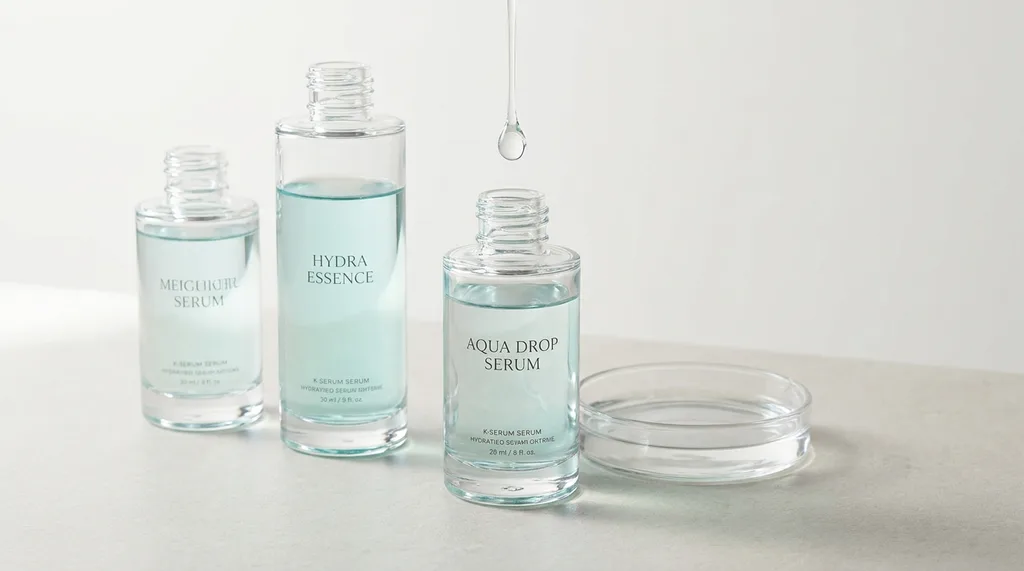
Your bathroom shelf probably has the right ingredients on it right now. The problem is that nobody told you which ones actually matter — and which ones are just expensive packaging around water and fragrance.
Glass skin content is everywhere, and almost all of it teaches you to chase the wrong thing. The dewy, mirror-finish glow you see on your screen is called mul-gwang — and it's a surface visual finish, not a measure of skin health. Korean women who've maintained that translucent, lit-from-within radiance into their forties and fifties aren't chasing mul-gwang. They're building something deeper. And what they're building can be done with a $12 toner as easily as a $90 essence — if you understand the three ingredients that actually do the work.
This is not a list of cheaper products that "look similar." This is an ingredient autopsy. By the end, you'll know exactly what to look for on an INCI list, exactly where most glass skin products spend their budget (hint: not on actives), and exactly which tier is genuinely worth the premium — and which isn't.
The Glow You're Buying Isn't the Glow You Want
[K-Beauty 101] Mul-gwang (물광) — Water Glow. The specular, mirror-like surface reflection of highly hydrated skin. A visual finish that can be created with humectants layered on damp skin. Transient. Product-dependent. Beautiful — and ultimately secondary.
[K-Beauty 101] Sok-gwang (속광) — Inner Glow. A lit-from-within radiance that signals deep dermal health and structural barrier integrity. It cannot be applied. It must be earned — through weeks of consistent, non-irritating barrier support. This is what glass skin actually is.
Here is the distinction that the entire $15 billion glass skin industry would prefer you not fully understand: mul-gwang is what you see in the before/after. Sok-gwang is what actually happened to the skin. Brands sell you products formulated to deliver the first. Dermatologists in Seoul measure success by the second.
The mechanism is a concept called TEWL — Transepidermal Water Loss. Healthy skin has a "brick-and-mortar" structure in its outermost layer: corneocytes (the bricks) bound together by intercellular lipids (the mortar). When that structure is intact, moisture stays in. Light reflects off an even, densely hydrated surface. The result looks like glass without a single drop of highlighter.
When that structure breaks down — through over-exfoliation, harsh surfactants, pollution, or simply layering too many actives too fast — TEWL increases. The skin feels what Koreans call sok-geonjo (속건조): the surface can feel oily, even dewy, while the deeper layers are parched and inflamed. You apply product after product. Nothing sticks. The skin never quite arrives.
The products you've been buying are mostly designed to create the appearance of glass skin on compromised skin. The real work — the 80% that doesn't get written about — is barrier repair. And the actives that do that repair are remarkably cheap.
🎵 K-Mono Lofi — Seoul Study Beats
Read deeper with Seoul lo-fi in the background — curated by K-Mono Lofi
The Ingredient Autopsy — What Glass Skin Actually Runs On
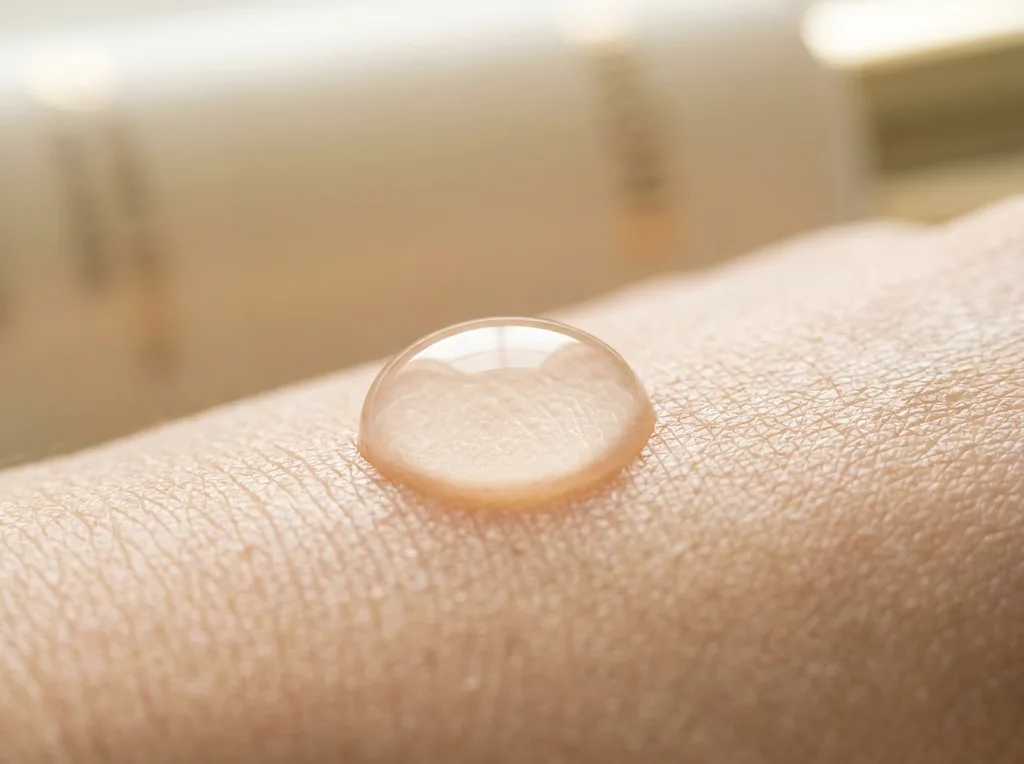
Strip away the marketing copy from any high-performing glass skin product, and you'll find three functional actives doing the heavy lifting. Everything else is delivery, texture, fragrance, or brand story.
Ceramides. The mortar in your skin's brick-and-mortar structure. When your barrier is damaged, ceramide levels drop. When ceramides are replenished topically, TEWL decreases measurably, and the skin's natural water-retention ability returns. The concentration matters — but a product doesn't need a luxury price point to deliver effective ceramide levels. What it does need is to list ceramides in the first half of the INCI list, not buried after several fragrance components near the bottom.
Niacinamide (Vitamin B3). One of the most thoroughly researched barrier-supporting actives in cosmetic dermatology. At concentrations between 2% and 5%, niacinamide stimulates ceramide synthesis, reduces TEWL, calms inflammatory response, and — relevant here — contributes directly to that even, luminous surface quality that reads as glass skin. Above 10%, the returns diminish and sensitization risk climbs. The sweet spot is 4–5%, which costs the same to manufacture whether it's in a $9 product or a $75 one.
Humectants: Hyaluronic Acid + Glycerin. These are your mul-gwang delivery mechanism. Layered correctly on damp skin, they pull moisture toward the surface and create the visual dewy finish. Hyaluronic acid at multiple molecular weights (high for surface plumping, low for deeper hydration) is ideal. Glycerin is humble, unglamorous, and exceptionally effective — and appears in nearly every well-formulated K-beauty toner regardless of price point.
A note on chemical compatibility worth understanding: Vitamin C (ascorbic acid) and benzoyl peroxide can neutralize each other when layered in immediate succession. Copper peptides and high-concentration vitamin C are a theoretically contested pairing — the science is not fully settled on this. Treat it as a "proceed with caution" rather than an absolute rule, and space them into separate AM/PM routines to eliminate the question entirely.
The barrier-building trio above — ceramides, niacinamide, humectants — works across formulations at nearly every price point. What changes as you move up the price ladder is not efficacy but experience: texture, scent, packaging, additional fermented extracts, or proprietary complexes that may offer incremental benefits. Whether those increments are worth the cost gap depends entirely on your skin's current state and your priorities.
Ingredient for Ingredient — The Honest Comparison
Below is what the market actually offers when you filter for these three core actives. The comparison spans three tiers — not by brand prestige, but by what the INCI list actually delivers.
💸 Budget Barrier Builder
Glycerin + Niacinamide Toner
Hada Labo Gokujyun / COSRX AHA/BHA Clarifying
Glycerin + HA as first actives. No fragrance. Barrier-safe. Under $15. The unglamorous one that works.
⭐ Best Value
Niacinamide Serum (4–5%)
COSRX Niacinamide 15% Serum (diluted approach) / The Ordinary Niacinamide 10% + Zinc
Active in first 5 INCI positions. HA + niacinamide synergy. The ingredient punch that most $80 serums are replicating.
✨ Premium — When It Earns It
Fermented Essence + Ceramide Complex
SK-II FTE / Sulwhasoo First Care Activating Serum
Biofermented actives at higher molecular penetration. Worth the gap only when the barrier is already healthy and you're optimizing, not repairing.
Now here is where the Founder's Heart has to speak plainly: for a compromised or reactive skin barrier, the budget and mid-tier options above will outperform premium products — because the premium products often contain additional actives, fermented extracts, and fragrance components that can further stress an already-damaged barrier. When your skin is in repair mode, less is more. Ceramides, niacinamide, glycerin, panthenol. Full stop.
The premium tier earns its price when your barrier is already stable and you're looking for the incremental refinement — the additional glow that fermented galactomyces or bifida filtrate can contribute to skin that is already healthy. That is a legitimate upgrade. It's just not the right starting point.
What the chart shows — and what your INCI label will confirm — is that barrier-building efficacy plateaus relatively early in the price curve. The ceramide serum and niacinamide serum that anchor the sweet spot zone can both be sourced for well under $30. The premium fermented essences offer real benefits, but they are optimizing a healthy barrier, not rebuilding a damaged one.
For deeper reading on the layering philosophy and the full AM/PM routine sequence, the complete science-side breakdown lives here: Glass Skin Masterclass — The Full Barrier Blueprint.
The Verdict — Who Should Spend What
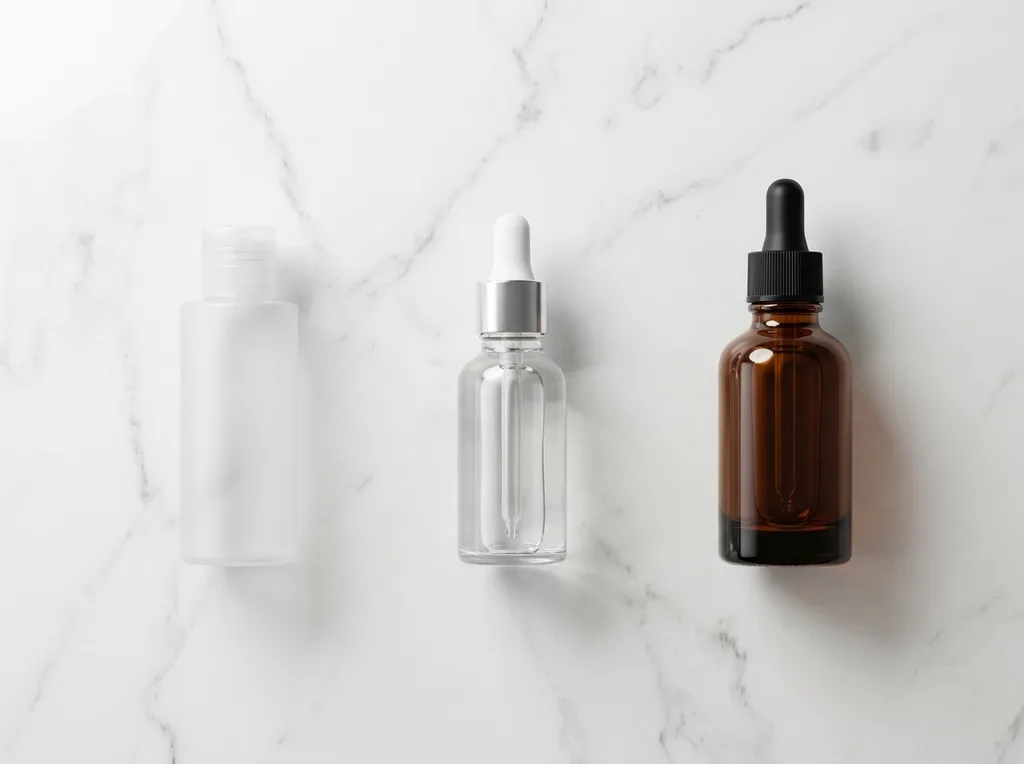
This is the section where honest advice diverges from every sponsored glass skin article you've ever read.
If your barrier is compromised right now — you're seeing reactive redness, your skin feels tight after cleansing, you're cycling through breakouts — stop all actives and invest in the budget tier. A pH-balanced cleanser, a glycerin-rich toner, a ceramide moisturizer. That is your entire routine. Under $30. Use it for four weeks before introducing anything else. The 7-skin method (chil-skin-beop) works beautifully here: seven thin layers of that glycerin toner, pressed in with warm palms, will restore measurably more hydration than a single application of almost any essence at any price point — because you're flooding a depleted barrier with what it actually needs.
If your skin is stable but dull — barrier intact, no reactivity, just lacking that inner glow — the mid-tier niacinamide serum earns its place completely. At a 4–5% niacinamide concentration with multi-weight hyaluronic acid, you are delivering the exact actives that support ceramide synthesis and surface luminosity. The sok-gwang you want begins here, and it doesn't require a luxury price.
If your skin is healthy and you want refinement — this is the only case where the premium fermented essence genuinely earns its price. Galactomyces ferment filtrate, bifida ferment lysate, and complex fermented extracts do offer molecular-level benefits that cheaper formulations don't replicate. But notice the condition: your barrier must already be healthy. Layering fermented actives on a damaged barrier is like renovating the second floor while the foundation is cracked.
One honest caveat about the 7-skin method for oily or congestion-prone skin: excess humectant layering without a proper occlusive finish can leave the skin without an adequate seal, paradoxically increasing TEWL. If you have a combination-oily type, cap your layering at three to four thin applications and seal with a lightweight ceramide emulsion rather than a rich cream.
Building the Full Routine Around These Actives
Once you've identified your tier, the layering sequence is non-negotiable. The physics here are simple: thinnest to thickest, water-based before oil-based, and a genuine 60 seconds between each step for the previous layer to bind before the next one sits on top.
AM architecture: pH-balanced cleanser (yak-san-seong, targeting pH 5.5) → niacinamide toner patted in with warm palms → HA serum pressed in from the center of the face outward → ceramide moisturizer sealed in with gentle upward pressure → SPF as the final non-negotiable layer. Nothing else in the morning. The skin's surface has spent the night in repair mode and does not need a stack of actives before facing the day's environmental stressors.
PM architecture: Oil-based first cleanse to dissolve SPF and sebum → water-based second cleanse → glycerin toner (this is your dak-to step, lightly on a soaked cotton pad along the skin's grain) → second toner application by hand (chap-to) → serum → ceramide moisturizer. If using any chemical exfoliant, it replaces the serum step — maximum two nights per week, never the same night as vitamin C.
Wait times are not optional. They feel ritualistic because they are. Sixty seconds between the toner and serum step allows the toner to fully absorb and the skin's surface to return to its baseline pH, so the next layer doesn't encounter a diluted, pH-shifted environment.
The glow you're building — real sok-gwang, not its surface imitation — takes approximately four to six weeks of consistent barrier support to become visible. That timeline frustrates people raised on overnight results. But Korean women who have maintained glass skin into their forties and fifties know that this patience is the only technique that doesn't eventually destroy the thing it was meant to create.
Glass skin was never for sale. The glow is the byproduct of a skin barrier that's been patiently rebuilt, layer by layer. The products that build it cost almost nothing. What's expensive is knowing which ingredients to look for — and the discipline to stop adding more.
Medical & Financial Disclaimer:
⚠️ Disclaimer: This article is written for educational purposes and does not constitute medical advice. All skincare routines, ingredient concentrations, and product approaches discussed are general in nature and may not be appropriate for every individual. Those with active skin conditions — including eczema, rosacea, perioral dermatitis, or severe acne — should consult a board-certified dermatologist before modifying their routine or introducing new actives. Patch-test all new products for a minimum of 48 hours before full-face application. The ingredient science discussed reflects general cosmetic chemistry consensus; individual product formulations vary and should be verified against current INCI labels. Price tiers mentioned are indicative and subject to regional variation. This site does not guarantee product availability or pricing accuracy.
✓ Researched and compiled using verified data as of the publication date.
 Operated by: Quiet Korea | Contact: rsl.2001.1975@gmail.com
Comments
Post a Comment