[Dupe Finder] The K-Beauty Dark Side Guide: What's Really in Those Bottles, and Smarter Alternatives
[Dupe Finder] The K-Beauty Dark Side Guide: What's Really in Those Bottles, and Smarter Alternatives
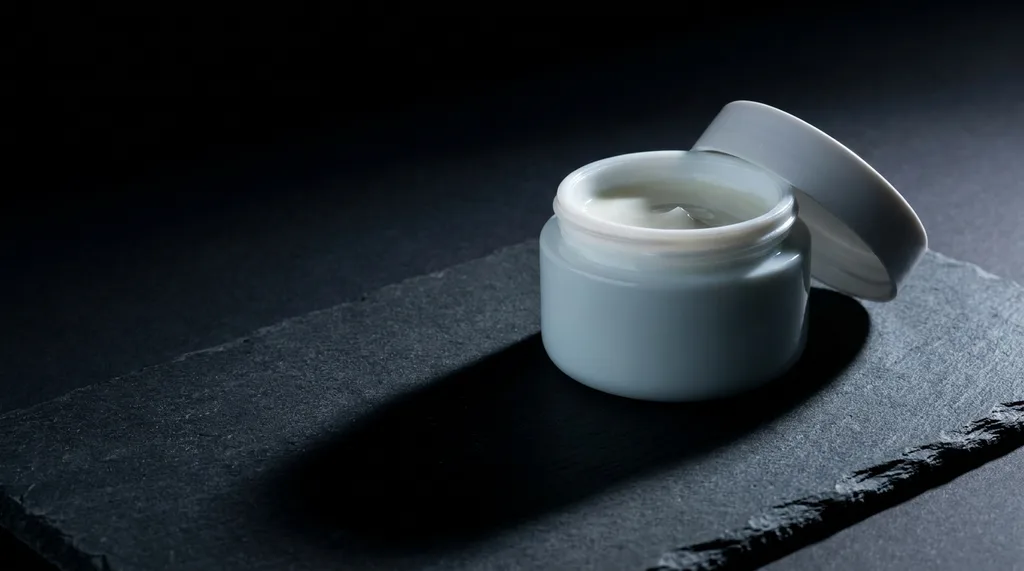
Walk into an Olive Young at midnight — which is entirely normal in Seoul, because the lights never quite go off — and find the brightening aisle. It used to be labeled whitening. The signage changed. The products mostly didn't. Locals who've been shopping there for years will notice the shift without anyone ever announcing it. A category that generated billions under one name quietly absorbed a new word, hoping the world would forget what the old one meant.
- The Regulatory Gap Behind the "Clean Beauty" Label
- The Whitening Industry's Buried History
- The Ingredient Autopsy: What's Actually Working (and What Isn't)
- Smarter Alternatives: The Ingredient-Based Escape Route
- How to Navigate This As an Adult Who Loves Korea
- Explore Ingredient-Transparent Brightening Alternatives
That small, unremarked rebrand is K-Beauty's dark side in miniature: the industry's extraordinary talent for packaging uncomfortable realities inside beautiful design.
And here's the number that keeps that talent from being merely a marketing story: mercury concentrations up to 67,000 mg/kg have been detected in face creams sold under the K-Beauty umbrella. Not a trace. Not a rounding error. A concentration so extreme it exists at a different scale from any defensible safety standard. Meanwhile, the same industry posted US$11.4 billion in exports in 2025, with US sales up 15% year-over-year. How does a country producing the world's most sophisticated skincare science explain that number — and why is almost no one in the global K-Beauty content ecosystem talking about it?
That question will hum under everything that follows. Because the answer changes not just how you shop K-Beauty, but how you see it.
The Regulatory Gap Behind the "Clean Beauty" Label
The fact that took everyone by surprise in August 2025: South Korea abolished its government-led "Natural/Organic" cosmetics certification system. The certification that millions of global consumers used as a trust signal when choosing products — gone, replaced by brand-led self-regulation under ISO 16128 standards.
What this means in practice is that any product you purchased before this date carrying a government natural/organic stamp was backed by independent verification. Any product after? The brand tells you it's natural. The brand verifies it's natural. You take the brand's word for it.
This is not unique to Korea — the Western beauty industry operates on similar self-regulatory models in many categories. But K-Beauty had specifically leveraged its government certification as a differentiator. Removing it creates a gap that counterfeit operations and corner-cutting brands will fill with extraordinary speed.
The deeper regulatory picture is actually more hopeful — and more complicated. The South Korean Ministry of Food and Drug Safety (MFDS) has initiated what amounts to the most significant overhaul of Korean cosmetics regulation in the industry's modern history. By 2031, every entity classified as a Hwajangpum Chaekim Panmaeeopja — a Cosmetics Responsible Seller — will be required to maintain comprehensive safety reports for every product they sell. This mirrors EU standards and effectively ends the era of simple product registration.
[K-Beauty 101] Hwajangpum Chaekim Panmaeeopja (화장품 책임판매업자) — "Cosmetics Responsible Seller." More than a business category, this designation represents a legal shift from simple distribution to full professional liability across a product's entire lifecycle. When this framework is fully enforced by 2031, it will fundamentally change who can sell K-Beauty and what they must prove about it.
The transition period, however, is where things get dangerous. Between now and 2031, brands are operating in a regulatory middle ground — the old lax system is being dismantled, but the new rigorous one isn't fully in place yet. That mercury finding? The contamination range of ND to 67,000 mg/kg wasn't from black-market products. It represents the spectrum discovered in face creams circulating in the existing market.
That range — "not detected" to an astronomically dangerous concentration — in the same product category tells you everything about the heterogeneity of the K-Beauty market. The brilliant serum formulated by a team of cosmetic chemists and the dangerous cream assembled in a facility with zero oversight wear almost identical packaging.
🎵 K-Mono Lofi — Seoul Study Beats
Read deeper with Seoul lo-fi in the background — curated by K-Mono Lofi
The Whitening Industry's Buried History
The linguistic shift from "whitening" to "brightening" is not merely marketing. It's a cultural debate happening in slow motion, and understanding it transforms how you read an entire product category.
[K-Beauty 101] Hwaiteuning (화이트닝) — "Whitening." This was the official product category label for skin-lightening cosmetics in Korea for decades, now being replaced by the softer "brightening." The original term carries roots that predate modern Korea: pale skin was historically associated with aristocratic indoor life, but the ideal was significantly amplified and systematized during the Japanese colonial period, when lighter skin became entangled with social mobility and cultural erasure. Modern Korean feminists and younger consumers are loudly contesting whether the current industry serves women's autonomy or inherited beauty trauma. The industry's response — a new word — doesn't settle the question.
What the rebrand doesn't resolve is that the whitening industry, restructured or not, generates enormous revenue by selling a standard that is, at its root, a hierarchy. The science has evolved — modern "brightening" formulations use mechanisms like niacinamide, arbutin, and tranexamic acid that are medically legitimate and focus on evening skin tone rather than achieving a specific complexion ideal. But the marketing imagery hasn't caught up with the science in every corner of the market.
The internal Korean debate is real and substantive. Korean feminist discourse online is increasingly direct about the connection between these beauty standards and documented 외모 차별 (oemmo chabyeol) — appearance discrimination — that affects women's employment, marriage prospects, and social standing in measurable ways.
[K-Beauty 101] Oemmo chabyeol (외모 차별) — "Appearance discrimination" or "lookism." In South Korea, resume photos are standard practice. Appearance is openly discussed in hiring contexts in ways that would be legally actionable in the EU, UK, or US. This is the structural engine underneath Korea's beauty anxiety economy — and understanding it reframes K-Beauty products from "aspirational" to "part of a pressure system that also happens to produce extraordinary formulations."
For a deeper investigation of how this pressure system shapes K-Beauty from the inside out, including the clinical and cultural forces now reshaping it: The Uncomfortable Truths Inside K-Beauty
The Ingredient Autopsy: What's Actually Working (and What Isn't)
Here's where the dupe finder logic becomes essential — because the dark side of K-Beauty is not that the best products are fraudulent. It's that the category's prestige has created cover for products that deliver nothing, products that actively harm, and routines that have been marketed as cure-alls when dermatologists increasingly call them barrier destroyers.
Take daily sheet masking. It's one of the most globally aspirational K-Beauty rituals. It is also, according to growing clinical consensus in Seoul's dermatology community, a practice that can progressively compromise the skin barrier if done every day without attention to ingredient interactions. The issue isn't sheet masks as a concept — it's the ritualization of them regardless of formula, skin type, or the state of your barrier on any given day.
Or take skin "detox" at jjimjilbang (Korean sauna). Beloved. Deeply cultural. And largely a myth. The skin does not "release toxins" through sweat. The temporary luminosity afterward is a real effect — heat increases blood circulation, opens pores, allows surface debris to be washed away more effectively. But the clinical narrative the industry built around "detox" is not supported by the mechanism of what actually happens.
What the Hwahae (Hwahae) platform — Korea's ingredient-analysis and review platform — has done for consumers is extraordinary: it shifted power from brand narrative to peer-verified evidence. Consumers using Hwahae are cross-checking INCI lists, identifying where key ingredients appear in the concentration sequence, and making decisions the same way cosmetic formulators do. They're also identifying two specific things worth understanding for anyone buying K-Beauty products abroad.
First: Preservative limits. Korean regulations cap dehydroacetic acid at 0.6% and benzoic acid at 0.5% — both reasonable ceilings. But in the counterfeit market, which has grown sophisticated enough to replicate holograms and barcodes convincingly, these limits are ignored entirely. The only protection against counterfeit products is purchase from verified official retailers. This is not a minor caveat.
Second: Synthetic colorant absorption. The colorant Amaranth (R2) has a 3.4% skin absorption rate in lotion formulations — and 0% absorption in cream formulations. This means the same ingredient behaves entirely differently depending on the vehicle that carries it. An ingredient is not an ingredient in isolation; it's an ingredient inside a specific delivery system, and that system matters more than the marketing headline.
Smarter Alternatives: The Ingredient-Based Escape Route
Knowing what to avoid is only useful if you know what to seek instead. The ingredient science points clearly toward what actually works for the goals K-Beauty's marketing is promising — and where you can find it without paying for a brand name that's 60% cultural cachet.
The whitening/brightening category, decoded: The active mechanisms with real clinical backing are niacinamide (inhibits melanosome transfer), tranexamic acid (suppresses melanin synthesis signaling), and alpha-arbutin (competitive inhibitor of tyrosinase). These are not exotic. They are available in single-ingredient or simple-formula products at a fraction of the flagship pricing.
The barrier-repair category, decoded: After years of hearing that daily exfoliation and heavy sheet-masking routines were the path to glass skin, the Seoul dermatology community is increasingly recommending a counter-approach — ceramide complexes, panthenol, and minimal-ingredient moisturizers that let the barrier recover rather than constantly challenging it.
Here's how the real alternatives stack up across price tiers:
💸 Budget Pick
Single-Ingredient Niacinamide Serum
5–10% niacinamide, minimal additives, no fragrance. Widely available on iHerb. The same mechanism as luxury brightening lines — without the heritage tax.
~$8–15 USD
⭐ Best Value
Tranexamic Acid + Niacinamide Formula
Dual-mechanism brightening — the combination dermatologists in Seoul have moved to recommending over traditional whitening actives. Increasingly available via iHerb from verified K-Beauty indie labs.
~$18–35 USD
✨ Premium (When Worth It)
Clinical K-Beauty: PDRN or Peptide-Driven Formula
The legitimate premium tier — polynucleotide or growth factor formulations from verified Korean labs. Buy only from official retailers. Counterfeits in this category are sophisticated and dangerous.
~$55–120 USD
The verdict, by who you are:
If your goal is brightening without the cultural baggage: The niacinamide category is your most honest entry point. It's the ingredient that K-Beauty's flagship brightening lines are built on — and finding it in a straightforward, ingredient-transparent formulation from iHerb at US$10–15 gives you the mechanism without paying for the mythology.
If you have barrier-damage from over-routine-ing: Stop adding products and start removing them. A ceramide-rich moisturizer and a gentle lipid cleanser, used consistently, will outperform any "barrier repair" serum that also contains fragrance, drying actives, or synthetic colorants with unpredictable absorption profiles.
If you want premium K-Beauty and are willing to pay for it: The Clinical K-Beauty category — PDRN, exosomes, advanced peptides — is where the real innovation lives in 2025. The US$36.2 billion market projection for clinical K-Beauty by 2034 reflects genuine consumer recognition that these actives are distinct from trend-driven formulations. But this category requires purchasing only from verified official retailers. The counterfeits are that good.
Where the original is genuinely worth it: Texture, delivery system, and the layering experience of a well-formulated K-Beauty product is not nothing. When a cream carries an active at 0% absorption versus a lotion that delivers 3.4%, the vehicle matters. The best Korean formulators understand this in a way that straight ingredient substitution sometimes misses. If a product's sensory profile is part of why it works — why you use it daily, why you maintain the routine — that's a real value, not a marketing illusion.
How to Navigate This As an Adult Who Loves Korea
The uncomfortable truth about K-Beauty's dark side is not that Korea is uniquely flawed. It's that the industry's extraordinary cultural momentum — the Hallyu halo effect, the ingredient innovation, the genuinely world-class dermatology — has been used to sell products and beauty standards simultaneously, and not every consumer has been equipped to tell the difference.
The tools that actually protect you:
1. Learn the INCI position rule. The first five ingredients by weight. That's where your formula lives. Everything after position ten is present in quantities that rarely produce the effect the marketing is promising.
2. Buy brightening, not whitening. The distinction is real when it's grounded in ingredients rather than branding. Niacinamide, tranexamic acid, alpha-arbutin — these even tone by inhibiting melanin processes without the colonial undertone. Products that promise to "whiten" your baseline complexion are selling you a standard, not a treatment.
3. Official retailers only for high-value products. Korean counterfeit operations have advanced to the point where holograms, barcodes, and packaging are replicated convincingly. The MFDS's post-market surveillance is improving, but enforcement gaps exist during this transition period. The risk in the premium Clinical K-Beauty category is not theoretical.
4. Let Hwahae validate before you buy. The ingredient-transparency platform used by Korean consumers themselves is your best due diligence tool. If a product's hero ingredient appears at position 22 in the INCI list, the platform will show you that — and you can make your decision accordingly.
5. Understand that barrier-repair isn't a product category. It's a rest period. Fewer actives, more lipids, less frequency. The K-Beauty routine culture has an inherent tension: the pleasure of a complex ritual and the science of barrier recovery pull in opposite directions. You get to decide which wins.
Korea's beauty industry produced $11.4 billion in exports in 2025 because it genuinely earned the world's trust with innovation that works. It is also navigating mercury contamination in legacy product categories, a regulatory framework mid-overhaul, a whitening ideology being slowly dismantled from within, and a social pressure system that targets teenagers and new graduates with documented, measurable consequences for their skin and their sense of self.
Holding all of that at once — the brilliant and the broken — is not anti-Korea. It's the only form of engagement with Korean culture that actually respects it.
The best thing K-Beauty ever taught the world is that skincare is a practice of attention. Apply the same attention to what you choose to put on your face.
Medical & Financial Disclaimer:
⚠️ Disclaimer: This article discusses skincare ingredients, regulatory systems, and product categories for educational purposes only. It does not constitute medical, dermatological, or financial advice. If you are experiencing skin sensitivity, barrier damage, hyperpigmentation, or any adverse skin reaction, consult a board-certified dermatologist before changing your skincare regimen or adding new actives. Mercury contamination concerns relating to specific products should be reported to the relevant national health authority in your country. Product purchase decisions, including counterfeit risk assessment, are the reader's own responsibility. Price estimates cited are approximate and subject to change. The author has no financial relationship with any product mentioned.
✓ Researched and compiled using verified data as of the publication date.
 Operated by: Quiet Korea | Contact: rsl.2001.1975@gmail.com
Comments
Post a Comment