[Haul & Commerce Review] Glass Skin Masterclass
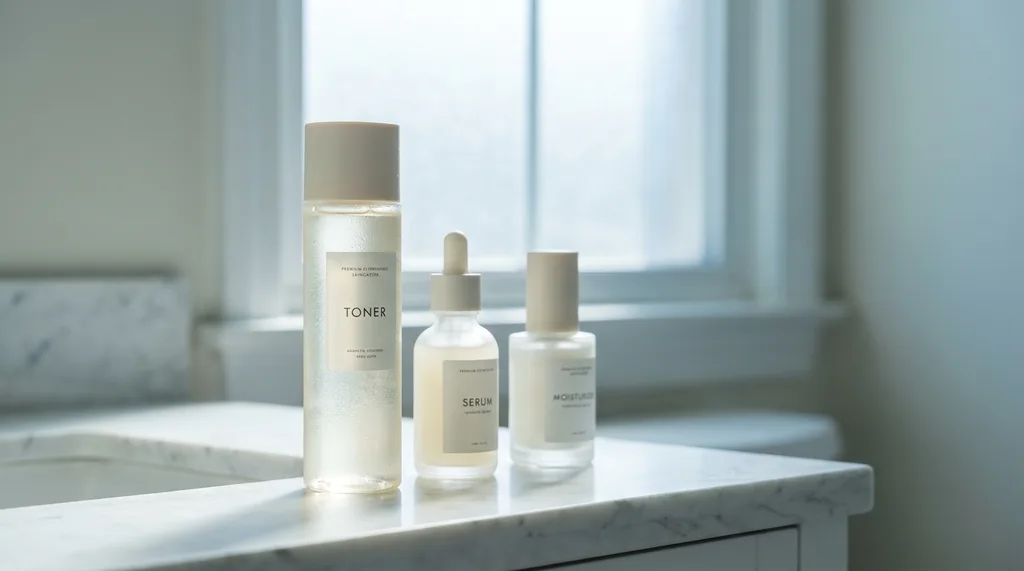
There is a word in Korean that your entire skincare routine might be pointing at wrong — and until you understand it, you could layer products for a decade and still miss the thing that actually makes the glass.
That word is 속광 (sok-gwang). And it is not what most glass skin tutorials are teaching you to achieve.
Here's what's actually happening when you scroll past those perfect, porcelain Korean faces: you're almost certainly seeing two completely different phenomena collapsed into one aspirational label. One of them — the dewy, almost-wet finish you can replicate with the right toner — is entirely temporary. The other is a physiological state that no product alone can manufacture. Most routines online are selling you the temporary one and calling it the whole thing.
This masterclass is about the other one.
The Two Glows Nobody Teaches Apart
Walk into any Olive Young and you'll find entire shelves organized around 물광 (mul-gwang) — the water glow. It's the mirrored, light-catching finish that looks like skin immediately after a long shower, when every pore is softened and the surface reflects rather than scatters. It's beautiful. It's also product-dependent, and it washes off.
[K-Beauty 101] Mul-gwang (물광) — Water Glow. The specular, surface-level radiance achieved through strategic humectant layering. Real, beautiful, and entirely transient — it is the visual finish of a routine, not its destination.
Sok-gwang is different. Korean skincare insiders describe it as the glow that comes from inside the skin — the lit-from-within quality that a concealer cannot fake and a highlighter cannot replicate. Dermatologists in Seoul describe it more precisely: it is what happens when the skin's stratum corneum maintains optimal hydration from within, when transepidermal water loss (TEWL) is properly controlled, and when the barrier's lipid-protein matrix is structurally sound enough to reflect light evenly rather than scattering it through a compromised surface.
Mul-gwang is a cosmetic result. Sok-gwang is a clinical marker of skin health.
The distinction matters more than any product recommendation because it changes the entire logic of what you're doing when you build a routine. If you're chasing mul-gwang, you add more. More toner layers, more serum, more oil on top. If you're building toward sok-gwang, your first instinct is to stop taking things away — stop stripping the barrier with alkaline cleansers, stop exfoliating twice a week while already dehydrated, stop piling actives on a compromised surface and wondering why it isn't glowing yet.
There is a condition Korean skincare culture has named with uncomfortable precision: 속건조 (sok-geonjo). Inner-skin dryness. The surface feels oily, sometimes even looks dewy — but deep in the dermis, the skin is parched and tight and stressed. It is the core failure state that most glass skin routines inadvertently create, because they address surface hydration while neglecting the structural repairs that allow that hydration to stay.
When Korean women in their forties have skin that embarrasses women in their twenties, the explanation isn't in the bottle. It's in twenty years of not destroying what they were born with.
🎵 K-Mono Lofi — Seoul Study Beats
Read deeper with Seoul lo-fi in the background — curated by K-Mono Lofi
Your AM Routine: Build the Mirror
The morning routine has one primary goal: prepare a calm, hydrated barrier to face UV, pollution, and whatever the day throws at it. Not to fix. Not to treat. Protect and reflect.
Step 1 — Rinse Cleanse (Purpose: Remove sleep residue without stripping)
In the morning, Korean dermatologists largely agree: unless you sweat heavily at night, a full foam cleanse is overkill. Lukewarm water or, at most, a pH 5.5 mildly acidic (약산성, yak-san-seong) cleanser splash is all your barrier needs. The acid mantle you rebuilt overnight should be treated as infrastructure, not something to blast away so you can "start fresh."
Step 2 — Dak-to Toner (Purpose: Gentle surface clearing + mild exfoliation)
Take a cotton pad and soak it — genuinely soak it, not damp but dripping. Press it flat to your face and sweep it along your skin's natural texture lines: outward across the cheek, upward on the forehead. Never drag. The friction here is supposed to be close to zero. This is 닦토 (dak-to), the wiping application — its job is to sweep away any overnight residue and prep the surface for what follows.
Wait 60 seconds after this step. Let the skin settle. Then proceed.
Step 3 — Chap-to Hydrating Toner (Purpose: Saturate the barrier with water molecules)
Pour a coin-sized amount of a hydrating essence-toner into your palms. Cup both hands together for five seconds — you're warming the product to skin temperature, so it integrates rather than sits. Then press both palms flat against your cheeks simultaneously and hold. Not rubbing. Not patting aggressively. Pressing — so the warmth of your hands drives the toner in rather than evaporating it.
If your skin is compromised or deeply dehydrated, this is where the 7스킨법 (chil-skin-beop) belongs. Repeat up to seven times with a watery toner, building microscopic layers of hydration that accumulate rather than overwhelm. Each pass should feel absorbed before the next one begins. A slightly tacky surface is normal; a still-wet surface means you've moved too fast.
Step 4 — Lightweight Serum (Purpose: Deliver targeted humectants + barrier-supporting actives)
Here is where molecular weight matters. Hyaluronic acid at high molecular weight sits on the surface and pulls moisture from the air; lower molecular weight penetrates further. Panthenol — provitamin B5 — is one of the most underrated barrier ingredients in the Korean pharmacopeia: it repairs as it hydrates. Niacinamide at 2–5% concentration regulates sebum, strengthens the barrier, and adds a translucency that is its own quiet contribution to sok-gwang.
Apply with the same palm-warming technique. Wait 45 to 60 seconds before moving on. This is not impatience — this is the time the previous layer needs to complete its journey before you seal it.
Step 5 — Emulsion or Moisturizer (Purpose: Lock in hydration with an occlusive-emollient layer)
Richer than a serum, lighter than a night cream. Korean women often reach for an emulsion here — a water-in-oil emulsion that provides the lipid reinforcement the barrier needs without the heaviness that would break down under sunscreen. Warm it in your hands, press it into your face.
Step 6 — SPF (Purpose: Prevent the single largest cause of barrier damage)
Non-negotiable. UV radiation degrades ceramides and collagen, the two structural elements most responsible for that even, light-reflecting surface you're building. All of the work above is undone in cumulative increments without it. Korean sunscreens — lightweight, finish-enhancing, often with a subtle brightening effect — have made this step genuinely pleasant. There is no glass skin argument that doesn't include this step.
Your PM Routine: Repair the Foundation
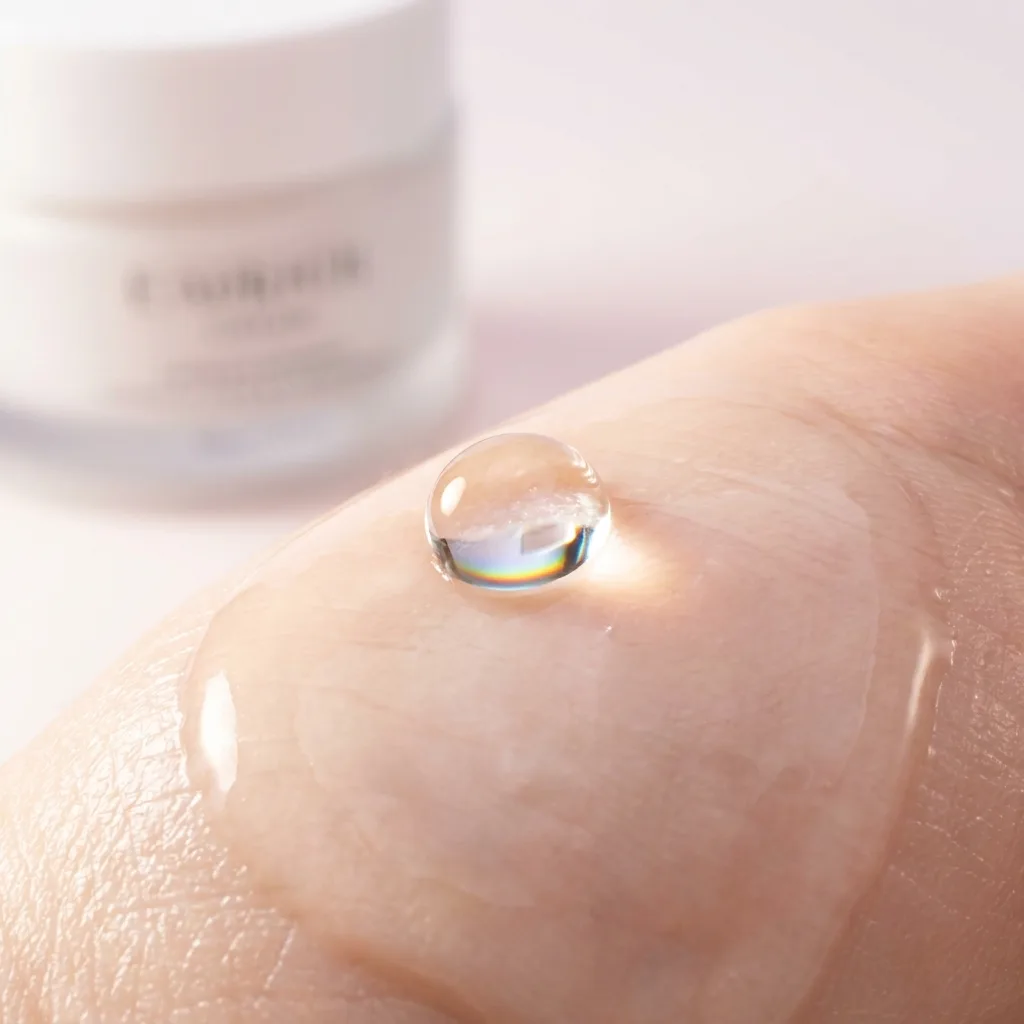
Night is when the skin's cellular repair cycle peaks. The PM routine's entire logic is different from the AM: you are not defending. You are rebuilding the 수분 장벽 (su-bun jang-byeok) — the moisture barrier — layer by layer.
Step 1 — Oil Cleanse (Purpose: Dissolve lipid-soluble barriers — SPF, sebum, pollution)
이중 세안 (I-jung Se-an), double cleansing, is the non-negotiable foundation of every Korean PM routine. Not a trend. A structural necessity. Oil cleansers work on the principle of like-dissolves-like: the SPF you applied in the morning, the sebum that mixed with environmental particulates across twelve hours — none of it yields to water alone.
Massage the oil cleanser into dry skin for at least 60 seconds. Not rushing. Feel the texture change as it emulsifies. Rinse with lukewarm — not hot — water.
Step 2 — Low-pH Foam Cleanse (Purpose: Remove water-soluble residue without stripping)
Follow with a yak-san-seong foam cleanser at pH 5.5. This is the second cleanse — shorter, gentler, just clearing what the oil left behind. The mildly acidic pH preserves the acid mantle you are about to spend the rest of this routine reinforcing. If your cleanser leaves your skin feeling tight, squeaky clean, or "refreshed" in that tingly way, it is alkaline, and it is working against you.
Step 3 — Treatment Essence (Purpose: Deliver barrier-repairing actives at peak absorption)
After a double cleanse, the skin is at maximum receptivity. This is where niacinamide, ceramide precursors, and Centella Asiatica (cica) earn their reputations. Niacinamide at concentrations between 2–5% strengthens the skin's natural lipid barrier and visibly reduces the appearance of enlarged pores over consistent use. Cica — revered in Korean dermatology for its wound-healing and barrier-recovery properties — is particularly well-suited for anyone whose barrier is already showing stress signals: tightness, redness, intermittent breakouts.
Pat — do not rub — with clean hands. The same palm-warming technique applies here.
Step 4 — Repair Serum (Purpose: Deliver peptides and occlusives to seal nightly repair)
Panthenol, ceramides, peptides. This is where Korean night serums earn their price. The skin's overnight repair cycle — cellular turnover, collagen synthesis, barrier lipid replenishment — is most active between roughly 10pm and 2am. A serum that supports this with the right substrate is not indulgence. It is engineering.
Step 5 — Night Cream (Purpose: Occlusive seal over everything you've built)
The cream here is heavier than its AM equivalent. It is not feeding the skin as much as it is creating a micro-occlusive environment that traps the hydration and actives underneath it. Press it in with your palms. Hold for ten seconds. The warmth of your hands is doing real work.
Optional — Sheet Mask (1일 1팩, 1-il 1-pack)
Once daily, on nights when the skin looks dull or tight, a simple hydrating or calming sheet mask worn for 15–20 minutes before the rest of the PM routine accelerates the saturation that the chap-to method achieves in the morning. Key word: hydrating. A heavy anti-aging mask every night will overload compromised skin. The logic here is always toward calm, not intensity.
The Honest Breakdown: What This Approach Actually Delivers
The Destroyer: What Wrecks Glass Skin Before It Can Form
This is the section most routines skip because it doesn't sell product. But it is the section most likely to change your skin.
Glass skin — real glass skin, sok-gwang — is destroyed before it is built by three specific behaviors that are completely normalized in the K-beauty content ecosystem.
Over-exfoliation. AHAs and BHAs used more than two or three times per week on a compromised barrier are not accelerating renewal. They are repeatedly reopening a wound that needs rest. The clinical consensus emerging from Seoul dermatology practices is pointed: the sharp uptick in consultation visits for barrier-damaged skin over the past several years correlates directly with the proliferation of daily exfoliant toner routines on social media. The glow chased with acid becomes the tightness, redness, and flakiness that more acid then "treats."
Wrong-order actives. The molecular weight rule exists because skin absorption is hierarchical. A rich cream applied before a lightweight serum creates a lipid seal the serum cannot penetrate. Inversely, a potent exfoliant applied to unprepared skin — before any hydration buffering — hits a depleted barrier at full concentration. The order of application is not a ritual. It is physics.
Impatience with layers. The 60-second wait between steps is the single most consistently skipped instruction in any layering routine. When the previous layer hasn't had time to begin absorption, the next one physically disturbs it rather than building on it. The result is that pilling, rolling texture that makes it look like the products aren't compatible — when the actual problem is timing.
[K-Beauty 101] Sok-geonjo (속건조) — Inner-skin dryness. A deceptive condition where the skin's surface appears normal or even oily, while the deeper dermal layers are starved of hydration. The hallmark symptom: tightness or discomfort after cleansing, even on "oily" skin. The cause: a compromised barrier losing water faster than topical products can replace it.
The final thing worth naming is the most counterintuitive shift in Korean skincare culture right now: the practitioners with the best skin are scaling back. The "skincare diet" — stripping a routine down to two or three precisely chosen steps — has been gaining serious traction among Korean beauty insiders not as a minimalism trend but as a correction. Because it turns out that a chronically overwhelmed barrier produces exactly the dullness, congestion, and uneven texture that more products are then purchased to fix.
The market for glass skin products will reach USD 42 billion by 2035. The irony is that the people who understand glass skin best keep buying less.
Glass skin is not what you put on. It is what you stop taking away.
The reflection you've been looking for was always there, underneath. The routine's real job is to stop getting in its way.
Read next: → Glass Skin Masterclass — The full science behind how skin barrier integrity produces the translucency that no product alone can replicate.
Medical & Financial Disclaimer: The skincare techniques and ingredient information in this article are intended for general educational purposes only and do not constitute medical advice. Individual skin conditions vary significantly. Before introducing new active ingredients — particularly exfoliants, retinoids, or high-concentration niacinamide — perform a patch test on a small area of skin and wait 24–48 hours. If you experience persistent redness, burning, breakouts, or barrier sensitivity, discontinue use and consult a board-certified dermatologist. Price references and market data are sourced from publicly available reports and may vary by region and retailer.
✓ Researched and compiled using verified data as of the publication date.
 Operated by: Quiet Korea | Contact: rsl.2001.1975@gmail.com
Comments
Post a Comment