Glass Skin Isn't What They Sold You

Every Korean woman who actually has glass skin will tell you the same thing: at some point, she stopped doing something. The question — the one worth sitting with through everything that follows — is what.
It's not a product she stopped using, exactly. It's a belief. And if you've ever stood in the skincare aisle genuinely convinced that the answer to luminous, poreless, almost-translucent skin was one more serum away, you've held the same belief. Most people in the global K-Beauty conversation are still holding it right now, which is exactly why the glass skin market is projected to nearly double from $2.43 billion to $4.26 billion by 2031 — a number that, when you understand what glass skin actually is at a biological level, becomes a little complicated to sit with.
Because glass skin is not a cosmetic state. It's a structural one.
The Routine That Wasn't a Routine
The "10-step K-Beauty routine" is one of the most successful pieces of marketing content in the history of the beauty industry. Phrased as a revelation — Korean women have been doing this for generations — it landed in Western beauty media around 2015 and rewired the entire global conversation around skincare. Suddenly, a two-step cleanser-and-moisturizer approach felt almost negligent. The implication was clear: more steps equal better skin.
Korean dermatologists and cosmetic chemists were, by most accounts, baffled.
The 10-step framework was never a clinical protocol. It was, at best, an aggregation of overlapping regional habits dressed up as doctrine. Korean women — particularly the self-described 코덕 (ko-deok), the obsessive beauty devotees who cross-reference ingredient lists the way sommoliers read labels — have always understood this. The ko-deok community doesn't follow a fixed step count. They ask a more precise question: what does my skin barrier actually need today?
That pivot — from "how many steps" to "what does my barrier need" — is the entire philosophy of modern Korean skincare compressed into a single mental shift. And it matters enormously, because the barrier is where glass skin lives or dies.
🎵 K-Mono Lofi — Seoul Study Beats
Read deeper with Seoul lo-fi in the background — curated by K-Mono Lofi
Korea's skincare export machine crossed $11.4 billion in 2025, growing nearly 12% year-over-year, making it the world's second-largest cosmetics exporter behind France. But something quieter than that number has been happening inside the domestic market: consumers have migrated from brand loyalty to ingredient scrutiny, armed with platforms like Hwahae — a mobile application that lets Koreans run product ingredient lists through independent safety and efficacy analysis before buying. The shift is from "what did this influencer recommend" to "what does the data say." The ko-deok aren't impressed by 10 steps. They want the two or three that actually hold up.
The Biology Beneath the Glow
Here is where the glass skin conversation gets genuinely interesting — and where most content about it falls completely silent.
Glass skin, in dermatological terms, isn't about adding luminosity. It's the visual result of what happens when your stratum corneum achieves what researchers call structural integrity: a tight, well-organized skin barrier with low transepidermal water loss, minimal inflammation, and high mechanical resilience. When the skin barrier is functioning optimally, it reflects light evenly instead of scattering it through surface irregularities. That's the glow. It's physics before it's aesthetics.
Two ingredients have emerged in the research literature as particularly significant here — and not for the reasons most product marketing suggests.
Galactomyces Ferment Filtrate (GFF) — found in products like COSRX Galactomyces 95 Tone Balancing Essence — is frequently described as a fermented ingredient with brightening effects. That description is technically accurate and functionally incomplete. Research published in the Journal of Investigative Dermatology points to something more precise: GFF activates the aryl hydrocarbon receptor (AHR) pathway, which in turn upregulates two critical barrier proteins — filaggrin and loricrin. These proteins are the structural scaffolding of the stratum corneum. Without adequate filaggrin expression, the skin barrier becomes porous and reactive; with it, the barrier holds water efficiently and resists environmental insults. GFF also activates NRF2 transcription, which suppresses the oxidative stress caused by UV exposure and inflammatory cytokines — a process researchers now call "anti-inflammaging," the blockade of the low-grade chronic inflammation that accelerates visible aging.
But perhaps the most unexpected finding involves what scientists measure as Young's modulus — a physics term describing material stiffness — applied to skin cells. GFF has been shown to stabilize the actin cytoskeleton within keratinocytes and increase focal adhesion proteins, which translates to skin that mechanically resists sagging and maintains elasticity. This isn't moisturization. It's structural biomechanics. The "glow" that GFF delivers is downstream of everything happening at the cellular scaffolding level.
Niacinamide is where the gap between marketing and mechanism is most worth understanding.
[K-Beauty 101] 속건조 (Sok-geonjo) — "inner-dryness," the sensation of tightness deep within the skin despite a surface that may feel normal. Korean skincare philosophy treats this as the primary diagnostic signal for barrier dysfunction — the condition that niacinamide and GFF directly address at the structural level.
Niacinamide promotes NAD+ synthesis, which improves cellular energy metabolism. At the right concentration, it inhibits melanosome transfer (reducing hyperpigmentation and post-inflammatory marks), suppresses sebum production, and rebuilds ceramide synthesis in the barrier. Clinical research confirms that 2–5% is the efficacy window: meaningful barrier repair, visible reduction in redness and fine lines after 12 weeks, measurable improvement in pigmentation. Below 2%, the effect is negligible. Above 10%, irritation risk climbs and the efficacy return diminishes sharply.
But here's the part almost no product description mentions: the same niacinamide concentration performs dramatically differently depending on the formulation's pH. Research shows that niacinamide in a pH 7.4 environment penetrates skin at approximately twice the rate of the same ingredient at pH 5.0. Two products with identical percentages on the label can deliver radically different outcomes based on formulation chemistry alone. This is why Korean cosmetic chemists and dermatology-adjacent reviewers on Hwahae dig into formulation architecture, not just ingredient presence.
The flow from these two ingredients to the glass skin outcome follows a clear biological logic — not a product sequence, but a cause-and-effect chain that Korean dermatologists have been mapping for over a decade:

Notice what's absent from this chain: a step count. There's no "step 4" or "step 7." There's a mechanism. And the mechanism has a nemesis.
The Trap Built Into the Trend
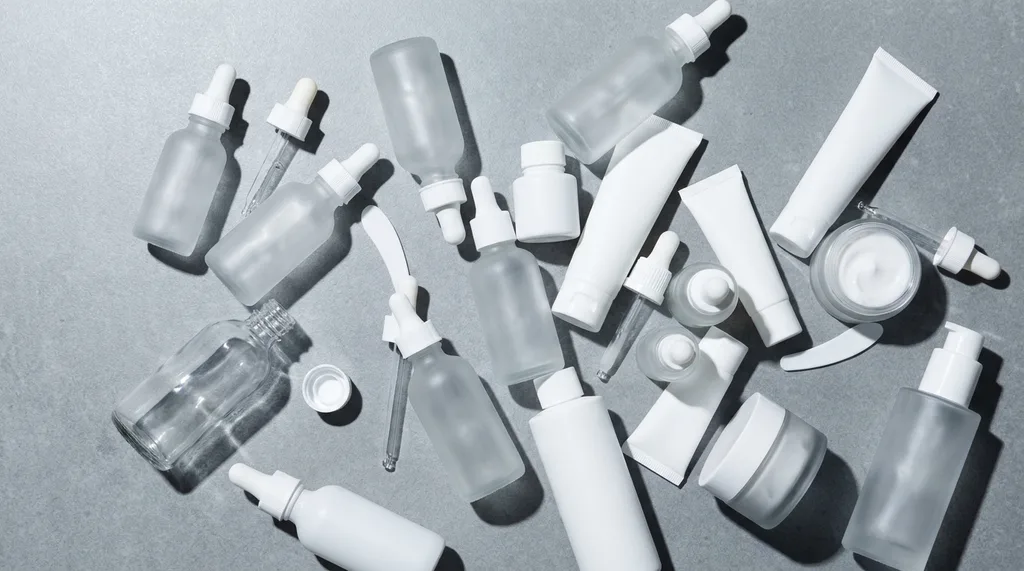
The cruelest irony of the glass skin pursuit is that the thing most likely to prevent it is the pursuit itself.
[K-Beauty 101] 오버케어 (Over-care) — skincare overload: using too many active ingredients or too many product layers, which compromises the skin barrier rather than rebuilding it. Korean dermatologists identify this as the primary cause of acquired skin sensitivity in otherwise healthy adults.
Korean dermatology clinics — particularly in Seoul's Gangnam district, where skincare culture and clinical medicine exist in unusually close proximity — have documented a consistent pattern: patients presenting with reactive, sensitized, chronically inflamed skin who have been diligently following multi-step routines. The barrier, far from being rebuilt, has been chemically stripped by the accumulating pH shifts, emulsifier interference, and surfactant exposure of too many products applied in rapid succession. The skin becomes what Korean practitioners call sensitized (민감해진 피부) — perpetually red, tight after washing, reacting to things that never bothered it before.
Over-exfoliation is the most dramatic version of this, but it's not the only one. Even entirely gentle products, layered carelessly and constantly, can disrupt the skin's acid mantle and interrupt the very barrier proteins — filaggrin, loricrin — that GFF and niacinamide are working to uphold. You can be sabotaging your barrier with kind ingredients simply by overwhelming it.
The honest version of the glass skin story includes this risk, because no honest observer of the Korean skincare landscape can ignore how many people arrive at sensitivity through the very routine meant to prevent it. The ko-deok community on Korean platforms discusses this openly — the warning that the 10-step pipeline, applied without understanding, has the same relationship to glass skin that a bull has to a china shop.
This is also where the sponsored-post ecosystem does real harm. A brand selling 10 products has no incentive to tell you that your skin barrier needs three of them removed. The Hwahae community, operating outside that incentive structure, does.
If you've found any of this useful — and especially if you want to go deeper on exactly which ingredients are worth the investment and which are marketing architecture — the K-Beauty Black Book is the clearest distillation of this kind of thinking available anywhere.
What the Real Devotees Actually Keep
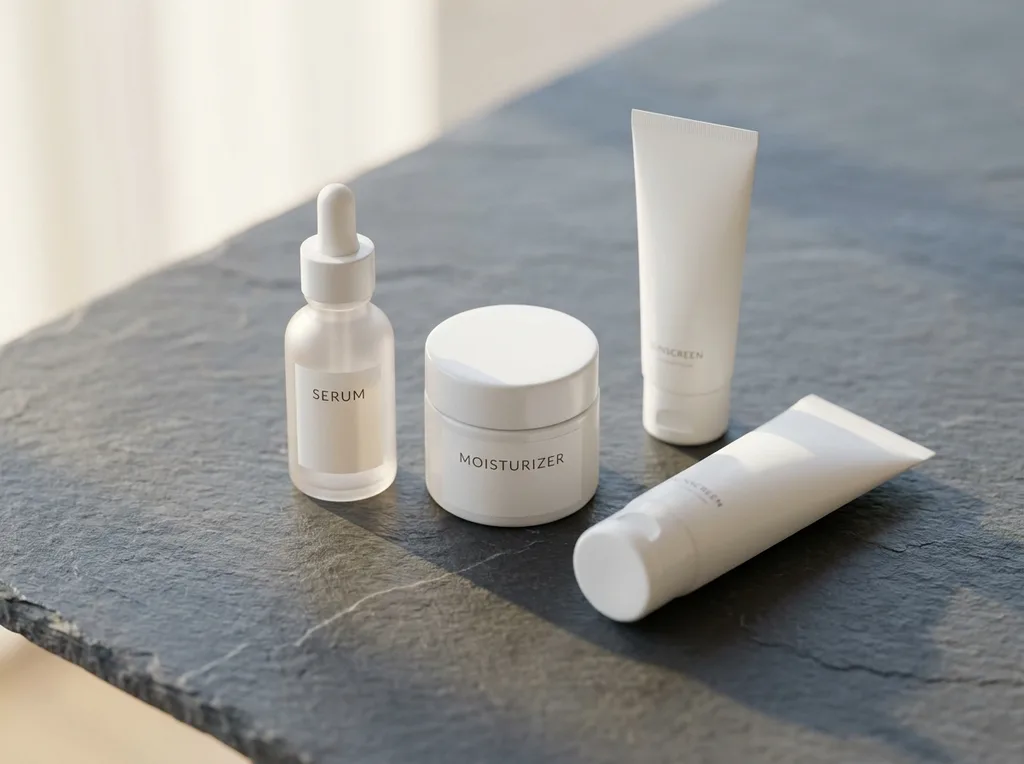
Walk through Olive Young on a weekday afternoon and you'll observe something counterintuitive: the Korean women spending real time reading labels are often holding fewer products than you'd expect. The 15-item haul is a tourist phenomenon. The ko-deok with 10 years of ingredient literacy picks up two things, reads the full INCI list of both, and leaves. The 가성비 (gaseongbi) philosophy — maximizing performance per unit of investment — doesn't mean cheap. It means ruthlessly efficient.
What the data-literate Korean skincare consumer has converged on, across Hwahae reviews and independent dermatology commentary, looks roughly like this:
✅ What Evidence Supports
Double cleansing (when needed): Oil cleanser for sunscreen/makeup removal. Gentle water-based follow-up. Not every evening.
GFF essence or niacinamide 2–5% serum: One targeted active. Not both in every routine — alternate or choose based on primary concern.
Ceramide-based moisturizer: Barrier repair is the goal, not just surface hydration.
SPF daily: Korean sunscreens (ultra-light, non-whitening formulas) are genuinely ahead of most global alternatives. Non-negotiable for preventing inflammaging.
⚠️ What Gets Oversold
Daily exfoliation (AHA/BHA): Clinical consensus supports 1–3x weekly maximum for most skin types. Daily use disrupts barrier faster than it renews it.
Ampoules stacked on serums on essences: Ingredient overlap and pH conflict reduce individual efficacy. Three actives don't triple the result.
10%+ niacinamide concentrations: Above the clinical sweet spot. Increased irritation risk without proportional efficacy gain.
Natural ingredient hype (bee venom, certain plant extracts): Marketing emphasis far outpaces long-term human clinical data. Interesting, not proven.
The layering principle that does hold up scientifically is sequencing by molecular weight and texture — lightest consistency applied first (watery toners, essences), building to heavier emollients and occlusives. This optimizes absorption without interference. Korean dermatologists describe this as targeting 속건조 directly: the water-phase layers address dehydration at depth; the lipid-phase layers seal the moisture gradient at the surface. It's a two-act play, not a ten-act opera.
The Hwahae platform represents something larger than a product review app. It's the infrastructure of what might be called "뷰티 교육" — beauty education as a consumer practice — where Korean shoppers internalize cosmetic biochemistry at a population level that has no real parallel elsewhere. The result is a market that genuinely cannot be fooled by packaging, because the ingredient list is always one scan away from public scrutiny. This consumer intelligence is part of why Korean formulation has evolved so quickly — the industry knows it's talking to people who will check.
Now: back to the question planted at the beginning.
What did she stop doing, the Korean woman who actually has glass skin?
She stopped believing the routine was the answer. She stopped adding products in response to every new concern. She stopped confusing complexity with care. What she kept was a clear understanding of what her barrier needs to function — hydration, structural proteins, minimal inflammation, daily UV protection — and she built the shortest path to those outcomes that her skin would accept. Sometimes that's four products. Occasionally it's six. It is never, if she's honest about the science, ten for ten's sake.
Glass skin doesn't appear because you finally found the right thing to put on. It appears because you finally stopped getting in the way.
⚠️ Disclaimer: The skincare science discussed in this article is based on published research and general dermatological consensus, not personalized medical advice. Skin types, barrier conditions, and ingredient tolerances vary significantly between individuals. If you experience persistent redness, stinging, breakouts, or barrier sensitivity, consult a board-certified dermatologist before introducing new active ingredients. Patch-test all new products before full application. The clinical efficacy of specific concentrations mentioned reflects general research findings and may differ based on individual skin chemistry and formulation variables.
✓ Researched and compiled using verified data as of the publication date.
 Operated by: Quiet Korea | Contact: rsl.2001.1975@gmail.com
Comments
Post a Comment