The Korean Anti-Aging Dupe You're Sleeping On — An Ingredient Autopsy
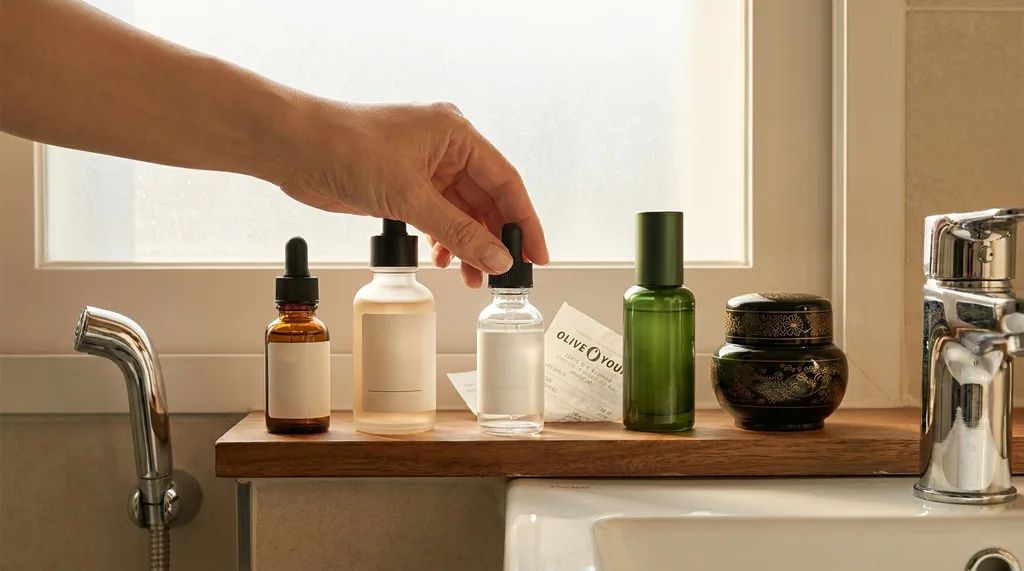
There is a peculiar truth that Korean women who have spent any time reading ingredient labels on Hwahae already know: the most trusted beauty regulatory system in Asia has quietly made it nearly impossible for a ₩300,000 serum to be scientifically better than a ₩25,000 one — at least on the one metric that determines whether a wrinkle actually improves.
That sounds like something a budget-beauty blogger would say to justify cheap choices. It is not. It is, in fact, the logical consequence of how South Korea's Ministry of Food and Drug Safety (MFDS) designed its certification architecture — and once you understand it, you will never look at a luxury anti-aging counter the same way.
This is the ingredient autopsy. No brand loyalty, no PR relationships, no sponsored softening. Just the science, the regulatory framework, and an honest answer to the question you actually came here to ask: am I paying for better skin, or am I paying for a prettier box?
The Certification Paradox That Changes Everything
[K-Beauty 101] 기능성화장품 (Gijeungseong Hwajangpum) — "Functional Cosmetic." Not a marketing category. A legal status. To carry claims about wrinkle improvement in Korea, a product must submit clinical data to the MFDS proving efficacy at the stated concentration. No certification, no claim. This regulatory barrier is what separates Korean anti-aging products from the global market's largely unregulated promise-land.
Here is where the paradox lives. The MFDS certification process requires a brand to demonstrate that its active ingredient — adenosine, a peptide, a retinoid — works at a minimum effective concentration. A ₩25,000 adenosine serum from SKIN1004 and a ₩280,000 fermented ginseng serum from a prestige house both had to clear that same bar to make wrinkle-improvement claims. The bar does not care about the packaging. The bar does not care about the brand story. The bar cares about whether the concentration is in the proven range.
Adenosine — the most common MFDS-approved wrinkle-improvement active — shows measurable collagen stimulation at concentrations between 0.04% and 0.1%, typically within 3 to 8 weeks of daily use. It works by binding to A2A receptors on dermal fibroblasts, triggering collagen synthesis pathways. That mechanism functions the same way in a ₩20,000 bottle as it does in a ₩200,000 one. What changes above a certain price point is not efficacy. It is texture. Longevity. Sensory experience. The smell of fermented ginseng on warm skin. These are real things — some people value them enormously — but they are not, clinically speaking, better wrinkle outcomes.
This is the crack in the belief that premium equals performance. The regulatory system was designed for consumer protection. What it accidentally created was the world's most level playing field for cosmetic actives.
For a deeper understanding of how Korean anti-aging philosophy builds skin infrastructure from the inside out, read: The Infrastructure Question: What Korean Anti-Aging Actually Builds
Stage 1 — The Ingredient Autopsy: What Actually Does the Work
Strip away the brand mythology around any prestige Korean anti-aging serum and you will typically find one of three functional architectures doing the actual biological work.
Architecture One: Adenosine-Centered The workhorse of MFDS-certified wrinkle improvement. Low molecular weight, high skin penetration, well-understood mechanism. The ingredient is cheap to source. The manufacturing process to stabilize it in a serum base is not complex. What the premium brands add around it — multi-molecular weight hyaluronic acid, fermented botanical extracts, elegant delivery emulsions — can meaningfully enhance how the skin feels and sometimes marginally improve how the active is absorbed. But the certified active itself? Interchangeable at threshold concentration.
Architecture Two: Retinal-Forward This is where the dupe calculus gets more complicated. Retinal — the aldehyde form of Vitamin A, sitting one step closer to retinoic acid than retinol — is roughly 11 times more potent than retinol in conversion efficiency. But that potency cuts both ways: it also oxidizes faster, irritates more readily, and requires either liposome encapsulation or airless packaging to remain stable and effective. A ₩15,000 retinal product in a jar is not a dupe for a ₩90,000 retinal product in an airless pump. The formulation technology is part of the active's delivery. Here, premium often genuinely earns its premium.
Architecture Three: Hanbang Barrier Repair Products built around red ginseng (hongsam), fermented yeast filtrates, or traditional herb complexes paired with ceramide-cholesterol-fatty acid trios. The barrier-repair science is solid and well-documented. The hanbang extracts carry both cultural resonance and a growing body of clinical data on antioxidant and collagen-stimulating properties — particularly for red ginseng ginsenosides. But here, too, the question is concentration and bioavailability, not brand prestige alone.
Stage 2 — The Honest Comparison
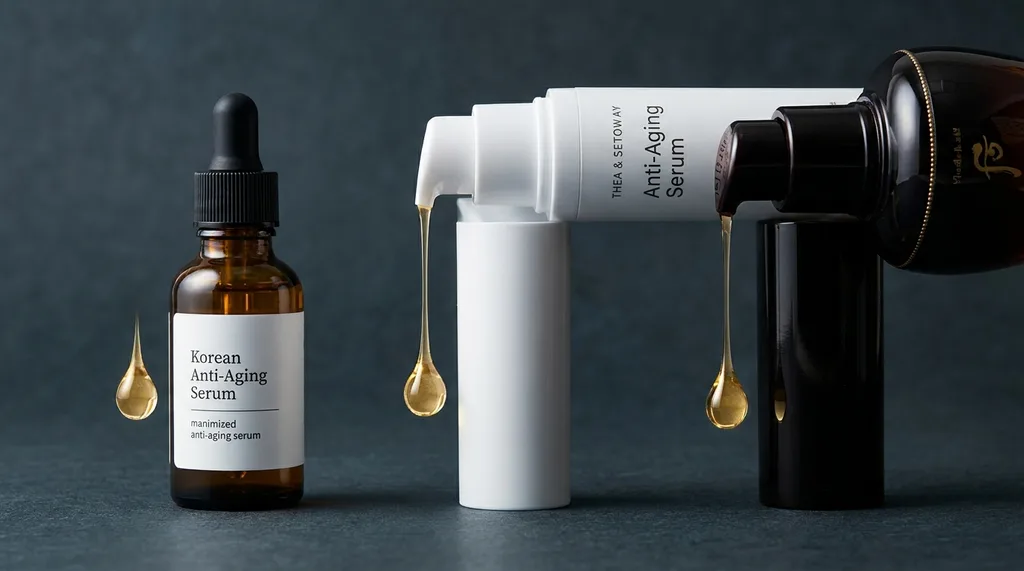
The framework below maps the three architectures against realistic price tiers. No invented prices. No fabricated concentration claims. Just what the ingredient science and Korean market structure actually support.
💸 Budget Tier
SKIN1004 / AXIS-Y
Adenosine + Centella / Barrier Ceramides
MFDS-certified actives. Minimalist base. Texture is functional, not luxurious. Ideal for daily-use adenosine application with zero friction.
⭐ Best Value Tier
numbuzin / Purito
Liposome Retinal / EGF + Adenosine
Where formulation technology begins to matter. Airless or opaque packaging. Genuine delivery-system investment at a mid-range price. The sweet spot for retinal.
✨ Premium Tier
Prestige Hanbang Lines
Fermented Red Ginseng + Multi-Peptide Complex
The case for premium is here: sensory experience, fermentation complexity, brand ritual. Worth it if the texture and hanbang philosophy matter to you. Not worth it purely for clinical actives.
The SVG below maps where each tier sits on the axis that actually matters — certified efficacy delivery versus price investment:
Notice what the scatter shows. Budget and premium products cluster inside the same certified efficacy band — the green zone where concentrations meet MFDS proof thresholds. The vertical axis climbs steeply. The horizontal axis barely moves. Price and certified efficacy are largely uncorrelated. What the premium tier does buy, distinctly, is the formulation context around the active — sensory quality, stability technology, and the ritual of the product. For some people, that context is worth every won. But it is a different category of value than skin science.
🎵 K-Mono Lofi — Seoul Study Beats
Read deeper with Seoul lo-fi in the background — curated by K-Mono Lofi
Stage 3 — The Verdict: Who Spends What, and Why
[K-Beauty 101] 탄력 (tallyeok) — skin elasticity. The metric Korean women in their 40s and 50s consistently cite as their primary anti-aging concern — not line reduction, but bounce, lift, the density beneath the surface. This matters for the dupe calculus: if tallyeok is your goal, barrier-rebuilding ceramide products and multi-peptide serums deliver it at every price point. If you're chasing the feeling of luxury skincare as part of a wellness ritual, that's a legitimate purchase — just know what you're buying.
If your primary concern is measurable wrinkle improvement on a limited budget: The MFDS certification system is on your side. Find an adenosine-certified product from brands like SKIN1004 or AXIS-Y. Apply it consistently for 6 to 8 weeks. The mechanism does not require premium packaging to function. On Hwahae, filter by gijeungseong hwajangpum (Functional Cosmetic) certification status — the badge is visible on product listings and tells you immediately whether a brand made the clinical commitment.
If retinal is your target active: Do not dupe this category on packaging alone. A stabilized retinal in an airless pump at a mid-range price from a brand like numbuzin or Purito is a genuine value — the liposome encapsulation technology is doing real work. A cheaper retinal in a jar or transparent bottle is not a cost-saving move; it is a degraded active. Spend the mid-range price. The formulation science here genuinely earns it.
If you want the full hanbang experience and can afford the premium tier: Go deliberately. Fermented red ginseng (hongsam) extracts have a body of clinical evidence for antioxidant and collagen-supporting properties that is not marketing mythology — it is two thousand years of observation now being validated by cosmetic science. The premium hanbang serums are not scientifically fraudulent. They deliver something real. They also deliver an experience — the texture, the ritual, the cultural resonance — that no budget product replicates. That is a legitimate purchase. Just make it consciously.
When to walk away entirely: Products leading with PDRN claims at premium prices and without clinical injection-equivalent evidence. Products in transparent or jar packaging with retinal or retinol as primary actives. Any product marketing "stem cell" effects via topical application without peer-reviewed delivery mechanism data. Hwahae's ingredient community flags these with ruthless accuracy — use it.
Stage 4 — Building the Routine That Actually Works
The mistake mature skin makes with K-Beauty is not budget — it is architecture. Spending ₩200,000 on a premium serum and undermining it with a compromised barrier beneath is the most expensive mistake in the category.
The framework is simple, and it does not require premium pricing at every layer:
The barrier foundation comes first: ceramides, cholesterol, and fatty acids in the right ratio (roughly 1:1:1 to mimic natural skin lipids). This is the layer that determines how well everything else penetrates. Budget brands do this well. The chemistry is not proprietary.
The certified active layer goes above: your adenosine, your liposome-encapsulated retinal, or your peptide complex. This is where ingredient science earns its keep, and where the dupe calculus above applies directly.
The skip-care philosophy — seukip-ke-eo in Korean beauty parlance — is not laziness. For mature skin in the 40s and 50s, where estrogen decline has already compromised the barrier's natural repair mechanisms, a five-product routine applied with clinical precision outperforms a twelve-product routine applied in a compromised state. The Korean women who look different at 50 than the marketing expects are not using more products. They are using fewer, better-chosen ones, consistently.
That consistency — compounded over months, not weeks — is what the ₩25,000 MFDS-certified serum and the ₩250,000 hanbang prestige serum share equally. The mechanism does not distinguish price. It distinguishes application.
The Korean regulatory system didn't create the world's most trusted cosmetic certification framework so that proven science would remain a luxury. It created it so that proven science could belong to everyone who shows up, reads the label, and stays consistent.
That is the dupe. Not a compromise. An access point to the same clinical foundation — built by the same government, validated by the same data — that the premium shelves rest on.
Related reading: The Infrastructure Question: What Korean Anti-Aging Actually Builds — the full philosophy behind why Korean skin looks different at 50, and how the preventive infrastructure model works from the inside out.
⚠️ Disclaimer: This article is educational and does not constitute medical or dermatological advice. Active skincare ingredients including retinoids, adenosine, and peptide complexes can cause irritation or adverse reactions in some individuals, particularly on mature or sensitized skin. Always conduct a patch test before introducing a new active to your routine. If you experience persistent redness, flaking, or discomfort, discontinue use and consult a board-certified dermatologist. Individual responses to topical actives vary; claims about wrinkle improvement are based on population-level clinical data and do not guarantee specific outcomes for any individual. Supplement or ingestible product decisions should be discussed with a qualified physician to assess potential interactions.
✓ Researched and compiled using verified data as of the publication date.
 Operated by: Quiet Korea | Contact: rsl.2001.1975@gmail.com
Comments
Post a Comment