Where K-Beauty Science Actually Works for Darker Skin — And the Affordable Alternatives That Deliver It
Where K-Beauty Science Actually Works for Darker Skin — And the Affordable Alternatives That Deliver It
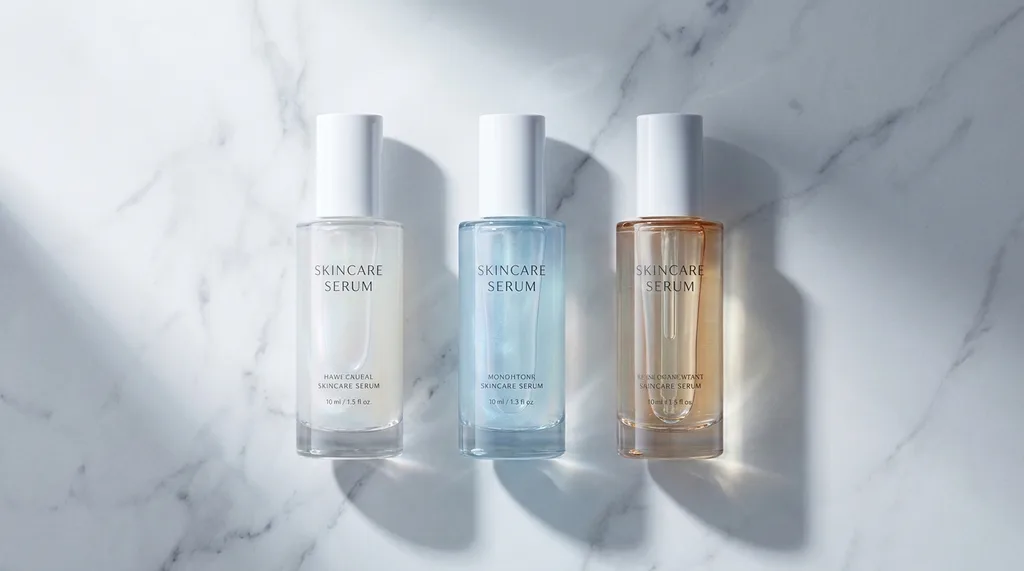
Walk into any Korean pharmacy and look at the shelf labels. Not the product names — the regulatory badges. A small stamp that reads 기능성화장품 (Gineungseong Hwajangpum), which translates to "Functional Cosmetic," means something the rest of the global beauty industry doesn't have a real equivalent for. It means the South Korean Ministry of Food and Drug Safety reviewed the formula, verified the active ingredients at specific concentration thresholds, and legally certifies that this product can claim to do what it says. Not "our moisturizer may help the appearance of." Actually does it. Or it doesn't get the badge.
- The Whitening Paradox: How Korean Regulatory Science Built a PIH Toolkit by Accident
- The Barrier Is the Bridge
- The Honest Part: K-Beauty Cosmetics Have Failed You, and That Failure Was Systematic
- The Dupe Framework: What Your Skin Actually Needs — and Where to Find It for Less
- What to Actually Do: The Three-Step Starting Protocol
- 💊 Find This on iHerb (Use Code QAK3042 for a discount!)
That regulatory apparatus built something that most global consumers have never heard about — and it matters enormously if you have melanin-rich skin.
There's an ingredient category Korean dermatologists spent decades refining for one very specific cultural concern, and it turns out to be more powerful for post-inflammatory hyperpigmentation on deeper skin tones than almost anything Western dermatology developed specifically for the purpose. The ingredients aren't secrets. The reason they work specifically for you has never been properly explained. That explanation comes later. First, let's break down the machine that built them.
The Whitening Paradox: How Korean Regulatory Science Built a PIH Toolkit by Accident
The Gineungseong Hwajangpum framework organizes skin-active products into three therapeutic categories: whitening (brightening), wrinkle improvement, and UV protection. Products claiming any of these benefits must use only pre-approved, government-certified (고시, gosi) ingredients — a legally binding administrative standard issued by the MFDS — within mandated concentration ranges. Niacinamide qualifies at 2–5%. Arbutin is approved. Ethyl Ascorbyl Ether has its certification window. Every one of these was stress-tested, concentration-capped, and validated before it reached a Korean Olive Young shelf.
[K-Beauty 101] 기능성화장품 (Gineungseong Hwajangpum) — "Functional Cosmetic." A government designation granted only to products that deliver verified therapeutic effects (brightening, anti-wrinkle, UV protection). Not marketing language — a legal certification backed by mandatory scientific dossiers.
Now here's the paradox. This system was built to address Korean beauty ideals around even-toned, luminous skin. But the ingredients it certified are melanin-interference agents — they interrupt the tyrosinase enzyme pathway, reduce excess melanin production, and support barrier integrity. Which are exactly the mechanisms that matter most for managing post-inflammatory hyperpigmentation. PIH — the dark marks left by a pimple, a shaving nick, a patch of eczema — is the dominant skin concern for darker skin tones precisely because melanin-rich skin produces more inflammatory pigment in response to injury.
Korean regulatory science wasn't trying to solve your PIH. It solved its own problem, and the science transferred perfectly.
The Barrier Is the Bridge
Here's where K-Beauty's philosophy becomes less about trendy steps and more about biology that's been ignored in Western dermatology for too long.
[K-Beauty 101] 피부 장벽 (Pibu Jangbyeok) — "Skin barrier." In Korean skincare philosophy, the barrier isn't just a moisturizing checkpoint — it's the foundation. A disrupted lipid barrier triggers inflammation, and inflammation on melanin-rich skin triggers PIH. Repair the barrier first. Everything else follows.
Melanin-rich skin has documented differences in transepidermal water loss (TEWL) patterns. Darker skin tones, particularly those with higher melanin concentrations, show higher baseline TEWL in some studies — meaning the barrier releases water more readily even when it appears intact. Western skincare, which for decades defaulted to heavier occlusive creams as the fix, often addresses the symptom. Korean formulation philosophy — layered hydration, ceramide-first repair, low-pH cleansing that doesn't strip acid mantle — addresses the mechanism.
This is where 수부지 (suboji) becomes a diagnostic revelation for a lot of darker-skinned readers.
[K-Beauty 101] 수부지 (Suboji) — Combination-dehydrated skin. The surface reads oily; underneath, the skin is parched. Korean dermatologists recognized this pattern decades ago. Western dermatology frequently misreads it as "simply oily" — and prescribes stripping, drying routines that compromise the barrier and, on melanin-rich skin, trigger exactly the inflammation cascade that causes PIH.
If you've been told you have oily skin and given a salicylic acid cleanser and a mattifying toner that left your face tight by noon — that's suboji being mismanaged. The K-Beauty framework doesn't just have a word for what you've been experiencing. It has a protocol built around it: gentle low-pH cleansing, hydrating actives that don't strip, barrier-sealing final steps. For melanin-rich skin with suboji, that protocol often performs better than anything prescribed in a Western dermatology office.
The skincare science is not just compatible with melanin-rich skin. In the barrier-repair category, it may be more relevant.
🎵 K-Mono Lofi — Seoul Study Beats
Read deeper with Seoul lo-fi in the background — curated by K-Mono Lofi
That said — this is OMNIARK, and we do not stop at the good news.
The Honest Part: K-Beauty Cosmetics Have Failed You, and That Failure Was Systematic
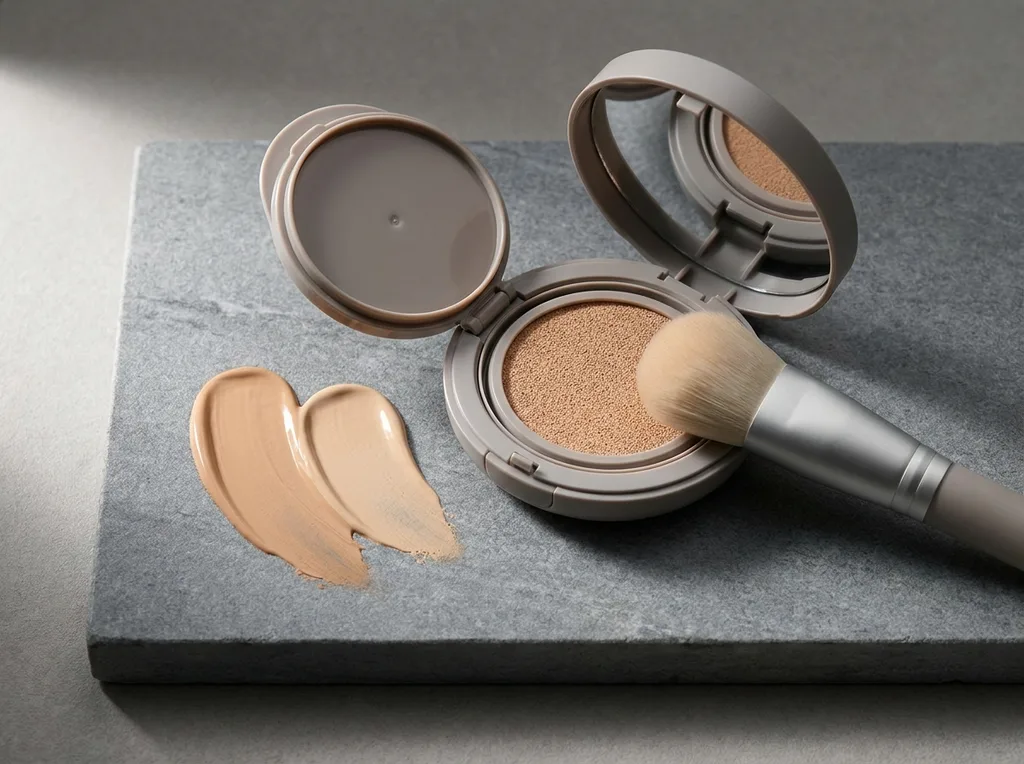
The science works. The foundation shades don't.
K-Beauty cosmetics — CC creams, BB creams, cushions, tinted sunscreens — were developed, tested, and photographed on a narrow range of skin tones. Not out of malice, but out of market design: the domestic Korean consumer base that products were originally optimized for has a relatively constrained undertone range, and marketing photography was calibrated to show results on those tones. The result is a category where shades tend to cluster around light-to-medium coverage with pink or neutral beige undertones, and products frequently oxidize warm or ashy on deeper complexions.
The problem runs deeper than shade count. Testing conditions matter. Photographic efficacy testing — does this "blur" or "brighten" — was conducted under lighting conditions optimized for fairer skin. SPF claims in Korean tinted products (ethylhexyl methoxycinnamate up to 7.5%, TiO2/ZnO up to 25%) are valid regardless of skin tone, but the cosmetic finish was never validated on medium-to-deep skin. The products that make NC15 skin glow can leave NC45 skin looking chalky, ashy, or simply absent.
This is a genuine industry failure. And it has not been fully corrected. Some K-Beauty brands have expanded their shade ranges for Western markets, but expansion that starts at "three more shades of beige" isn't inclusion. It's an announcement.
Here's the calibrated read: dismiss K-Beauty cosmetics entirely and you miss nothing critical. Dismiss K-Beauty skincare because of cosmetics failures, and you lose access to some of the most scientifically rigorous, barrier-intelligent products on the market.
The dupe framework below is built on that distinction.
The Dupe Framework: What Your Skin Actually Needs — and Where to Find It for Less
If you're looking for a "K-Beauty dupe" for darker skin, you're asking the wrong question. The right question is: which core ingredients does the research support for melanin-rich skin concerns, what concentrations actually work, and which products deliver them without the price premium?
The Korean regulatory system has already done the hard filtering. Ingredients that made it onto the 고시 (gosi) approved list were tested for efficacy. Start there.
For the concerned link to the broader K-Beauty and melanin-rich skin science: the full breakdown of how barrier philosophy maps to specific skin tones is explored in K-Beauty and Darker Skin: Where the Science Actually Lands.
The three ingredients with the strongest evidence for PIH and barrier concerns in melanin-rich skin — and that appear consistently across Korean regulatory-approved products — are niacinamide, Centella Asiatica (Cica), and ceramide-based barrier complexes. Here's how the dupe tiers work:
💸 Budget Tier
Single-Ingredient Niacinamide
5% concentration, minimal base formula. Olive Young house-brand or iHerb equivalent. Delivers the 고시-validated mechanism at the lowest possible price point.
⭐ Best Value
Niacinamide + Cica Serum
Combines PIH-targeting actives with barrier repair. Mid-range Korean brands (Anua, COSRX) formulate this pairing well. Addresses both the inflammation source and the pigment response simultaneously.
✨ Premium
Full Barrier + Brightening System
Ceramide-rich base + regulated brightening actives (niacinamide, arbutin) + Cica. This is where spending more makes a measurable difference — not for the ingredient, but for the delivery vehicle and formulation stability.
The honest verdict on when to spend more: the budget tier niacinamide delivers the same active ingredient. Where premium formulas earn their price is in the base — ceramide-rich emulsions stabilize actives better and simultaneously repair the barrier while the niacinamide does its work on pigment. If your barrier is severely compromised, the full system matters. If you're maintaining, the budget tier holds its own.
A note on what the science actually says about concentration: niacinamide's clinical evidence for hyperpigmentation reduction clusters around 4–5%. Products that list it in the first third of the INCI list are likely in that range. Products where it appears after the preservatives are delivering a cosmetic trace, not a therapeutic dose. The 고시 certification range (2–5%) is your guide — and it's written on the product by Korean law.
The cluster in the green zone tells the real story. Budget-tier Korean niacinamide serums, carrying the Gineungseong Hwajangpum regulatory backing, land in the highest evidence category at the lowest price point. Western "brightening" serums with similar marketing language sit at moderate evidence and significantly higher prices. The gap isn't a matter of sophistication — it's a matter of regulatory infrastructure. Korean law forced the science. That infrastructure is what you're buying when you buy budget K-Beauty, and you don't have to pay premium prices to access it.
What to Actually Do: The Three-Step Starting Protocol
Actionable doesn't mean complicated. For melanin-rich skin, the science points to a clear entry sequence.
Start with a low-pH cleanser. This isn't aesthetic — it's barrier math. Standard alkaline cleansers (most Western drug store options sit at pH 8–10) disrupt the acid mantle. Every disruption triggers inflammation. On melanin-rich skin, inflammation = PIH risk. Korean low-pH cleansers (pH 4.5–6.5) exist because Korean dermatology understood this relationship decades before "pH balancing" became a Western trend.
Layer your actives by concern, not by marketing claim. If PIH is your primary concern: niacinamide at 4–5% (check INCI position — first third of the list), applied after watery essence layers, before heavier moisturizers. If barrier compromise is primary: look for ceramide + cholesterol + fatty acid combinations in the moisturizer or barrier cream slot. The Korean regulatory framework validated both pathways separately. You can run them together.
Protect the barrier you're building. Sunscreen is non-negotiable for PIH management — UV exposure reactivates dormant hyperpigmentation and darkens existing marks regardless of what actives you're using. Chemical filters (no white cast) are your practical option for daily wear. Check the UV filter list before adding to your routine.
The readers who get the most from K-Beauty's skincare science are not the ones who follow every trend. They're the ones who understand two things: the regulatory backing that separates a science-verified active from a marketing claim, and the honest gap between what K-Beauty skincare delivers versus what its cosmetics have failed to provide.
K-Beauty didn't set out to build the best toolkit for melanin-rich skin. It built a rigorous science-backed system for its own concerns — and the science transferred. That transfer is real, it's documented, and it's available at price points that most of the "inclusive beauty" Western marketing apparatus hasn't come close to matching.
The open loop closes here: the ingredient is niacinamide, the science is the 고시 regulatory framework, and the reason it works specifically for PIH on deeper skin is that post-inflammatory pigment and general "brightening" run on the same tyrosinase pathway. Korean law demanded the science be proven. You benefit from that proof regardless of who it was originally designed for.
The best K-Beauty available to melanin-rich skin isn't the most expensive. It's the most accurately chosen.
The full science behind barrier philosophy and melanin-rich skin adaptation is explored in depth at K-Beauty and Darker Skin: Where the Science Actually Lands.
⚠️ Disclaimer: This article is educational and does not constitute medical or dermatological advice. Ingredient science discussed reflects general clinical literature, not specific product prescriptions. Post-inflammatory hyperpigmentation can have underlying causes that require diagnosis by a board-certified dermatologist — if your hyperpigmentation is persistent, worsening, or accompanied by other symptoms, consult a dermatologist before beginning any new active ingredient regimen. Patch-test all new K-Beauty products on the inner arm for 48 hours before full-face application, particularly products containing niacinamide above 5%, arbutin, or chemical exfoliants, as individual sensitivities vary significantly. Regulatory concentration data referenced is based on Korean MFDS Functional Cosmetic standards and may not reflect formulations sold in other markets.
✓ Researched and compiled using verified data as of the publication date.
 Operated by: Quiet Korea | Contact: rsl.2001.1975@gmail.com
Comments
Post a Comment